NI Road Deaths Surge 64% as Fatal Weekend Pushes 2026 Toll to 36
Northern Ireland's roads have claimed 36 lives in 2026 — a 64% increase on the equivalent period last year — after a devastating final weekend of June that saw three people killed in separate collisions across the province, prompting urgent calls from road safety authorities for drivers to exercise extreme caution as the summer season reaches its peak.
Background
Road safety has been a persistent challenge in Northern Ireland, where the combination of rural road networks, high levels of car dependency, and a historically younger driving population has contributed to fatality rates that have, in some years, exceeded those of comparable regions in Great Britain. The Department for Infrastructure and the PSNI's Roads Policing Unit have invested significantly in enforcement and education campaigns over the past decade, and the long-term trend in road deaths had been broadly downward — making the sharp reversal seen in 2026 all the more alarming.
The 2025 figure for the same period provided a relatively low baseline, which partly explains the scale of the percentage increase. However, statisticians and road safety experts caution against over-relying on year-on-year comparisons for what are, in absolute terms, small numbers. What is not in dispute is that 36 people have lost their lives on Northern Ireland's roads in less than six months — a human toll that represents 36 families shattered, 36 communities diminished.
The pattern of fatalities in 2026 has shown a disproportionate number of single-vehicle collisions, particularly involving motorcycles and young male drivers on rural roads. This mirrors a trend identified in previous years and has led to renewed calls for targeted interventions aimed at these specific risk groups.
Key Developments
The weekend of 26-28 June proved particularly devastating. Matthew McIlroy, aged 31, died in a single-vehicle collision on 26 June. Shane Caulfield, aged 21, was killed in a separate single-vehicle incident on the same day. On 28 June, a 55-year-old motorcyclist from the Bellaghy area in County Londonderry was killed in a two-vehicle collision on the Cushendall Road in County Antrim — a stretch of road that has seen a number of serious incidents in recent years.
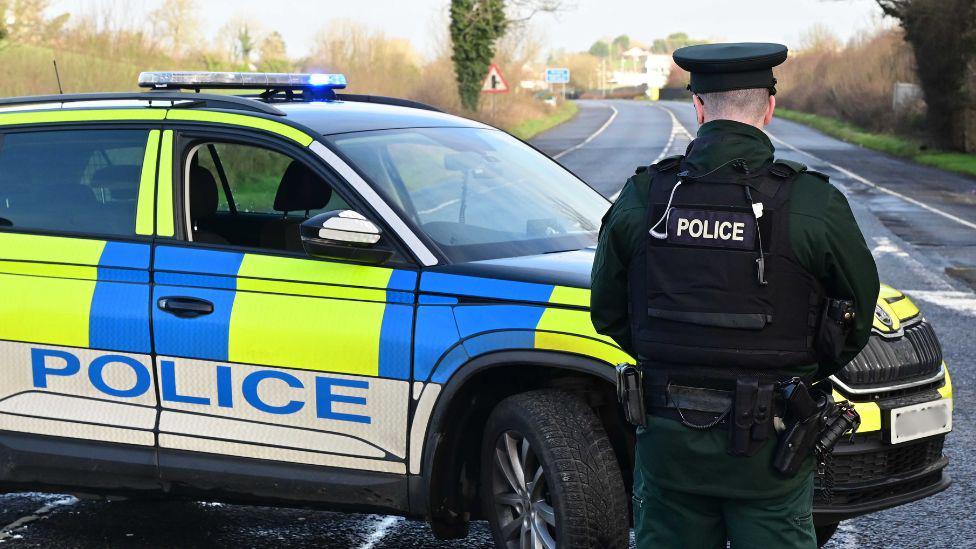
The PSNI's Roads Policing Unit confirmed all three deaths and issued a statement calling on drivers to take personal responsibility for their behaviour on the roads. Officers noted that speed, distraction, and failure to wear seatbelts remained the primary contributory factors in fatal collisions across Northern Ireland, and that the summer months — with longer days, increased traffic volumes, and more motorcyclists and cyclists on the roads — typically see a spike in serious incidents.
The Department for Infrastructure has been contacted for comment on whether any additional road safety measures are planned in response to the rising toll. The department's Road Safety Strategy, which runs to 2030, sets targets for reducing deaths and serious injuries, but those targets are now looking increasingly difficult to achieve given the trajectory of 2026.
Why It Matters
A 64% increase in road deaths is not a statistical anomaly to be explained away — it is a crisis that demands a serious policy response. Northern Ireland's road network presents particular challenges: a high proportion of single-carriageway rural roads, limited motorway coverage outside the greater Belfast area, and a public transport system that, outside the city, is insufficiently developed to provide a genuine alternative to car travel for most journeys.
The comparison with the Republic of Ireland is instructive. The Road Safety Authority in the South has invested heavily in infrastructure improvements, enforcement technology, and public awareness campaigns, and has seen a broadly downward trend in fatalities over the past two decades. Northern Ireland's equivalent bodies have operated with more constrained budgets and have faced the additional challenge of a road network that was significantly under-invested during the Troubles era.
The age profile of victims is also a concern. The deaths of Matthew McIlroy, aged 31, and Shane Caulfield, aged 21, are a reminder that road collisions remain one of the leading causes of death among young men in Northern Ireland — a fact that has not changed despite decades of awareness campaigns.
Local Impact
The communities affected by the weekend's fatalities are spread across Northern Ireland. The Bellaghy area of County Londonderry, where the motorcyclist killed on the Cushendall Road was from, is a small rural community where the loss of a 55-year-old resident will be deeply felt. The Cushendall Road itself, which winds through the Glens of Antrim, is a popular route for motorcyclists during the summer months and has been the scene of previous fatal incidents. Local councillors in the Causeway Coast and Glens area have previously called for safety improvements on this stretch of road.
What's Next
The PSNI Roads Policing Unit has indicated that enforcement activity will be intensified over the coming weeks, with particular focus on speed, mobile phone use, and seatbelt compliance. The Department for Infrastructure is expected to publish an interim review of the Road Safety Strategy later in the summer, which will assess progress against targets and identify areas where additional intervention is required. Road safety charities, including Brake NI, have called for an emergency summit involving all relevant agencies to address the 2026 spike before the summer driving season reaches its peak in July and August.