NI Riots Aftermath: 35 Arrests, 23 Charges as Political Row Over Border Security Intensifies
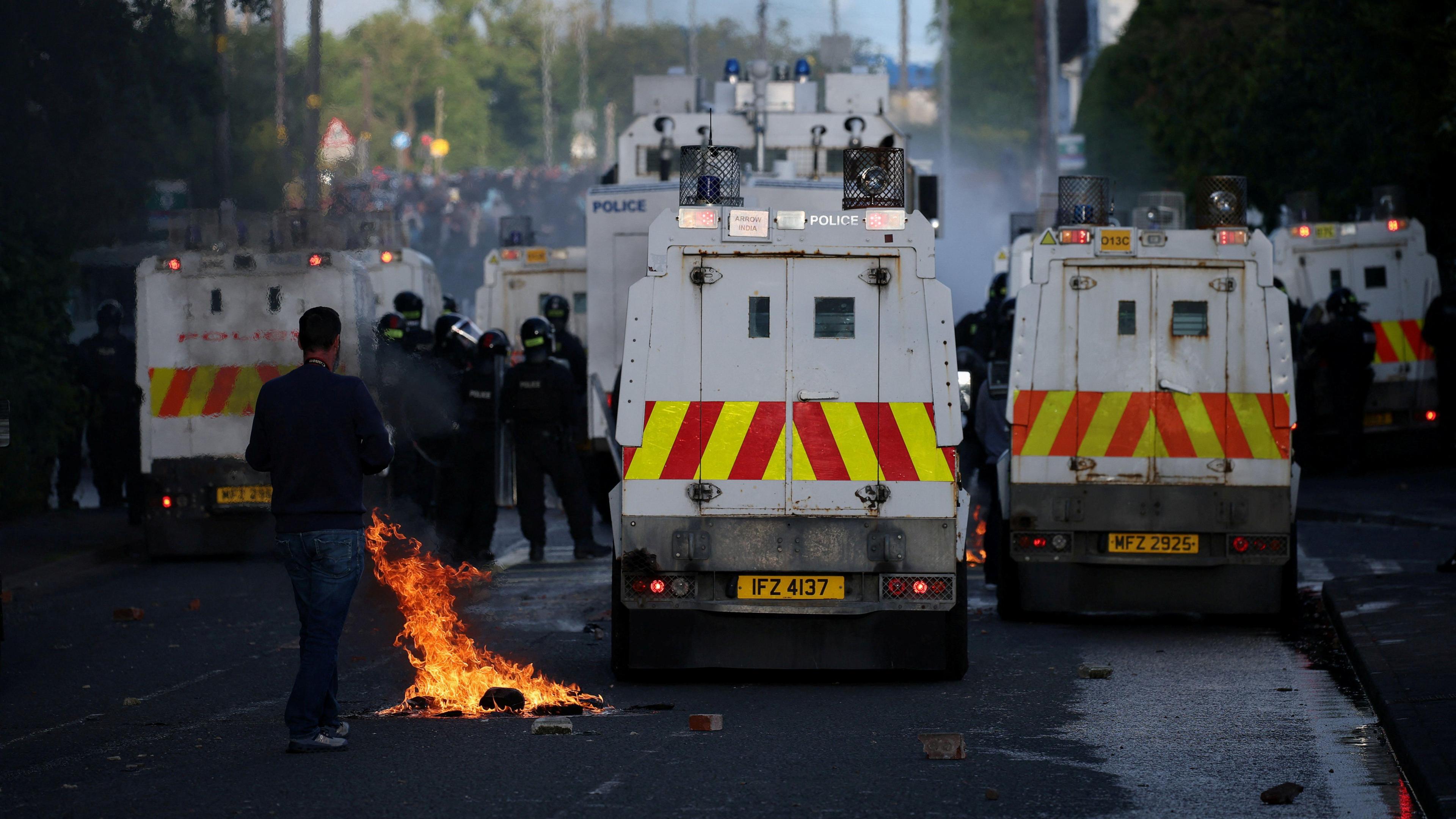
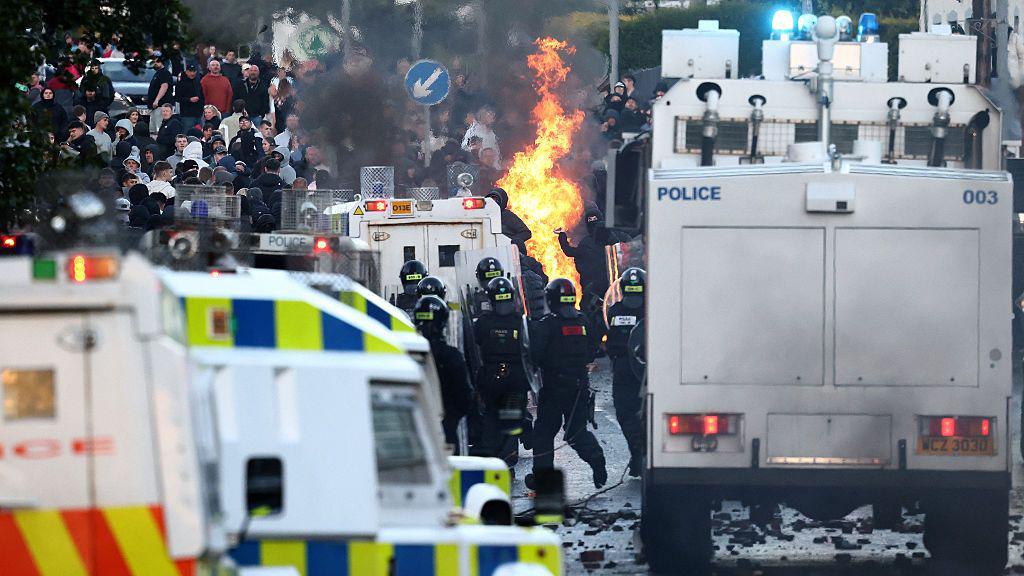
A week on from the worst civil disorder Northern Ireland has seen in years, the PSNI has made 35 arrests and filed 23 charges in connection with the riots that swept across the province between 9 and 11 June — while the political debate about their causes and consequences has sharpened into a bitter dispute over border security, immigration policy, and the future of the Common Travel Area.
Background
The riots were sparked by a knife attack in north Belfast on 8 June 2026, in which local man Stephen Ogilvie was seriously injured. The suspect, a Sudanese national who had entered Northern Ireland via the Republic of Ireland, was arrested and charged within hours. What followed was three nights of disorder that shocked the province and drew condemnation from political leaders across the United Kingdom and Ireland. Homes were burned, businesses were attacked, and 27 people were left homeless. The PSNI declared a critical incident and deployed officers from across the province, while UK Prime Minister Keir Starmer described the violence as "abhorrent" and pledged that those responsible would face justice.
The disorder was not spontaneous. Evidence gathered by the PSNI and by researchers monitoring online activity suggests that the riots were coordinated to a significant degree through social media platforms, with individuals in multiple locations receiving instructions about targets and tactics in real time. This online dimension has complicated the investigation, as it requires the PSNI to work with digital forensics specialists and, in some cases, to seek cooperation from platform operators based outside the United Kingdom.
Stephen Ogilvie, the original victim of the knife attack that triggered the disorder, was reported on 17 June to be out of a coma but facing the possibility of permanent vision loss — a detail that has added further emotional complexity to an already charged situation. His family has appealed for calm and has explicitly stated that they do not want their son's suffering to be used as a justification for violence against others.
Key Developments
The PSNI's investigation is proceeding on multiple fronts. Of the 23 people charged, the offences include riot, arson, assault on police, and possession of offensive weapons. Several of those charged are understood to have been identified through CCTV footage and social media analysis. The PSNI has appealed for anyone with information about those who organised or incited the disorder online to come forward, and has indicated that further arrests are expected.
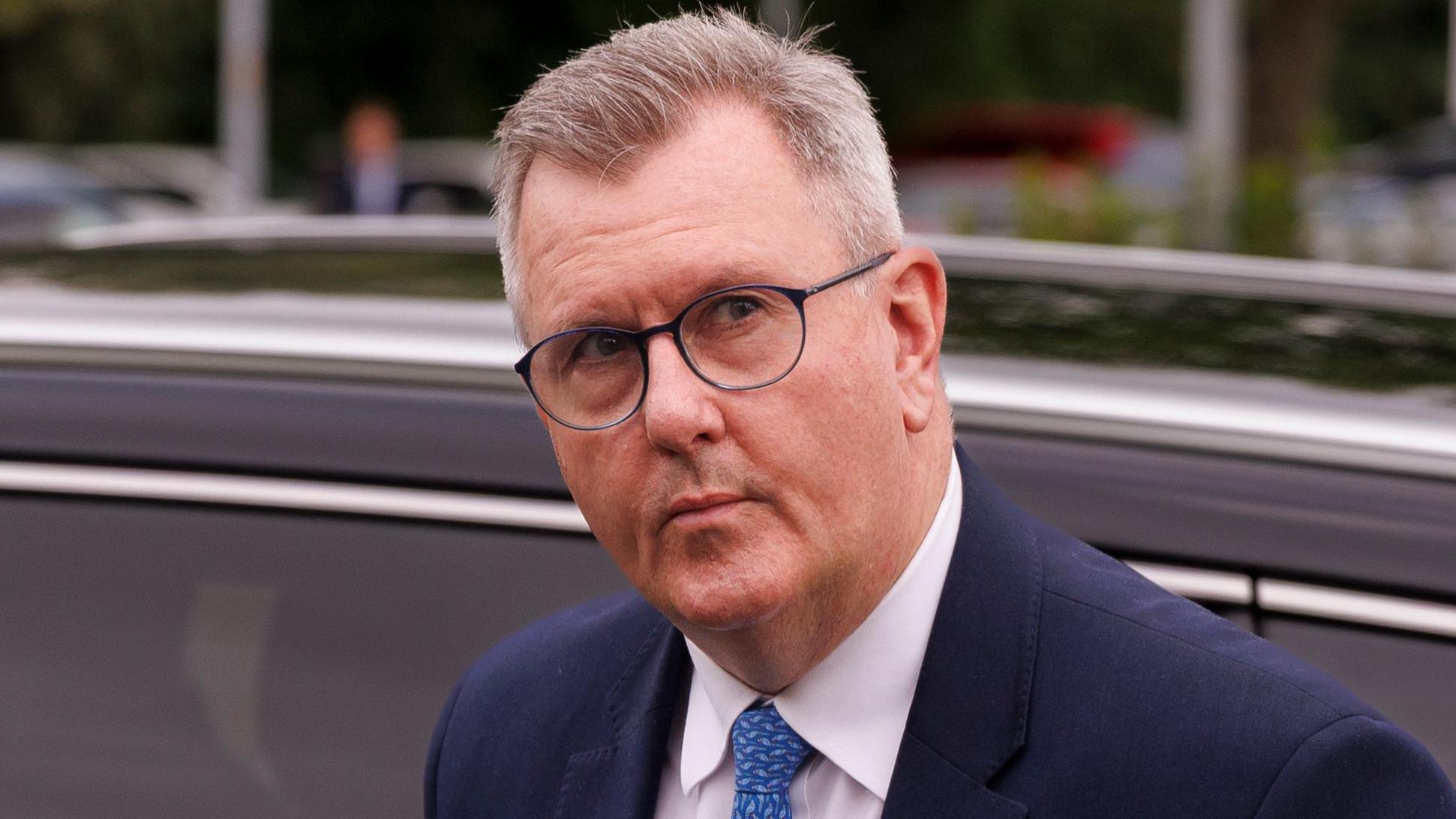
The political fallout has been intense. DUP leader Gavin Robinson met with UK Prime Minister Keir Starmer to press the case for tighter controls on the Common Travel Area, arguing that the "open, porous border" between Northern Ireland and the Republic was being exploited for immigration purposes. Robinson described the situation as "unsustainable" and called for a bilateral returns agreement between the UK and Ireland to allow the removal of individuals who had entered the UK illegally via the Republic.
SDLP leader Claire Hanna dismissed the DUP's position as "bunkum" and a "distraction," arguing that a harder border would be impractical, economically damaging, and contrary to the Good Friday Agreement. Sinn Féin's Matt Carthy criticised the EU Migration Pact for failing to account for the island's division and called for a bilateral returns arrangement — a position that, while superficially similar to the DUP's, is framed in terms of managed cooperation rather than border enforcement.
Why It Matters
The riots and their aftermath have exposed deep fault lines in Northern Ireland's political landscape that go beyond the immediate question of immigration. The disorder has been exploited by those who wish to undermine the peace process and to stoke sectarian and racial tensions in communities that have worked hard to move beyond the divisions of the past. The targeting of properties associated with ethnic minority communities — including homes and businesses owned by people from South Asia, Africa, and Eastern Europe — represents a form of racially motivated violence that Northern Ireland has not seen on this scale before.
The debate about the Common Travel Area is particularly sensitive. The CTA, which allows free movement between the UK and Ireland without passport checks, is one of the foundational elements of the relationship between the two countries and is explicitly protected under the Good Friday Agreement. Any move to introduce systematic checks on the Irish border would have profound implications not just for immigration policy but for the entire architecture of the peace settlement. The Irish government has been clear that it will not accept measures that undermine the CTA or the open border, and has called for bilateral cooperation on data sharing and returns as an alternative to physical border controls.
Local Impact
In the communities most directly affected by the riots — including areas of north Belfast, Ballymena, Antrim town, and Newtownabbey — the immediate priority is recovery. Twenty-seven people who lost their homes in the disorder are being supported by the Housing Executive and local councils, with temporary accommodation arranged and longer-term rehousing under way. Several businesses that were attacked or burned have indicated that they will not reopen, representing a permanent loss to local economies that were already under pressure. Community relations organisations, including the Community Relations Council and a range of local voluntary groups, have begun a programme of dialogue and support in the affected areas, working to prevent further disorder and to rebuild trust between communities.
What's Next
The PSNI investigation is expected to continue for several months, with further arrests and charges anticipated. The Public Prosecution Service will manage the cases through the courts, with the first hearings for those already charged expected in the coming weeks. At Stormont, the Assembly's Justice Committee has called for a special session to examine the PSNI's response to the disorder, including the controversial checkpoint allegations near the Mater Hospital. The UK and Irish governments are engaged in bilateral discussions about immigration data sharing and returns, with a joint statement expected before the end of June. The Policing Board will hold a special meeting to scrutinise the PSNI's handling of the riots.