NI Childminders Face 'Severe Financial Burden' as Heating Oil Costs Double Due to Iran War
Registered childminders across Northern Ireland are facing a severe financial crisis as heating oil costs have doubled compared to pre-war levels, with the ongoing conflict in Iran driving global oil prices to their highest point since 2008 and placing unsustainable pressure on small childcare businesses that cannot easily pass the additional costs on to the families they serve.
Background
Northern Ireland's dependence on home heating oil is the highest of any UK nation, with approximately 62.5% of homes relying on oil-fired central heating. This dependence reflects the province's geography — a large proportion of the population lives in rural areas beyond the reach of the natural gas network — and its housing stock, much of which was built before the widespread availability of alternative heating systems. The unregulated nature of the heating oil market means that global price volatility is passed directly and rapidly to consumers, without the buffering effect that regulated energy markets provide in other parts of the UK.
The conflict in Iran, which began in 2026 and has resulted in the closure of the Strait of Hormuz to commercial shipping, has caused what the International Energy Agency has described as the largest supply disruption in the history of the global oil market. The impact on heating oil prices in Northern Ireland has been severe: the average price for 500 litres of home heating oil reached £561.83 by 24 September 2026, representing an increase of approximately 80% compared to pre-war levels. Energy analysts from the Consumer Council Northern Ireland have noted that prices are highly "headline driven" and sensitive to developments in the Middle East, and that they tend to rise much faster than they fall.
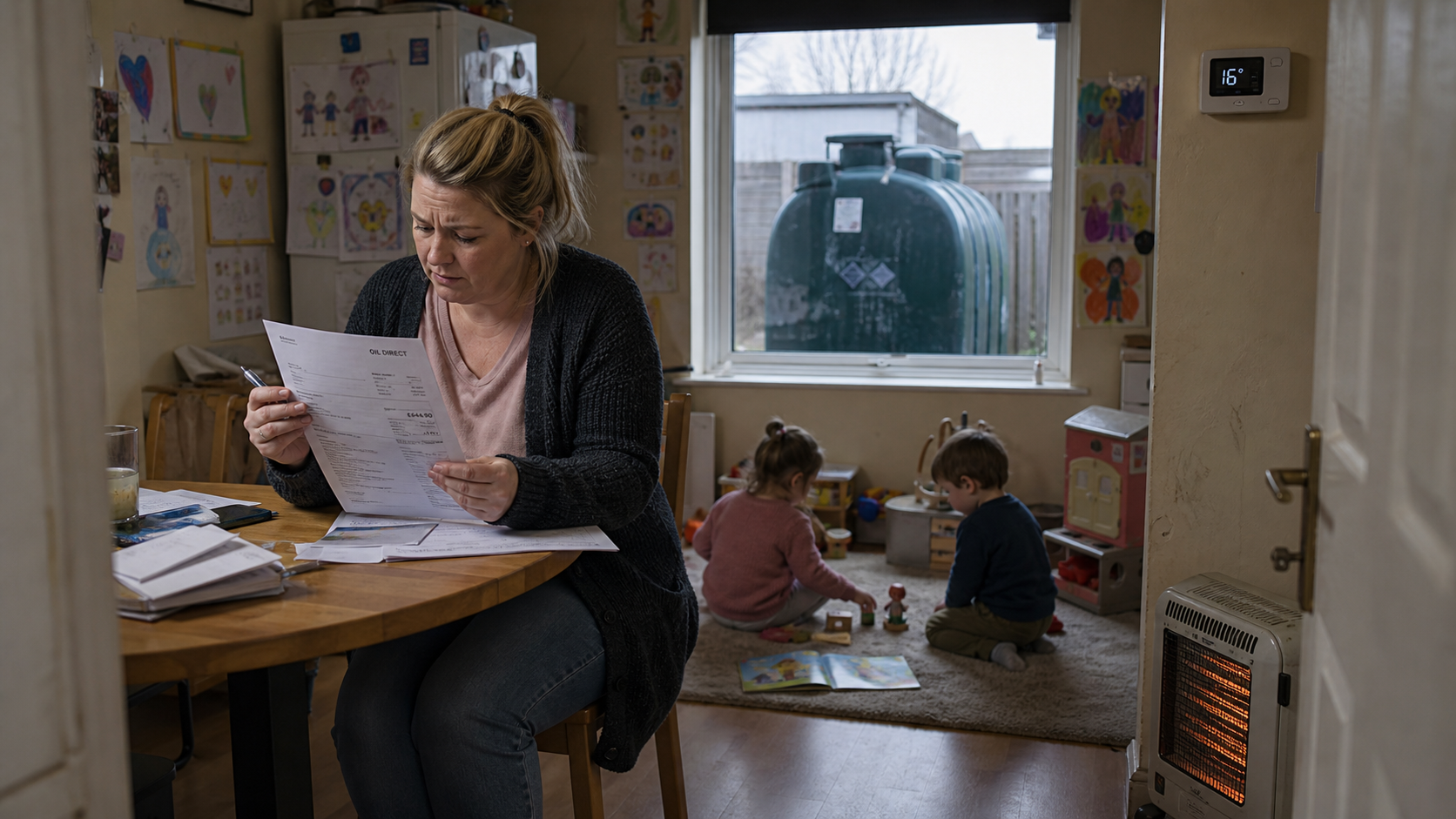
For registered childminders — who operate from their own homes and who are therefore directly exposed to domestic energy costs — the price surge has created a crisis that threatens the viability of their businesses. Unlike larger childcare providers, who can spread energy costs across multiple rooms and a larger number of children, childminders typically operate in a single domestic setting where heating costs are a significant proportion of their total overheads.
Key Developments
Rachel Jeffers, a childminder in County Tyrone, told the BBC that her heating oil costs have doubled since the previous year, creating a financial pressure that she described as "severe." Like many childminders, Jeffers faces a difficult choice: absorb the additional costs and accept a significant reduction in her income, or pass them on to the families she serves and risk losing clients who are themselves struggling with the cost of living. "I can't put my prices up because the families I look after are in the same boat as me," she said. "But I can't keep absorbing these costs either."
The financial pressure extends beyond heating oil to include significant increases in food and insurance costs, creating a compound effect that is pushing many childminders to the edge of viability. Several have reported monitoring their heating usage strictly, turning off heat earlier in the day or questioning whether they can continue to operate at all. The loss of registered childminders from the sector would have significant consequences for the availability of childcare in rural Northern Ireland, where childminders are often the only affordable option for families who cannot access nursery or creche provision.
The Stormont administration launched the Home Heating Oil Support Scheme on 9 September 2026, providing a £100 voucher to eligible lower-income households — those with a combined income of £30,000 or less or those receiving specific benefits. As of 23 September, the Department for Communities had received 123,987 applications. The scheme is scheduled to remain open until 31 March 2027, with most successful applicants receiving a payment card within ten working days.
Why It Matters
The childminder crisis is a microcosm of the broader impact of the Iran war on Northern Ireland's economy and society. The province's disproportionate dependence on oil — for heating, for transport, and for agriculture — means that it is more exposed to global oil price shocks than any other part of the United Kingdom. The £100 voucher offered by the Home Heating Oil Support Scheme is widely regarded as insufficient to address the scale of the problem, and childcare organisations have called for a specific support package for registered childminders that reflects the particular vulnerability of their business model.
The childcare sector in Northern Ireland is already under significant strain, with a shortage of registered providers, high costs for families, and a workforce that is chronically underpaid relative to the qualifications and responsibilities involved. The energy crisis adds another layer of pressure to a sector that was already struggling, and the risk of a significant reduction in the number of registered childminders — particularly in rural areas — is a genuine concern for families, employers, and the wider economy.
Local Impact
The impact of the heating oil crisis is felt most acutely in the rural areas of Northern Ireland — in counties Tyrone, Fermanagh, Armagh, and Down — where oil dependence is highest and where the alternatives to oil heating are most limited. In these areas, childminders are often the only affordable childcare option for families, and their loss from the sector would leave parents with no viable alternative. The Northern Trust, Southern Trust, and Western Trust areas — which cover much of rural Northern Ireland — have all reported concerns about the impact of the energy crisis on childcare provision, and the Health and Social Care Board has been asked to assess the risk to childcare capacity in the most affected areas.
What's Next
The Department for Communities has indicated that it will review the Home Heating Oil Support Scheme before the end of 2026, with the possibility of increasing the voucher value or expanding the eligibility criteria if the energy price situation does not improve. Childcare organisations have submitted a formal request to the Department of Education for a specific support package for registered childminders, and a response is expected before the end of October. The Consumer Council Northern Ireland will publish its next heating oil price analysis in mid-October, which will provide an updated picture of the market situation and inform decisions about further government intervention.