New Film Celebrating Life and Work of Belfast Poet Pádraic Fiacc to Screen at Féile an Phobail
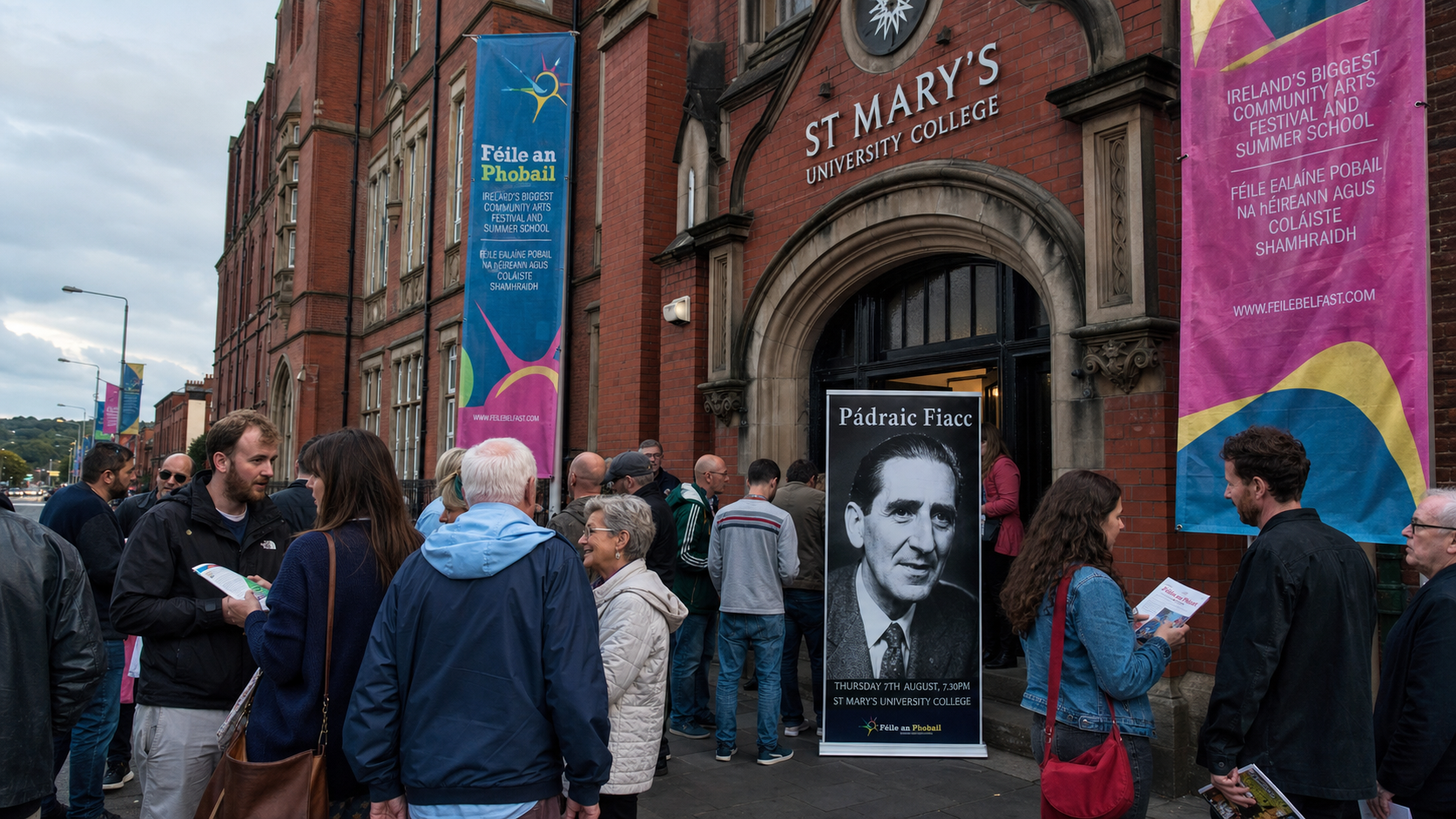
A new film celebrating the life and work of the late Belfast poet Pádraic Fiacc is to receive its premiere at the Féile an Phobail festival in August, in what promises to be one of the most significant cultural events of the summer for Belfast's literary community. Fiacc, who was born Patrick Joseph O'Connor in Belfast in 1924 and died in 2019 at the age of 94, was one of the most distinctive and uncompromising voices in Irish poetry, known above all for his unflinching engagement with the violence and trauma of the Troubles. The film, which will be screened free of charge, is expected to introduce his work to a new generation of readers and viewers.
Background
Pádraic Fiacc occupies a unique and somewhat paradoxical position in the canon of Irish poetry. He was born in Belfast but spent much of his early life in New York, where his family had emigrated, before returning to Belfast in the 1940s. His poetry is rooted in the experience of working-class Catholic Belfast, and his engagement with the violence of the Troubles — which he witnessed at close quarters in the streets of the Falls Road area where he lived — gave his work a rawness and urgency that set it apart from much of the Irish poetry of his era.
Fiacc's most celebrated collection, Ruined Pages: Selected Poems, published in 1994, brought his work to a wider audience and established his reputation as one of the essential voices of the Troubles era. His poems do not offer comfort or resolution — they confront the reader with the reality of violence, grief, and moral complexity in a way that can be deeply unsettling. This quality, which made him a somewhat marginal figure in the mainstream of Irish literary culture during his lifetime, has come to be recognised as one of his greatest strengths.
Féile an Phobail, which translates as "Festival of the People," is one of the largest community arts festivals in Europe, held annually in West Belfast. The festival, which was founded in 1988 in the aftermath of the Milltown Cemetery attack, has grown from a community response to violence and trauma into a major cultural event that attracts tens of thousands of visitors each year. Its programme encompasses theatre, music, film, debate, and community events, and it has a strong tradition of engaging with the political and cultural history of West Belfast and of Ireland more broadly.
Key Developments
The Irish News reported on Wednesday that a new film about Pádraic Fiacc is scheduled for a free screening at Féile an Phobail in August. The film, the details of which have not yet been fully disclosed, is understood to draw on archive footage, interviews with those who knew Fiacc, and readings of his poetry. The decision to premiere the film at Féile an Phobail is fitting, given the festival's roots in the same West Belfast community that shaped Fiacc's life and work.
The film's premiere comes at a time of growing interest in Fiacc's work, driven in part by the broader reassessment of Troubles-era literature and art that has been taking place in recent years. Academic interest in his poetry has increased, with several universities in Ireland and Britain now including his work in their Irish literature curricula. A new edition of his selected poems is also understood to be in preparation, which would make his work more widely available to readers who may have encountered references to it but struggled to find copies of his collections.
The screening will be free of charge, reflecting Féile an Phobail's commitment to making culture accessible to all members of the community, regardless of income. The festival's organisers have indicated that the Fiacc film will be accompanied by a discussion event featuring poets, critics, and others who can speak to the significance of his work.
Why It Matters
The celebration of Pádraic Fiacc's work at Féile an Phobail matters for several reasons. First, it represents an act of cultural recovery — the bringing back into public consciousness of a poet whose work deserves to be more widely known and read. Second, it is an opportunity to engage with the Troubles and its legacy through the medium of poetry, which has a unique capacity to convey the emotional and moral complexity of that period in ways that journalism and history cannot always achieve. Third, it is a reminder of the richness of Belfast's literary culture, which has produced poets, novelists, and playwrights of international significance across the decades. Fiacc's work, with its unflinching honesty and its refusal of easy consolation, is as relevant today as it was when it was written — perhaps more so, as Northern Ireland continues to grapple with the legacy of the Troubles.
Local Impact
For the West Belfast community in which Fiacc lived and wrote, the film premiere at Féile an Phobail will be a moment of recognition and celebration. Many older residents of the Falls Road area will have known Fiacc personally, and the film will provide an opportunity to share memories and reflections on his life and work. For younger people in the community, the film may be an introduction to a poet whose work speaks directly to the history of the place in which they live. The Féile an Phobail organisers have indicated that they will work with local schools and community groups to promote the screening and to develop educational resources around Fiacc's poetry. The Belfast Central Library, which holds a significant collection of Fiacc's papers and correspondence, is also expected to mark the occasion with a related exhibition.
What's Next
The Féile an Phobail festival takes place in August, with the full programme to be announced in the coming weeks. The Pádraic Fiacc film screening will be listed on the festival's official website when the programme is published. The discussion event accompanying the screening will feature speakers to be confirmed, and the organisers have indicated that they are in contact with several leading Irish poets and critics who have written about Fiacc's work. A new edition of Fiacc's selected poems, if confirmed, is expected to be published in time for the autumn literary season.