Galway International Arts Festival on Course for Record 450,000 Visitors and €50 Million Economic Impact
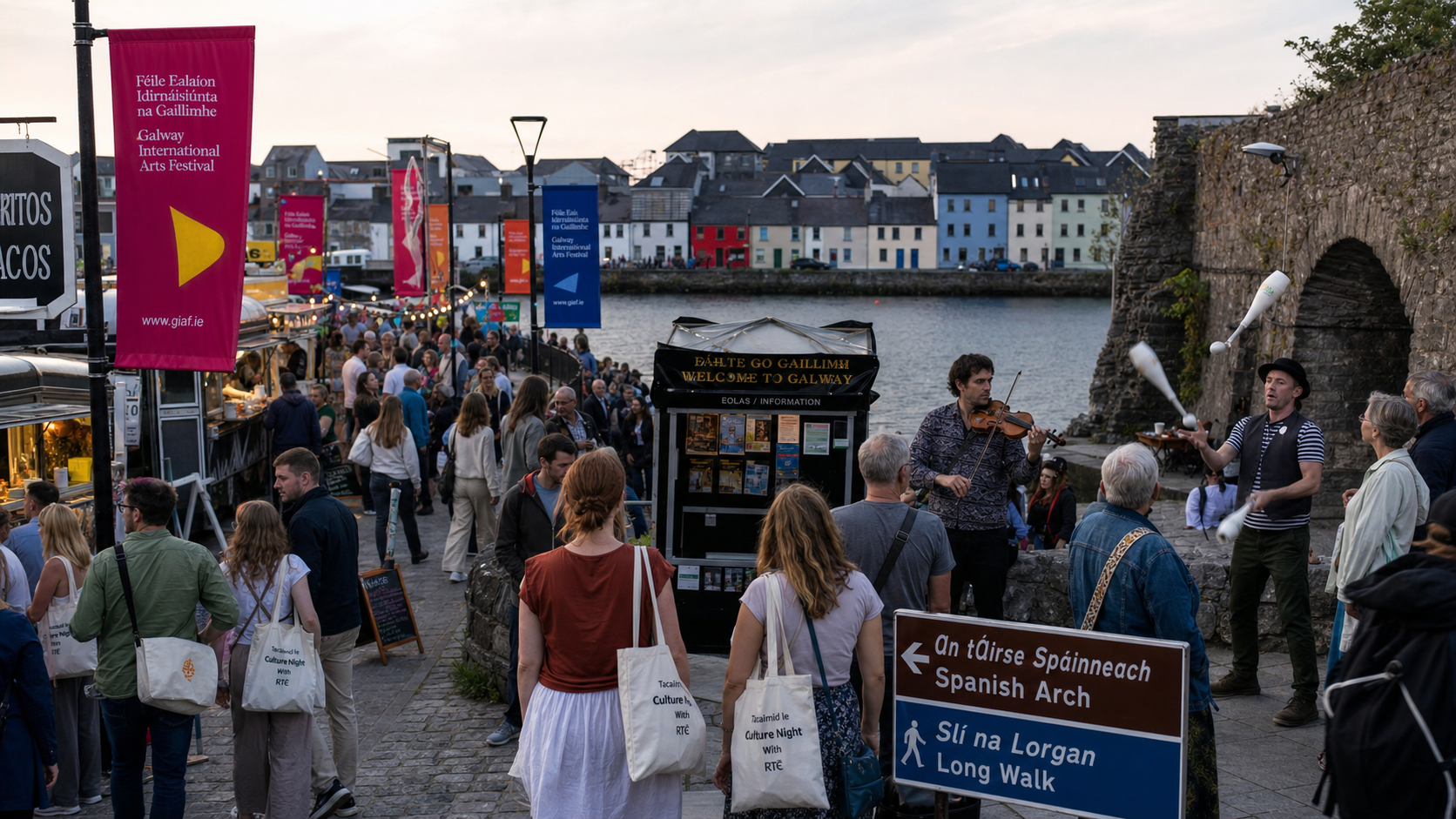
The 49th Galway International Arts Festival is on course for record-breaking attendance figures, with organisers anticipating over 450,000 visitors and an estimated economic impact of approximately €50 million for the Galway region. The festival, which is one of the most significant arts events in Ireland and one of the largest international arts festivals in Europe, is drawing audiences from across Ireland, Britain, and further afield to a programme that spans theatre, visual art, music, street performance, and family events. RTÉ is supporting 21 arts and cultural events across Ireland this July, including a major revival of Dion Boucicault's The Shaughraun by the Druid theatre company.
Background
The Galway International Arts Festival was founded in 1978 and has grown from a small local event into one of the most important arts festivals in Europe. The festival's success is rooted in its commitment to presenting work of the highest international quality alongside the best of Irish and Galway-based arts, and in its ability to transform the city of Galway into a living arts space for the duration of the event. The festival has been instrumental in establishing Galway's reputation as a cultural capital, a reputation that was reinforced by the city's designation as European Capital of Culture in 2020.
The economic impact of the festival on the Galway region is substantial and well-documented. Research commissioned by the festival has consistently shown that the event generates significant spending in the local economy, with visitors spending money on accommodation, food, transport, and retail in addition to their festival tickets. The €50 million figure anticipated for this year's edition would represent a record for the festival and would make it one of the most economically significant cultural events in Ireland.
The festival's relationship with RTÉ, the national broadcaster, is an important part of its profile. RTÉ's support for arts and cultural events across Ireland in July — including 21 events this year — reflects the broadcaster's commitment to its public service remit and its recognition of the importance of arts and culture to Irish society. The Galway festival is the centrepiece of this summer programme, but RTÉ's support extends to events across the country, from the West Cork Literary Festival to the Boyle Arts Festival in County Roscommon.
Key Developments
The 49th Galway International Arts Festival is currently under way, with a programme that includes major international theatre productions, visual art exhibitions, street spectacles, and a wide range of music events. The festival's Big Top, which is one of the largest temporary performance venues in Ireland, is hosting a series of headline shows that have been selling out in advance. The visual art programme, which includes exhibitions in galleries and public spaces across the city, has been particularly well received, with several works generating significant media attention.
The Druid theatre company's revival of The Shaughraun, Dion Boucicault's classic nineteenth-century melodrama, is one of the most anticipated productions of the festival. Druid, which is based in Galway and is one of Ireland's most celebrated theatre companies, has a long history of presenting landmark productions at the festival, and its revival of The Shaughraun — a play that has not been staged in Ireland for many years — is expected to be one of the highlights of the summer arts calendar. RTÉ is providing broadcast support for the production, which will be recorded for future transmission.
The festival has also been notable for its street programme, which brings large-scale outdoor performances to the streets and public spaces of Galway city. These events, which are free to attend, are among the most popular with local residents and casual visitors, and contribute significantly to the festival's overall attendance figures.
Why It Matters
The Galway International Arts Festival is one of Ireland's most important cultural institutions, and its success has implications that extend well beyond the arts sector. The festival's economic impact demonstrates the value of investment in arts and culture as a driver of tourism and economic activity, a point that is particularly relevant at a time when the government is making decisions about arts funding. The festival also plays an important role in Ireland's international reputation, attracting visitors and media attention from across the world and reinforcing the image of Ireland as a country with a rich and vibrant cultural life. For Galway specifically, the festival is a key part of the city's identity and its economic development strategy, and its continued success is essential to maintaining the city's position as one of Ireland's most attractive destinations for visitors and businesses alike.
Local Impact
The economic impact of the festival is felt across the Galway region, from the city centre hotels and restaurants that benefit most directly from the influx of visitors to the rural areas of Connemara and the Aran Islands that attract festival-goers seeking to extend their stay. The festival generates significant employment, both directly through the arts organisations and production companies involved in the programme and indirectly through the hospitality and retail sectors. Local businesses have reported strong trading during the festival period, with many noting that the event is one of the most important weeks of the year for their revenues. The festival also has a significant impact on the local arts community, providing opportunities for Galway-based artists and arts organisations to present their work to a large and diverse audience.
What's Next
The Galway International Arts Festival continues until the end of July, with the final weekend expected to be the busiest of the event. The festival's organisers will begin planning for the 50th edition — a milestone anniversary — immediately after this year's event concludes. The 50th festival, which will take place in 2027, is expected to be a particularly ambitious edition, with special programming to mark the occasion. RTÉ has confirmed its continued support for the festival and for the broader programme of arts and cultural events across Ireland in the coming year.