New E-Scooter Rules Take Effect as Ireland Bans Under-18s and Mandates Helmets Following Surge in Child Brain Injuries
New e-scooter regulations have taken effect in Ireland, banning under-18s from riding the devices, mandating helmets and high-visibility clothing for all users, and doubling fines for offences — measures introduced in response to a 50% increase in traumatic brain injury admissions for children over the past 12 months that has alarmed health authorities and prompted urgent government action.
Background
E-scooters have become one of the most contentious issues in Irish road safety policy over the past several years. The devices, which first appeared on Irish streets in significant numbers around 2020, have grown rapidly in popularity as a convenient and environmentally friendly mode of urban transport. However, their proliferation has been accompanied by a significant increase in accidents, injuries, and near-misses that has raised serious concerns about their safety, particularly for children and young people.
The legal status of e-scooters in Ireland has been ambiguous for years. Unlike in many other European countries, where e-scooters are regulated as a distinct category of vehicle with specific rules about where they can be ridden, at what speed, and by whom, Irish law has not provided a clear framework for their use. This ambiguity has made enforcement difficult and has contributed to a culture of casual disregard for basic safety precautions — riding without helmets, on footpaths, at excessive speeds, and by children who are too young to appreciate the risks.
The data from the Health Service Executive and Children's Health Ireland has been the catalyst for the government's decision to act. A 50% increase in traumatic brain injury admissions for children over the past 12 months — a figure that represents real children with real, life-changing injuries — has made the case for urgent intervention unanswerable. The government's response, while welcomed by health advocates, has also been criticised by some as too little, too late.
Key Developments
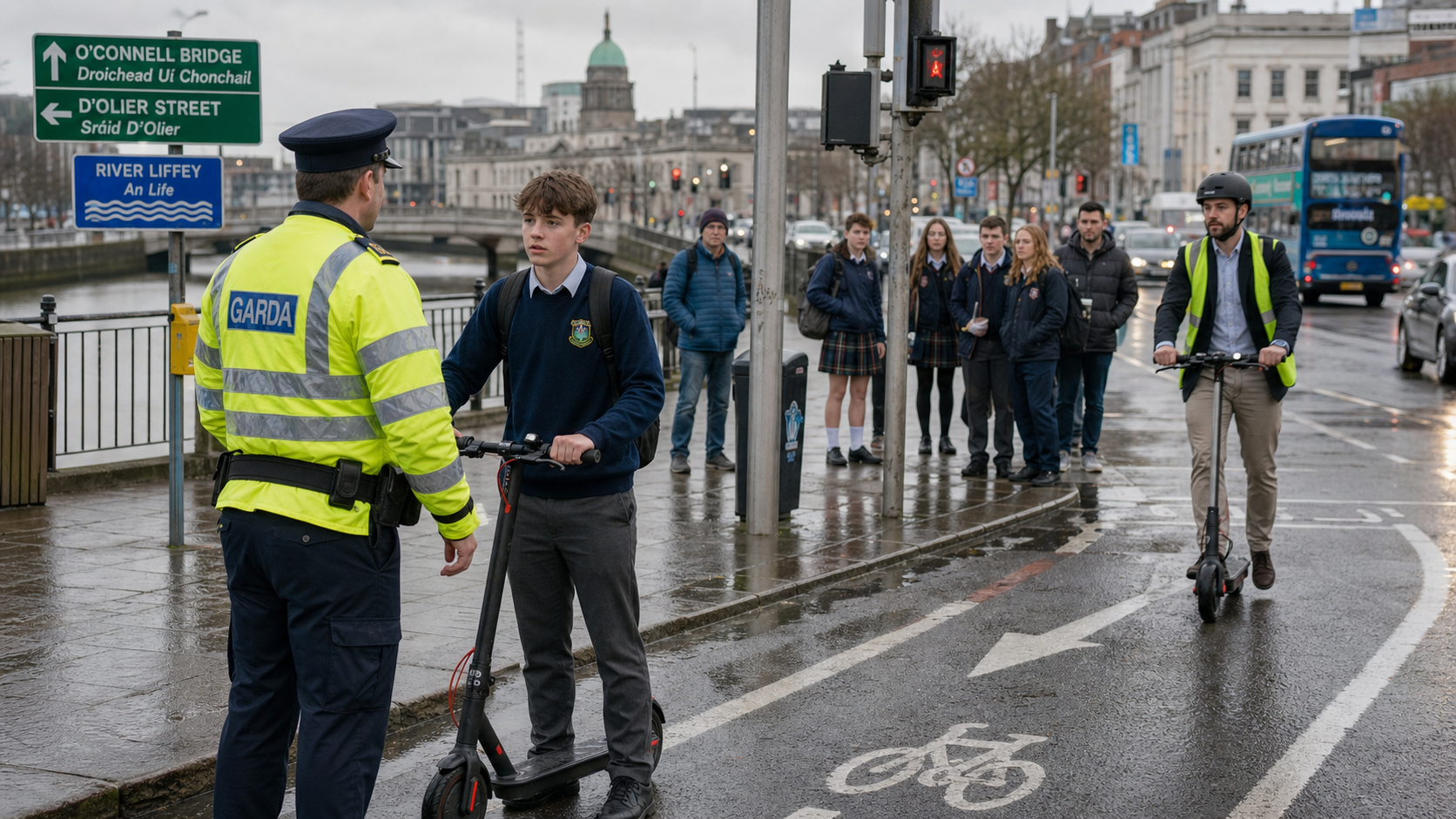
The new regulations, which took effect in late August and early September 2026, introduce several immediate safety measures. E-scooters are now banned for individuals under the age of 18. All e-scooter users are required to wear helmets and high-visibility clothing. On-the-spot fines for e-scooter offences have been raised to €100, and the fees associated with the release of detained e-scooters have been doubled.
The government has also announced plans for further legislation that will classify e-scooters as "mechanically propelled vehicles," introducing a registration and licensing scheme that will apply to all e-scooters in the country, including those already in circulation. New laws will prohibit the sale of e-scooters to minors and restrict the sale of devices that do not meet legal requirements for public road use.
Law enforcement efforts have intensified significantly in 2026, with over 1,400 e-scooters seized and nearly 800 prosecutions recorded in the first part of the year. The government has also agreed to provide additional legal protections to members of An Garda Síochána to assist them when pursuing e-scooters and e-bikes, mirroring systems currently in place in the United Kingdom.
Minister for Transport Eamon Ryan acknowledged that the government had been slow to act on the e-scooter issue. "We should have moved faster," he said. "The evidence of the harm being caused — particularly to children — has been clear for some time, and we should have responded more quickly. These new measures are necessary and proportionate, and they will save lives."
Why It Matters
The e-scooter regulations matter because they represent a belated but necessary intervention in a public health issue that has been causing real harm to real people. Traumatic brain injuries are among the most serious and life-altering injuries that a person can sustain, and the fact that children are being admitted to hospital with such injuries as a result of e-scooter accidents is a failure of public policy that demanded a response.
The regulations also matter because they set a precedent for how Ireland will manage the introduction of new forms of personal transport in the future. The e-scooter experience has demonstrated the risks of allowing new technologies to proliferate without an adequate regulatory framework, and the lessons learned from this episode should inform the government's approach to other emerging transport technologies, including e-bikes, electric cargo bikes, and autonomous vehicles.
The comparison with Northern Ireland is instructive. The NHS in Northern Ireland has been dealing with similar e-scooter injury patterns, but the regulatory framework in Great Britain — where e-scooters are subject to stricter rules — has provided a more effective basis for enforcement. The Irish government's decision to move towards a similar framework is a recognition that the current approach has been inadequate.
Local Impact
In Dublin, where e-scooters are most prevalent, the new regulations have been welcomed by pedestrians and cyclists who have long complained about the dangers posed by e-scooter riders on footpaths and cycle lanes. The Garda Síochána has indicated that enforcement of the new rules will be a priority, with checkpoints and patrols in areas where e-scooter use is most concentrated. In Cork, Galway, and Limerick, local authorities have also indicated that they will work with the Gardaí to enforce the new regulations.
For parents of children who have been using e-scooters, the new age restriction has prompted a range of reactions — from relief that the government has acted to frustration at the loss of a mode of transport that many children have come to rely on. Children's Health Ireland has welcomed the regulations as a necessary step to protect children from serious injury, and has called for a broader public education campaign to raise awareness of the risks associated with e-scooter use.
What's Next
The further legislation to classify e-scooters as mechanically propelled vehicles is expected to be introduced in the Dáil in the autumn session, with implementation of the registration and licensing scheme anticipated in 2027. The government has indicated that it will monitor the impact of the immediate safety measures over the coming months and will consider further action — including an outright ban on e-scooters — if the new regulations do not produce a significant reduction in accidents and injuries. The HSE and Children's Health Ireland will publish updated injury data in early 2027, which will provide the first evidence of whether the new measures are having the desired effect.