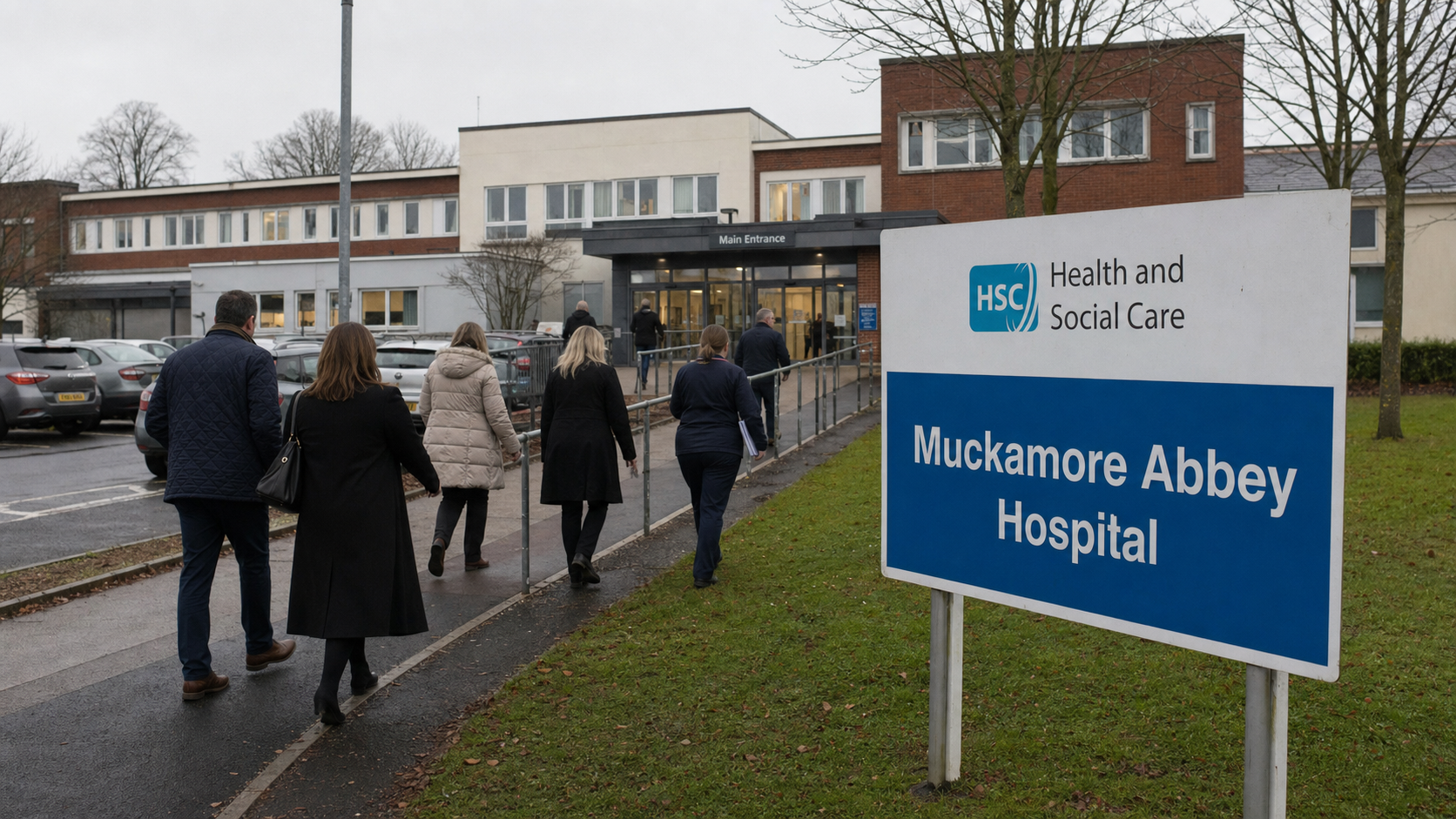
Muckamore Abbey Hospital Inquiry Publishes 106 Recommendations After Years of Evidence
The Muckamore Abbey Hospital Inquiry has published its final report containing 106 recommendations after finding that patients with learning disabilities at the County Antrim hospital were subjected to systematic abuse over a period of more than a decade, including the misuse of medication to render patients compliant, the use of seclusion as punishment, and a closed institutional culture that the Belfast Health and Social Care Trust failed to challenge, in what inquiry chair retired judge Tom Burgess described as "a fundamental failure of the duty of care owed to some of the most vulnerable people in our society."
Background
Muckamore Abbey Hospital near Antrim town has been at the centre of a major safeguarding scandal since 2017, when CCTV footage emerged showing staff physically abusing patients with learning disabilities. The footage led to a major PSNI investigation, the suspension of dozens of staff members, and the establishment of a statutory public inquiry in 2019. The inquiry, which has heard evidence from more than 200 witnesses over seven years, is one of the longest-running public inquiries in Northern Ireland's history.
The hospital, which is operated by the Belfast Health and Social Care Trust, provides long-term care for adults with learning disabilities and complex needs. At the time the abuse was first identified, approximately 90 patients were resident at the hospital, many of whom had been there for years or decades. The inquiry has examined the culture, management, and oversight of the hospital from 2012 to 2020, a period during which the abuse is believed to have been most prevalent.
Key Developments
The inquiry's final report, published on Friday, makes 106 recommendations covering the full range of issues identified during the seven-year investigation. The most significant findings relate to the systematic misuse of PRN — as-needed — medication, which the inquiry found was routinely administered to patients not for clinical reasons but to make them easier to manage. The report describes patients being left in a "zombified" state as a result of excessive sedation, unable to engage with therapeutic programmes or to communicate their needs and wishes.
On seclusion, the inquiry found that patients were placed in bare, windowless rooms for extended periods — in some cases several days — not as a last resort to prevent harm but as a routine response to behaviour that staff found challenging. The report describes this as "a fundamental violation of the dignity and rights of vulnerable people" and finds that it was known to senior management but not effectively challenged.
The inquiry found that the Belfast Trust's oversight of the hospital was "chronically inadequate." Concerns about the hospital's culture had been raised internally from at least 2014, but the Trust's response was characterised by superficial investigations, inadequate follow-up, and a failure to implement the systemic changes that were needed. The report describes this as "a failure of institutional courage" at the highest levels of the Trust's management.
Among the 106 recommendations are calls for the establishment of an independent oversight body for all learning disability inpatient facilities in Northern Ireland, mandatory human rights training for all staff working with people with learning disabilities, a fundamental review of PRN medication protocols, and a new system of unannounced inspections of inpatient facilities. The report also recommends that the Department of Health develop a clear strategy for reducing the number of people with learning disabilities in long-term inpatient care, with a target of reducing the inpatient population by 50 per cent within ten years.
Why It Matters
The Muckamore Abbey inquiry matters because it exposes the consequences of institutional neglect of some of the most vulnerable people in Northern Ireland society. The patients at Muckamore Abbey were entirely dependent on the state for their care and protection, and the inquiry's findings show that the state failed them comprehensively — not through the actions of a few rogue individuals but through systemic failures of culture, management, and oversight that persisted for years.
The report's findings also have implications beyond Muckamore Abbey. The patterns of practice identified — the misuse of PRN medication, the use of seclusion as punishment, the closed institutional culture — are not unique to one hospital. The recommendations are designed to address these patterns across the entire learning disability inpatient sector in Northern Ireland, and their implementation will require sustained commitment from the Department of Health, the Belfast Trust, and the other health trusts that operate similar facilities.
For the families of patients who were abused at Muckamore Abbey, the report's publication is a moment of vindication after years of fighting to have their concerns taken seriously. Many families spent years raising concerns about their relatives' care before the CCTV footage emerged in 2017, and the inquiry's findings confirm that those concerns were justified and that the system failed to respond to them adequately.
Local Impact
The inquiry's findings have been felt most directly by the families of the approximately 90 patients who were resident at Muckamore Abbey during the period under investigation. Many of these families live in the greater Belfast area, and several have been active participants in the inquiry process, giving evidence about their experiences and advocating for systemic change. The Muckamore Families Group, which was established in 2017 to support families through the inquiry process, has welcomed the report's publication but warned that "recommendations without implementation are worthless." In Antrim town, where the hospital is located, local politicians have called for a clear timeline for the implementation of the inquiry's recommendations. The Department of Health has said it will publish an implementation plan within three months.
What's Next
The Department of Health has accepted all 106 recommendations in principle and has committed to publishing an implementation plan within three months. The Belfast Trust has said it will begin implementing the recommendations relating to medication management and seclusion immediately. The PSNI investigation into the abuse at Muckamore Abbey is ongoing, with a number of former staff members facing criminal charges. The first trials are expected to begin in the autumn. The inquiry chair has said he will monitor the implementation of the recommendations and will publish a progress report in two years.