Michael Healy-Rae Resigns as Minister of State in Shock Dáil Announcement
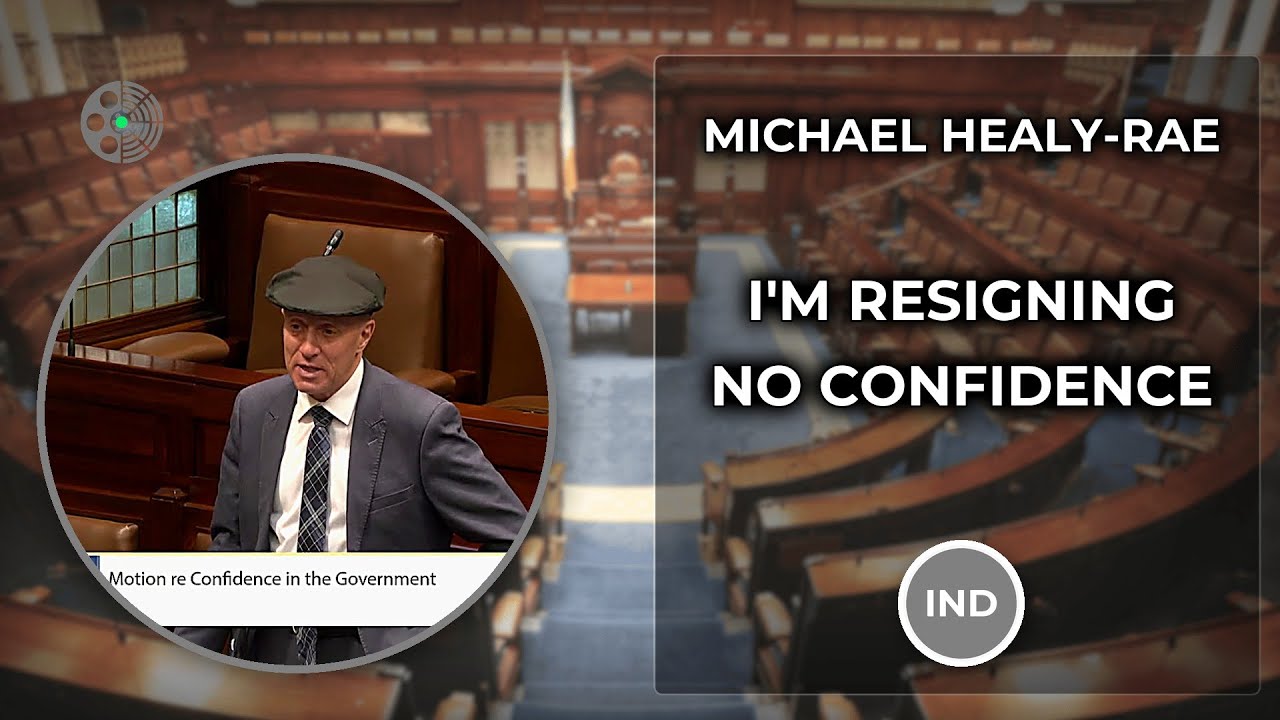
Independent TD Michael Healy-Rae dramatically resigned as Minister of State during a Dáil confidence debate on 14 April 2026, declaring that the Irish government had "let the people down" over the fuel crisis — a shock move that blindsided coalition leaders but ultimately failed to bring down the government, which survived the subsequent confidence vote by 92 votes to 78.
Healy-Rae, who held the role of Minister of State at the Department of Agriculture, Food and the Marine with responsibility for forestry, farm safety, and horticulture, delivered an emotional resignation speech in which he described meeting "grown men who were crying because they can't afford fuel." His departure marked the coalition's first major defection and exposed the fragility of its working majority.
Background
Michael Healy-Rae, born in January 1967, is one of the most recognisable figures in Irish politics — a Kerry independent from a formidable political dynasty founded by his father, Jackie Healy-Rae. First elected to Dáil Éireann in 2011, he has consistently topped the poll in Kerry at every subsequent general election, building his political brand on staunch advocacy for rural and agricultural interests and a reputation for delivering results for his constituency.
He was appointed to the coalition government in January 2025 as part of an arrangement to secure a stable Dáil majority. His appointment was seen as a pragmatic move by the coalition to bring one of the Dáil's most effective rural voices inside the tent. However, the fuel crisis of April 2026 placed him in an impossible position — caught between his ministerial obligations and the fury of the farming and haulage communities that form the bedrock of his political support.
The crisis itself was triggered by a sharp spike in global oil prices resulting from the 2026 Iran war and the disruption to shipping in the Strait of Hormuz. Irish consumers saw diesel prices rise by 28 per cent and petrol prices by 25 per cent in the weeks following the conflict's escalation. A €250 million government package of excise duty cuts, announced in March 2026, was widely perceived as insufficient by those in transport-dependent sectors.
Key Developments
Beginning on 7 April 2026, a week of intense protests brought significant parts of Ireland to a standstill. Led by farmers, hauliers, and transport workers, the demonstrations involved slow-moving convoys and blockades of major motorways, city centres, fuel depots, and the country's only oil refinery at Whitegate. By 11 April, an estimated 600 of Ireland's 1,500 filling stations had run out of fuel. Taoiseach Micheál Martin described the blockade of Whitegate as an "act of national sabotage," a characterisation that further inflamed tensions.
When the opposition tabled a motion of no confidence, Healy-Rae used the debate to announce his resignation. His speech was widely reported as one of the most dramatic moments in recent Dáil history. Despite his departure, the government survived the confidence vote by 92 to 78, with other independent TDs and smaller parties declining to bring down the administration. Healy-Rae subsequently returned to the independent benches, from where he is expected to continue advocating for rural Ireland.
Why It Matters
Healy-Rae's resignation is significant not merely as a political event but as a barometer of public sentiment. The fuel crisis has exposed a deep fault line between urban and rural Ireland, between those who can absorb rising energy costs and those — farmers, hauliers, small business owners — for whom fuel is not a lifestyle expense but an existential one. His decision to walk out of government rather than defend a policy he believed was failing his constituents is a rare act of political principle from a politician more often associated with pragmatic deal-making.
The confidence vote result — 92 to 78 — also reveals how narrow the government's effective majority has become. While the coalition survived, the margin is uncomfortably thin, and the fuel crisis is unlikely to resolve quickly given the ongoing situation in the Strait of Hormuz. Further political turbulence cannot be ruled out.
Local Impact
For Ireland, and particularly for rural communities, the fuel crisis and Healy-Rae's resignation have crystallised a sense of grievance that has been building for years. The cost of living in rural areas — where car dependency is not a choice but a necessity — has been rising steadily, and the fuel price spike has pushed many households and businesses to breaking point. The government's response will be closely watched, and the pressure to deliver meaningful relief has not diminished with the survival of the confidence vote.
What's Next
With Healy-Rae now on the opposition benches, the government must find a replacement for his ministerial role and manage a Dáil arithmetic that has become more precarious. The fuel crisis remains unresolved, and the protests, while temporarily paused, could resume if prices do not fall. Taoiseach Martin has indicated that further measures are under consideration, but the political cost of inaction is now clearly understood.
Sources: The Irish Times — Government Survives Confidence Vote After Healy-Rae Resignation; RTÉ News — Fuel Protests: Government Survives Confidence Motion; TheJournal.ie — 'This Government Have Let the People Down'