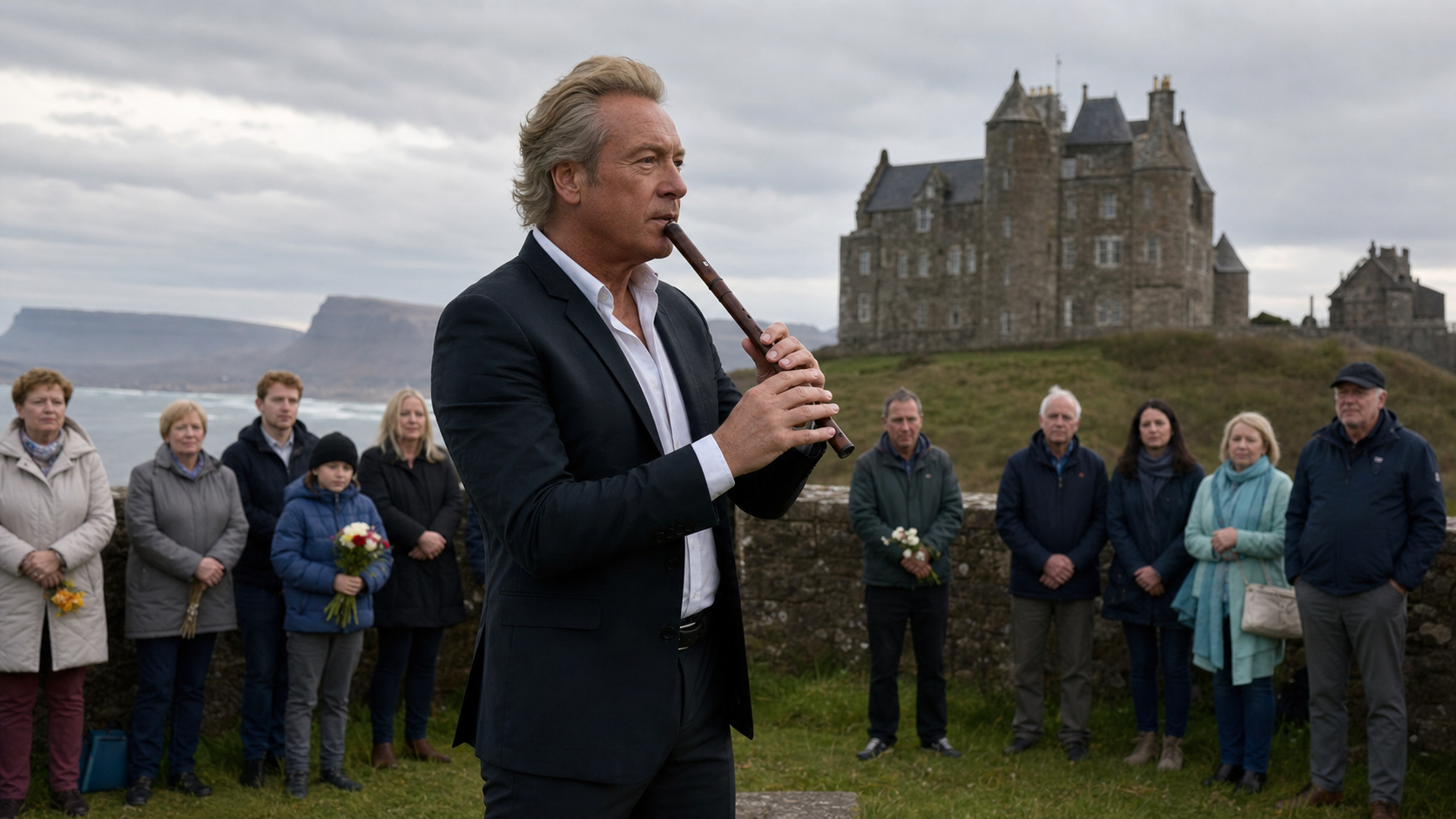
Michael Flatley Plays Jigs at Classiebawn Castle to Honour Mountbatten Victims on 47th Anniversary
Michael Flatley, the Irish-American dancer and musician best known for Riverdance and Lord of the Dance, travelled to Classiebawn Castle in Mullaghmore, County Sligo, on Monday to perform a flute tribute marking the 47th anniversary of the IRA bombing that killed Lord Louis Mountbatten, his grandson Nicholas Knatchbull, crew member Paul Maxwell, and Lady Brabourne in August 1979.
Background
The bombing of the Shadow V fishing boat in Mullaghmore Harbour on 27 August 1979 was one of the most shocking acts of political violence in the history of the Troubles. Lord Louis Mountbatten, the 79-year-old former Viceroy of India and uncle of Prince Philip, was killed along with his 14-year-old grandson Nicholas Knatchbull, 15-year-old local crew member Paul Maxwell from Enniskillen, and Lady Brabourne, who died the following day from her injuries. The attack was carried out by the Provisional IRA and caused international outrage.
Classiebawn Castle, the Victorian Gothic estate on the Mullaghmore headland, had been the Mountbatten family's summer residence for decades. The family had deep connections to the area, and Mountbatten was known to the local community as a familiar presence during the summer months. The castle, which overlooks the bay where the bombing took place, has remained a place of quiet remembrance for those who knew the victims and for the wider community of Mullaghmore.
Michael Flatley, who was born in Chicago to Irish parents and grew up immersed in traditional Irish music before his career as a dancer brought him global fame, has spoken in the past about the importance of music as a bridge between communities and cultures. His visit to Classiebawn was arranged in coordination with Caroline Devine, the custodian of the castle, who noted that the Mountbatten family had historically hosted traditional music evenings at the estate, inviting local musicians and neighbours to participate.
Key Developments
Flatley arrived at Classiebawn by helicopter on Monday, 24 August, accompanied by a small group of musicians including flautist Michael Hurley, banjo player John McMorrow, and accordionist Pat McGurrin. Playing an 1836 cocuswood flute — an instrument of considerable historical and musical significance — Flatley performed a programme of jigs and reels, including "The Belles of Tipperary," a piece he and Hurley had played together nearly 50 years earlier when they competed against one another as teenagers at the All-Ireland Fleadh.
Before the musical tribute, Flatley was taken on a boat tour of the bay by Pat and John Barry, sons of the former head housekeeper at Classiebawn, to view the location where the Shadow V was moored and the site of the explosion. The experience, he said, was deeply moving. He described himself as "non-political" and said his visit was intended to spread "love and joy and art" while acknowledging the tragedy that had occurred in the waters below the castle.
The visit was reported by the Irish Times and drew a warm response from those who knew the history of the site. Caroline Devine noted that the Mountbatten family had always maintained a connection to the local community and that the musical tribute felt consistent with the spirit of the evenings that had been held at the castle in earlier decades.
Why It Matters
Flatley's gesture at Classiebawn is a small but meaningful act of remembrance in a landscape still marked by the legacy of the Troubles. The 1979 Mullaghmore bombing is one of a number of atrocities from that period that have never fully receded from public consciousness — in part because the victims included a figure of international prominence, and in part because the community of Mullaghmore itself bore the trauma of violence in a place associated with summer and leisure. The 47th anniversary falls at a moment when legacy issues remain politically contested in Northern Ireland, making acts of personal remembrance — conducted outside the formal political arena — particularly resonant.
Traditional music has long served as a medium through which Irish communities process grief, celebrate life, and maintain connection across generations. Flatley's choice to mark the anniversary with music rather than words reflects an understanding of that tradition. The presence of an 1836 flute — an instrument that predates the Famine, the partition of Ireland, and the Troubles themselves — adds a layer of historical depth to what might otherwise be read as a simple celebrity gesture.
Local Impact
In Mullaghmore and the wider north Sligo area, the anniversary of the bombing is observed quietly each year. The local community has long maintained a respectful relationship with the memory of the victims, and the Maxwell family — Paul Maxwell was from Enniskillen — have remained connected to the area over the decades. Flatley's visit, and the music played at Classiebawn, offered the community a moment of reflection that was welcomed by those who were present.
What's Next
The 47th anniversary falls two days before the actual date of the bombing, 27 August. Formal commemorations are expected to take place on that date, as they have in previous years. The Mountbatten family, who continue to visit the area periodically, have not commented publicly on Flatley's tribute. The castle itself remains in private ownership and is not open to the public.