Masked Republican Colour Party Marches Through West Belfast for Easter Commemoration
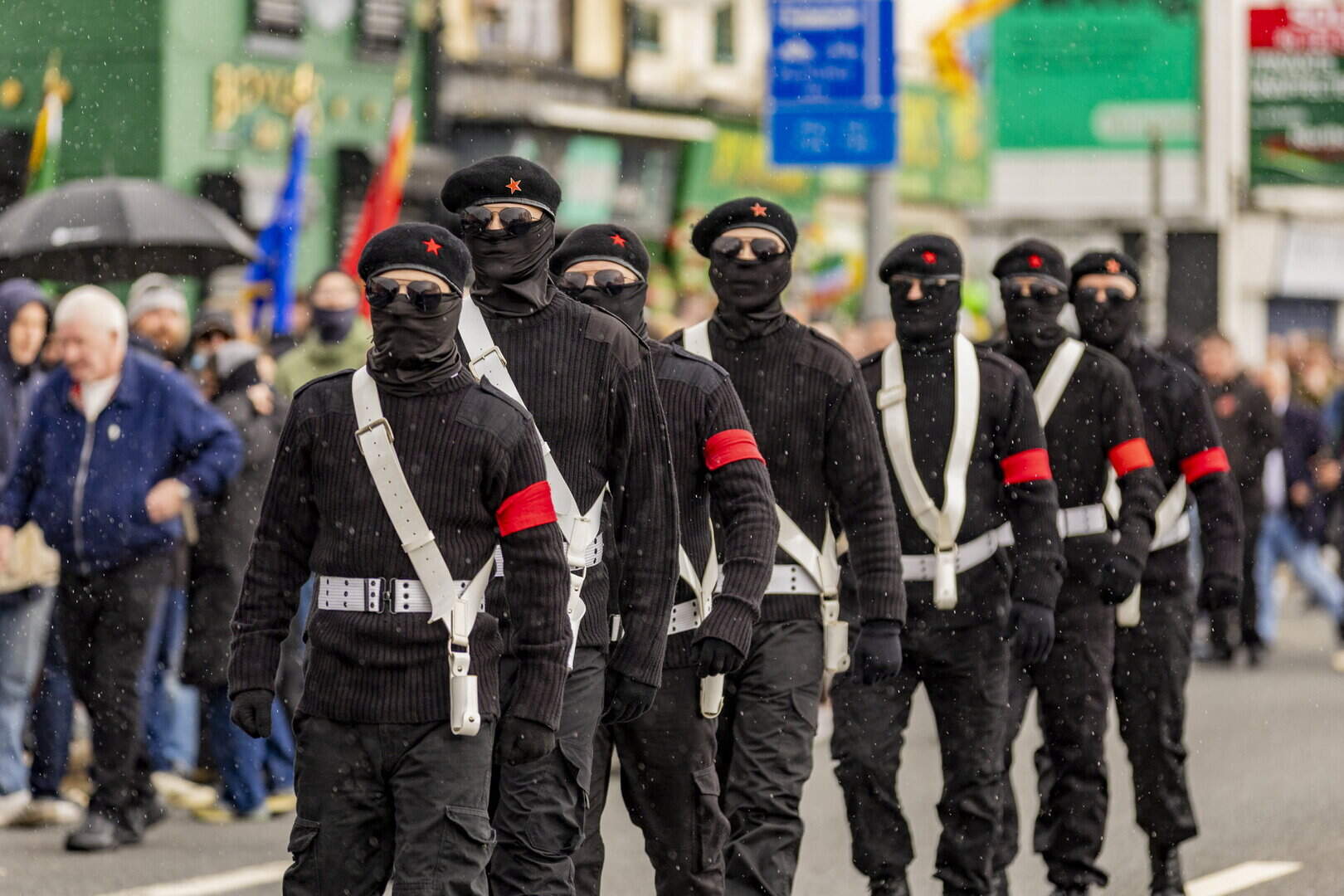
A masked republican colour party marched through west Belfast on Easter Sunday afternoon as part of an Easter commemoration organised by the Irish Republican Socialist Party (IRSP), drawing sharp condemnation from unionist politicians who described the event as an "insult to victims of terrorism" — and prompting questions about the policing of paramilitary-style displays in Northern Ireland.
The procession, which began at Dunville Park and made its way to Milltown Cemetery, featured participants dressed in black attire, complete with berets and sunglasses, their faces obscured by masks. A PSNI presence was visible along the parade route, monitoring the proceedings as they unfolded. The event passed without incident as the participants completed their march to the republican plot within Milltown Cemetery for a commemoration ceremony.
Background
The Irish Republican Socialist Party was founded in 1974 and is widely considered to be the political wing of the Irish National Liberation Army (INLA), a paramilitary group formed in the same year by former members of the Official Irish Republican Army. The INLA engaged in a violent campaign during the Troubles, targeting the British Army and the Royal Ulster Constabulary. The group was responsible for a number of high-profile attacks, including the 1979 assassination of Conservative politician Airey Neave and the 1982 Droppin Well bombing, which killed 17 people. The INLA declared a ceasefire in 1998 following the Good Friday Agreement and officially ended its armed campaign in 2009.
The IRSP continues to hold annual Easter commemorations as part of the republican calendar, marking the 1916 Easter Rising and those who died in subsequent conflicts. The 2026 commemorations took place against the backdrop of the 110th anniversary of the Rising, with events held across the island of Ireland. The state commemoration in Dublin, attended by the President of Ireland and Taoiseach Micheál Martin, provided a contrasting image of how the Easter Rising is marked at an official level.
The display of paramilitary-style clothing, flags, and emblems at parades and commemorations is a highly sensitive issue in Northern Ireland. There is no specific law banning all such displays, but the PSNI has the power to intervene if it believes a display constitutes a criminal offence, is intended to intimidate, or is likely to lead to a breach of the peace. In January 2026, the PSNI issued new service guidance clarifying that officers should act to remove harmful displays when safe to do so, and that not taking action is "not an option" when a display causes harm.
Key Developments
The Ulster Unionist Party (UUP) leader condemned the parade, describing it as an insult to victims of terrorism. The appearance of masked individuals in paramilitary-style uniforms on the streets of Belfast remains deeply sensitive given the legacy of the Troubles and the ongoing work of reconciliation in Northern Ireland. The Democratic Unionist Party and Traditional Unionist Voice were also vocal in their criticism, with TUV leader Jim Allister accusing the Executive of tolerating the promotion of republican terrorism.
Nationalist parties were more circumspect. Sinn Féin did not condemn the IRSP march but emphasised the importance of peaceful and democratic means of achieving political goals. The SDLP, which has consistently rejected violence, was more critical of the paramilitary displays while stressing the need for dialogue and understanding. The PSNI confirmed it would review footage from the event as part of its ongoing monitoring of paramilitary-style activity.
Why It Matters
The annual Easter commemorations in Northern Ireland remain a sensitive and contested issue, reflecting the unresolved tensions that persist in the region despite the peace process. The appearance of masked colour parties raises fundamental questions about the boundaries of acceptable commemoration and the ongoing influence of dissident republican groups. For victims of INLA violence and their families, the sight of masked figures marching through Belfast streets is a deeply painful reminder of the past. The divided political reaction — condemnation from unionists, silence from mainstream nationalism — illustrates how far Northern Ireland still has to travel on the road to genuine reconciliation.
Local Impact
For Belfast residents, particularly those in west Belfast, the Easter period brings a complex mix of commemoration, community, and controversy. The IRSP march is one of several republican events that take place across the city during the Easter weekend, and its presence on the streets of a community still healing from the Troubles is felt acutely. The PSNI's monitoring of such events requires significant resources and careful judgement, balancing the right to peaceful assembly against the need to prevent intimidation. Community leaders and victims' groups have called for greater clarity from both the PSNI and political parties on where the line should be drawn.
What's Next
The PSNI is expected to review footage from the event as part of its ongoing monitoring of paramilitary-style activity in Northern Ireland. Political debate about the appropriateness of masked parades is likely to continue in the days ahead, with calls for the Parades Commission and the PSNI to take a firmer approach to future events of this nature.
Full coverage at Belfast Telegraph. Further reporting on similar events is available at BBC News.