Martha's Rule Hailed for Saving Hundreds of Lives Across NHS England
An NHS initiative known as 'Martha's Rule', which gives patients and their families the right to request an urgent second opinion from a critical care team, is being hailed as a major success after being credited with saving hundreds of lives in its first few months. Launched in September 2024, the scheme has been used over 10,000 times, leading to significant changes in treatment for nearly 1,900 patients and preventing hundreds of potential deaths.
Background
Martha's Rule is named in memory of 13-year-old Martha Mills, who died in 2021 from sepsis. Martha's parents had repeatedly raised concerns about her deteriorating condition at a London hospital, but these were not acted upon in time. A coroner later ruled that Martha would likely have survived if she had been moved to intensive care earlier. The tragedy and her parents' subsequent campaign for better patient advocacy led to the development of Martha's Rule. The core principle is to empower patients and their families, who often spot subtle signs of deterioration, to formally escalate care and trigger a critical care review if they feel their concerns are being dismissed.
Key Developments
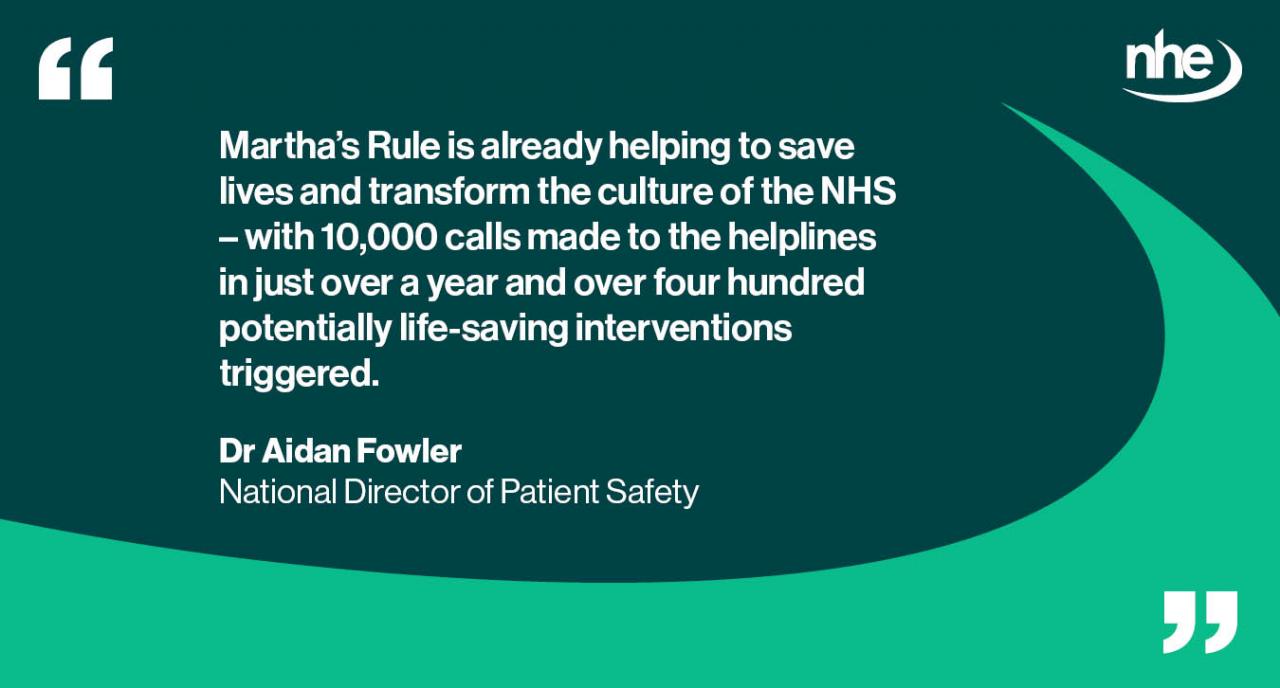
The rule was rolled out across all NHS England hospitals in September 2024. New data released by NHS England reveals the profound impact it has had in a short period. In the first six months of operation, the service was activated over 10,000 times by concerned patients or their relatives. These calls for a second opinion resulted in treatment plans being altered for 1,885 patients. Crucially, among these cases, there were 446 instances where the intervention was deemed to be potentially life-saving, where the critical care team's assessment led to an immediate and necessary escalation of treatment that prevented a fatal outcome. The figures provide powerful evidence that the system is working as intended, providing a vital safety net for patients. Source: NHS England News.
Why It Matters
Martha's Rule represents a significant cultural shift within the NHS, moving towards a model where patients and their families are treated as active partners in their care. It formally acknowledges that the people who know the patient best can be the first to notice when something is wrong. By providing a clear and simple process for escalating concerns, it bypasses the traditional hospital hierarchy that can sometimes make it difficult for junior staff or worried relatives to challenge the decisions of senior clinicians. The success of the scheme demonstrates that empowering patients is not just a matter of good practice, but a crucial component of patient safety. It has the potential to prevent hundreds of avoidable deaths each year and improve trust between the public and the health service.
Local Impact
While Martha's Rule is currently an NHS England initiative, its success is being watched closely by health authorities in Northern Ireland, Scotland, and Wales. Patient safety groups and politicians in Northern Ireland have already called for a similar system to be implemented locally. The evidence from England provides a compelling case for its adoption. Implementing a 'Martha's Rule' for Northern Ireland would offer the same reassurance to patients and families in hospitals in Belfast and across the province, ensuring that their concerns are always heard and acted upon, and potentially saving lives as a result.
What's Next
NHS England will continue to monitor the data from Martha's Rule and will likely use the findings to further refine the process. The success of the initiative will strengthen the case for it to be adopted as a standard of care across all UK nations. For Martha's parents, the success of the rule is a powerful and lasting legacy for their daughter. Their campaign has already transformed patient safety in England and looks set to do so across the rest of the country, ensuring that other families do not have to endure the same preventable loss that they did. Read the original announcement on the NHS England website.