Irish Public Has Low Confidence in Pandemic Preparedness as Government Publishes New Research and Readiness Monitor
A new survey has found low levels of public confidence in the Irish government's preparedness for the next pandemic, as the Minister for Health publishes new research on pandemic and emergency preparedness alongside a Pandemic Preparedness Monitor designed to track Ireland's readiness across key indicators — findings that come six years after the Covid-19 pandemic exposed significant gaps in Ireland's public health infrastructure and as the World Health Organisation continues to warn that the risk of another major pandemic remains high.
Background
Ireland's experience of the Covid-19 pandemic was, in many respects, a test of the country's public health infrastructure that it did not fully pass. The initial response — the lockdowns, the public health messaging, the vaccine rollout — was broadly effective, and Ireland's mortality rate compared favourably with many comparable countries. But the pandemic also exposed significant weaknesses: inadequate intensive care capacity, a fragmented public health system, insufficient stockpiles of personal protective equipment, and a contact tracing infrastructure that had to be built from scratch in the middle of a crisis.
The lessons of Covid-19 prompted a significant review of Ireland's pandemic preparedness, with the government commissioning a series of reports and establishing new structures — including the Health Security Agency — designed to improve the country's ability to respond to future health emergencies. The publication of new research and the Pandemic Preparedness Monitor this week represents the latest step in that process, providing a framework for tracking Ireland's progress against a set of key preparedness indicators.
The World Health Organisation has consistently warned that the risk of another major pandemic remains high, with the emergence of new pathogens, the ongoing evolution of existing viruses, and the increasing frequency of zoonotic spillover events — the transmission of diseases from animals to humans — all contributing to a threat environment that is, if anything, more challenging than it was before Covid-19. Ireland's preparedness for that threat is therefore not an abstract policy question — it is a matter of direct relevance to the health and wellbeing of the population.
Key Developments
The new survey, published alongside the research and the Pandemic Preparedness Monitor, found that a majority of Irish adults have low or very low confidence in the government's ability to manage the next pandemic effectively. The survey, which was conducted by a leading market research firm on behalf of the Department of Health, found that concerns about hospital capacity, the availability of personal protective equipment, and the coordination between different parts of the health system were the most commonly cited reasons for low confidence.
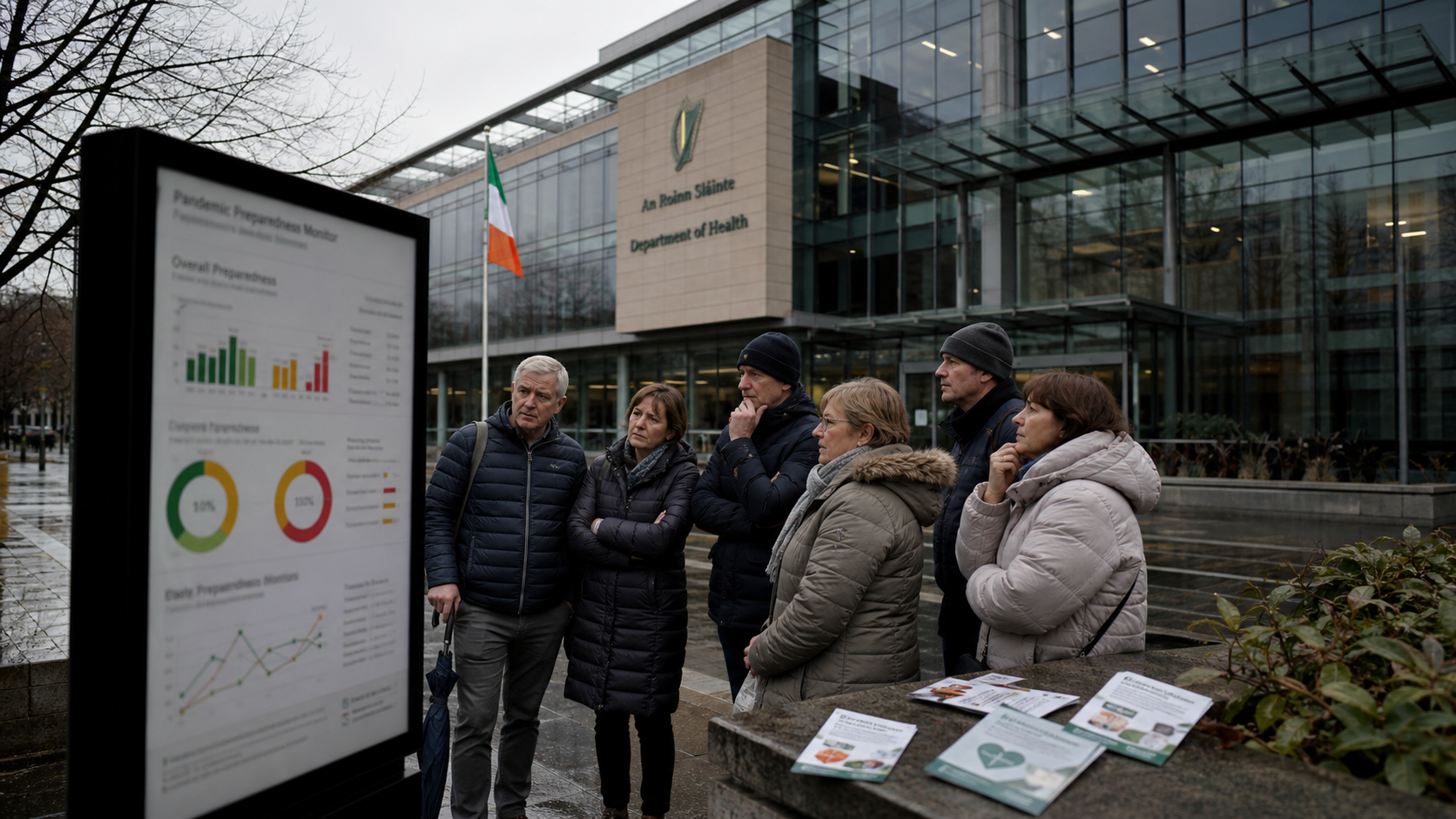
The Pandemic Preparedness Monitor, which will be updated annually, tracks Ireland's readiness across a range of indicators including intensive care capacity, stockpiles of essential medicines and equipment, the strength of the public health surveillance system, and the robustness of the legal and governance frameworks for managing health emergencies. The initial assessment identifies several areas where Ireland's preparedness has improved since Covid-19 — including the establishment of the Health Security Agency and the expansion of intensive care capacity — but also highlights areas where significant gaps remain.
Minister for Health Stephen Donnelly described the publication of the research and the monitor as "an important step in building a more resilient health system," but acknowledged that there is "more work to be done" to address the gaps identified. He indicated that the government will publish a revised pandemic preparedness action plan before the end of 2026, setting out specific targets and timelines for addressing the areas of weakness identified by the monitor.
Why It Matters
The low public confidence in pandemic preparedness matters because public trust is itself a component of pandemic preparedness. A population that does not trust the government's ability to manage a health emergency is less likely to comply with public health measures when they are introduced, less likely to take up vaccines, and more likely to seek information from unreliable sources. The erosion of public trust in institutions — a trend that has been documented across many countries in the aftermath of Covid-19 — is therefore not just a political problem but a public health one.
The publication of the Pandemic Preparedness Monitor is a positive development in that it creates a framework for accountability — a set of measurable indicators against which the government's performance can be assessed over time. But the monitor is only useful if the government acts on its findings, and the history of pandemic preparedness planning in Ireland — where reports have been commissioned, recommendations made, and action deferred — suggests that sustained political commitment will be required to translate the monitor's findings into genuine improvements in preparedness.
Local Impact
The pandemic preparedness research has particular relevance for communities that were most severely affected by Covid-19 — the elderly, those with underlying health conditions, and those living in areas with limited access to healthcare. In Dublin, the concentration of population and the pressure on the city's hospital network — including St James's Hospital, the Mater, and Beaumont — means that any future pandemic would place enormous strain on the capital's health infrastructure. In rural areas, the challenges are different but equally significant: limited access to specialist care, long distances to hospital, and the particular vulnerability of isolated older people. The HSE's regional health areas, which are being established as part of the ongoing health service reform, are expected to play a central role in pandemic preparedness planning at a local level.
What's Next
The government will publish a revised pandemic preparedness action plan before the end of 2026, setting out specific targets and timelines for addressing the gaps identified by the Pandemic Preparedness Monitor. The Health Security Agency will publish its first annual report in October, providing a detailed assessment of Ireland's health security posture. The WHO's next global pandemic preparedness review, which will assess the readiness of all member states, is scheduled for 2027, and Ireland's performance in that review will be an important test of the progress made since Covid-19.