Limerick Boxer Lee Reeves Remains Critical but Stable in Hospital After Knockout Defeat at Dublin's 3Arena
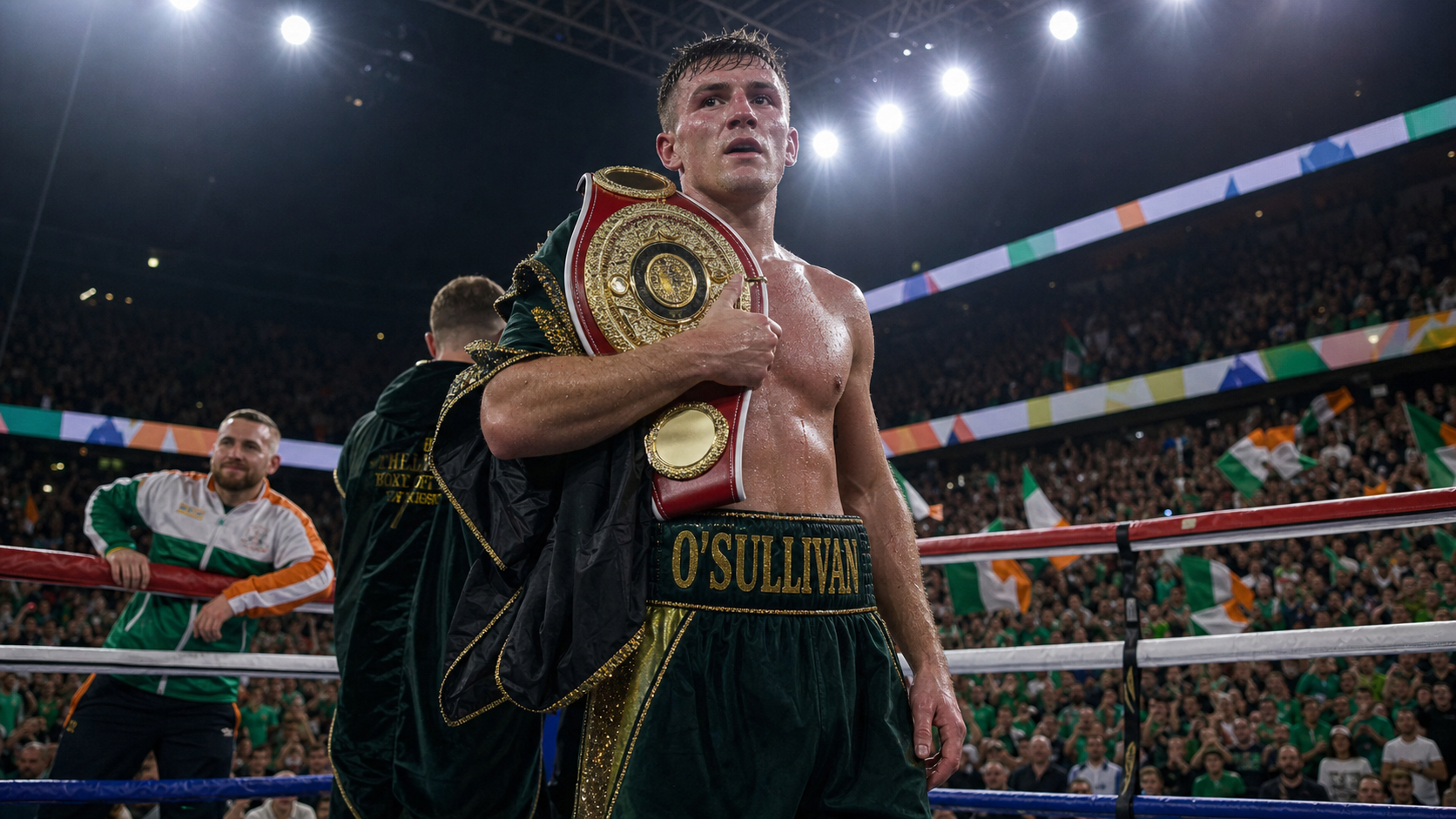
Limerick boxer Lee Reeves, 31, remains in a critical but stable condition in hospital following a heavy knockout defeat to Gary Cully in the 10th round of their BUI Celtic super-lightweight title contest at the 3Arena in Dublin on Saturday night, August 1, with Queensberry Promotions confirming his condition and the Irish boxing community uniting in prayer and support for a man described by those who know him as one of the most admired figures in Limerick sport and community life.
Background
Lee Reeves is a professional boxer from Roxboro in Limerick city, a community that has produced a remarkable number of talented fighters over the decades and which has followed his career with enormous pride. Outside the ring, Reeves serves as a soldier with the 12th Battalion at Sarsfield Barracks in Limerick — a dual identity as athlete and serviceman that has made him a particularly respected figure in the city. He is also an active ambassador for Limerick Treaty Suicide Prevention, a charity that works to address the mental health crisis that has affected Limerick and many other Irish communities in recent years.
Reeves had built a solid professional record before Saturday's contest, establishing himself as a credible contender in the super-lightweight division and earning the opportunity to compete for the BUI Celtic title — a significant prize in the Irish professional boxing landscape. His opponent, Gary Cully, is one of the most accomplished Irish professional boxers of his generation, and the contest was anticipated as a genuine competitive examination for both fighters.
The 3Arena in Dublin has hosted some of the most significant nights in Irish professional boxing in recent years, and Saturday's card — promoted by Queensberry Promotions, the company founded by Frank Warren — attracted a large and enthusiastic crowd. The Reeves versus Cully contest was one of the headline bouts of the evening.
Key Developments
The fight was competitive through the early rounds, with both men landing significant shots and the contest appearing evenly balanced. In the 10th round, however, Reeves suffered a heavy knockout that left him requiring immediate medical attention in the ring. Medical personnel were on hand within seconds, and Reeves received treatment for several minutes before being stretchered from the ring and transported to hospital by ambulance.
Queensberry Promotions issued a statement confirming that Reeves remains in a critical but stable condition, and promoter Frank Warren expressed that he and his team are in constant contact with those supporting Reeves and that updates will be provided as they become available. Gary Cully, visibly distressed in the aftermath of the fight, expressed his concern and relayed his prayers for Reeves' recovery, a response that was widely praised for its humanity and decency.
Tributes have poured in from across the Irish boxing community and beyond. Prayers were offered for Reeves' recovery at Saint Patrick's Garrison Church in Galway, reflecting the reach of his reputation beyond his home city. Community groups in Limerick have organised prayer vigils and fundraising initiatives to support Reeves and his family during what is an extraordinarily difficult time.
Why It Matters
The injury to Lee Reeves has reignited the debate about safety in professional boxing — a debate that is as old as the sport itself and which has never been fully resolved. Boxing's defenders argue that the sport, properly regulated and medically supervised, provides opportunities for young people from disadvantaged backgrounds that few other activities can match, and that the risks, while real, are accepted freely by informed adults. Its critics argue that no amount of regulation can make a sport whose explicit objective is to render an opponent incapable of continuing inherently safe, and that the human cost — measured in injuries like the one suffered by Reeves — is too high. The Irish Athletic Boxing Association and the BUI have both indicated they will review the medical protocols in place at Saturday's event, though initial indications are that the ringside medical response was prompt and professional.
Local Impact
In Limerick, the news of Reeves' condition has been met with an outpouring of community solidarity. His colleagues at Sarsfield Barracks have been in close contact with his family, and the Defence Forces have offered whatever support is required. The Limerick Treaty Suicide Prevention charity, of which Reeves is an ambassador, has received a significant increase in donations since news of his condition became public, with supporters citing his advocacy work as an inspiration. Local politicians, including Limerick's TDs and city councillors, have expressed their support for Reeves and his family and have called for a review of the safety protocols governing professional boxing in Ireland.
What's Next
Reeves' medical team will provide updates on his condition as his treatment progresses. The BUI and Queensberry Promotions have both indicated they will cooperate fully with any review of the circumstances of the fight and the medical response. The Irish Athletic Boxing Association has called for a meeting of its medical committee to review the protocols in place at professional boxing events in Ireland. The wider boxing community will be watching Reeves' recovery with enormous concern and hope, and the sport's governing bodies will face difficult questions about how to balance the preservation of boxing as a competitive sport with the imperative to protect the health and safety of those who participate in it.