Liam Neeson's Tuam Babies Film Opens in Irish Cinemas as Forensic Excavation Continues at Site
The Lost Children of Tuam, produced by Liam Neeson and directed by Frank Berry, has opened in Irish cinemas following its world premiere at the Galway Film Fleadh — where it won the award for Best Irish Film — bringing the story of Catherine Corless's extraordinary investigation to a mainstream audience at a moment when forensic archaeologists are still recovering the remains of children from the Tuam site.
Background
The story of the Bon Secours Mother and Baby Home in Tuam, County Galway, is one of the most disturbing chapters in modern Irish history. Between 1925 and 1961, the home housed unmarried mothers and their children, who were subjected to conditions of severe deprivation and neglect. When Catherine Corless, a local amateur historian, began researching the home in the early 2010s, she discovered that 796 children had died at the facility during that period — but that there were no corresponding burial records. Her subsequent investigation revealed that the children had been buried in an unmarked mass grave on the site, in what had been a sewage tank.
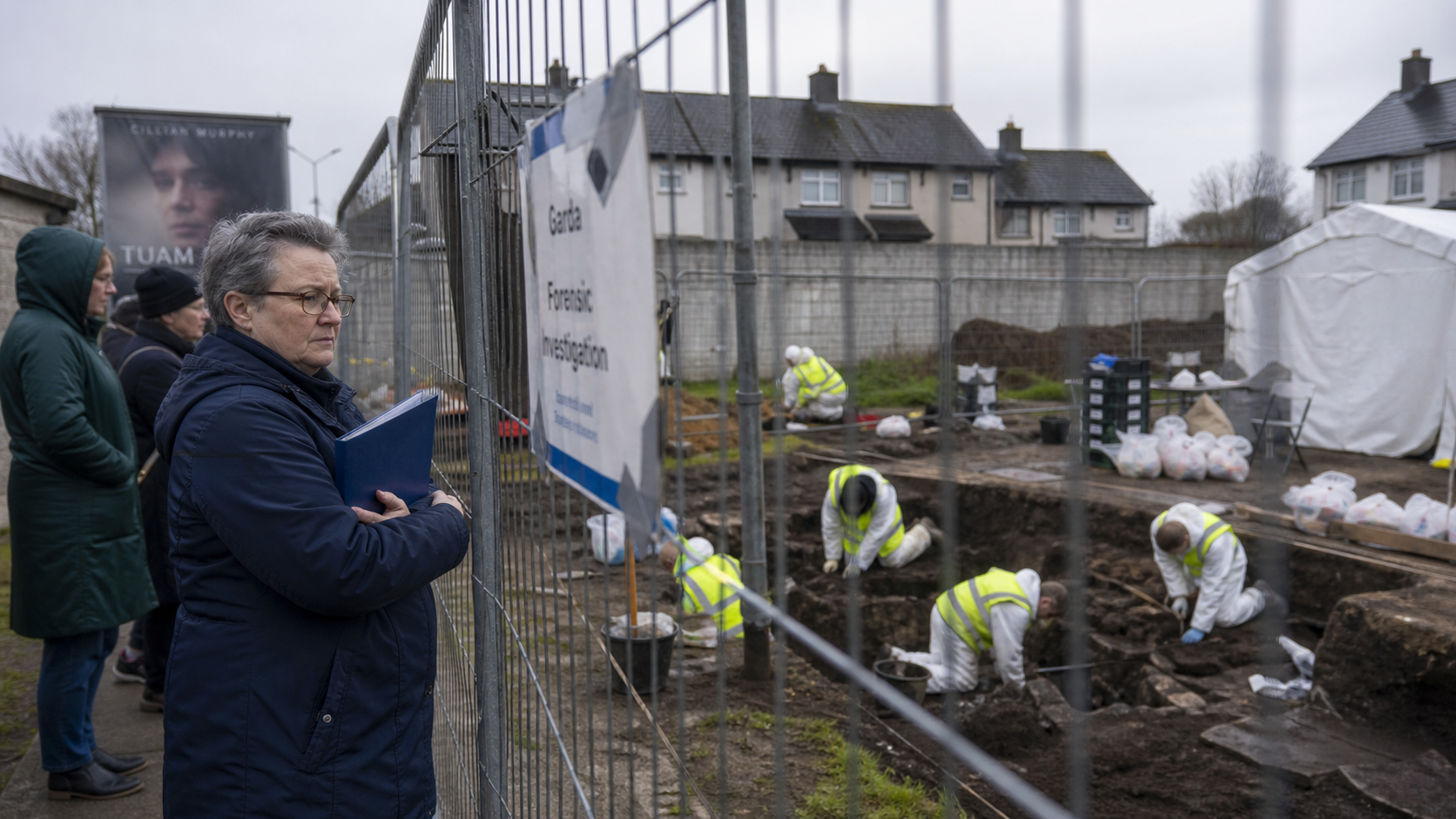
Corless's findings, which she published in a local history journal in 2012 and which were subsequently reported internationally, triggered a national reckoning with Ireland's treatment of unmarried mothers and their children. The Mother and Baby Homes Commission of Investigation, established in 2015, confirmed the scale of the tragedy and documented the conditions in which the children and their mothers had lived. The Irish Government issued a formal apology in 2021, and a forensic excavation of the Tuam site began in 2025, with archaeologists having recovered the remains of 99 infants and children to date.
Liam Neeson, who grew up in Ballymena in County Antrim and was raised in the Catholic Church, has spoken about feeling a "quiet rage" and a "deep sense of obligation" when he read a 2017 New York Times article about Corless's investigation. The film, which marks Neeson's first time serving as a producer, was developed in close collaboration with Corless herself, who has described Monica Dolan's performance as "fantastic" and "true to life."
Key Developments
The Lost Children of Tuam held its world premiere at the Galway Film Fleadh in July 2026, where it won the award for Best Irish Film — a recognition that reflected both the quality of the filmmaking and the significance of the subject matter. The film subsequently screened at the Toronto International Film Festival in September, where it attracted significant international attention and generated strong reviews from critics who praised director Frank Berry's sensitive and restrained approach to the material.
The film opened in Irish cinemas on 25 September 2026, with a UK release scheduled for 9 October. Monica Dolan's performance as Corless has been widely praised, with critics noting the precision and empathy with which she captures the determination and emotional resilience of a woman who refused to accept official silence in the face of overwhelming evidence of institutional wrongdoing. Neeson, who appears briefly in the film, has spoken about the importance of ensuring that the narrative remained grounded in the factual realities of Corless's research rather than becoming a conventional dramatic thriller.
The film's release coincides with the ongoing forensic excavation at the Tuam site, where an international team of archaeologists has been working since 2025 to recover and identify the remains of the children buried there. The excavation is expected to continue for several more years, and the film's release has renewed public interest in the progress of the work and in the question of when the children's remains will be formally identified and given a proper burial.
Why It Matters
The Lost Children of Tuam matters because it ensures that the story of the Tuam babies — and of the broader system of mother and baby homes that operated across Ireland for much of the twentieth century — remains in the public consciousness at a moment when there is a risk that the initial shock of the revelations will fade into the background of Irish public life. The film does not allow that to happen. By placing Catherine Corless at the centre of the narrative and by depicting her investigation with documentary precision, it makes the story personal and immediate in a way that official reports and government apologies cannot.
The film also arrives at a moment when the question of institutional accountability — for the Church, for the state, and for the medical and social work professions that operated within the mother and baby home system — remains unresolved. The Mother and Baby Homes Commission's report documented the scale of the tragedy but was criticised by survivors and their advocates for failing to assign individual responsibility. The film does not attempt to resolve that question, but it keeps it alive in a way that is essential for the ongoing process of reckoning.
Local Impact
In Tuam, where the film's subject matter is not history but living memory for many residents, the release has been received with a mixture of pride and pain. Catherine Corless, who has lived in the town throughout her investigation and who has faced considerable personal pressure as a result of her work, has spoken about the importance of the film in ensuring that the children are not forgotten. The Galway Film Fleadh premiere, held in the city closest to Tuam, was attended by survivors and their families, and the emotional response to the film in that context was described by those present as overwhelming. The film is being shown in cinemas across Connacht, and special screenings have been organised for survivor groups and advocacy organisations.
What's Next
The Lost Children of Tuam opens in UK cinemas on 9 October 2026, with a wider international release expected in the following months. The film has been submitted for consideration for the Academy Awards in the Best International Feature Film category, and its Toronto screening has generated interest from US distributors. The forensic excavation at the Tuam site is expected to continue through 2027 and beyond, with the identification of individual children's remains dependent on the availability of DNA samples from surviving family members. The Irish Government has committed to funding the excavation and to providing a dignified burial for all identified remains.