Katie Taylor Bows Out at the Top: Three-Time Undisputed Champion Leaves Gloves in the Ring After Croke Park Farewell
Katie Taylor has retired from professional boxing as a three-time undisputed world champion, defeating French opponent Flora Pili on a unanimous points decision at a sold-out Croke Park in Dublin on Saturday night — a performance of controlled brilliance before more than 80,000 spectators that confirmed, if any confirmation were needed, that the Bray woman is the greatest female boxer in the history of the sport.
Background
Katie Taylor's career is one of the most remarkable in the history of Irish sport. She won five consecutive World Amateur Boxing Championships between 2006 and 2012, and claimed Olympic gold at the London 2012 Games in the inaugural women's lightweight event — a victory that was watched by more people in Ireland than any sporting event in the country's history to that point. She turned professional in 2016, at the age of 30, and proceeded to dominate women's professional boxing in a way that no fighter of any gender had done in the modern era.
Taylor became the undisputed lightweight champion in 2019, unifying all four major world titles in a single weight class — a feat that had eluded many of the sport's greatest male fighters. She subsequently moved up to super-lightweight, where she again unified the major titles, becoming a two-time undisputed champion. Her final fight, against Flora Pili, was for the vacant WBC super-lightweight title, which she claimed with a performance that belied her 40 years and the accumulated wear of a career spanning three decades.
The Croke Park fight was the culmination of years of negotiation between Matchroom Boxing, Aiken Promotions, and the GAA. Taylor had long expressed a desire to fight at the iconic stadium, and the event — which included a musical performance by Westlife and was broadcast live on RTÉ and DAZN — was designed as a fitting farewell to a career that had transformed women's professional boxing from a niche pursuit into a mainstream sport.
Key Developments
Taylor's performance against Pili was a masterclass in the craft of boxing. She controlled the distance throughout, using her jab to keep Pili at range and her movement to avoid the Frenchwoman's attempts to engage at close quarters. The judges' scorecards — 100-90, 100-90, and 98-91 — reflected the one-sided nature of the contest, though Pili, who was unbeaten entering the fight, showed courage and resilience in continuing to press forward despite being outclassed in every department.
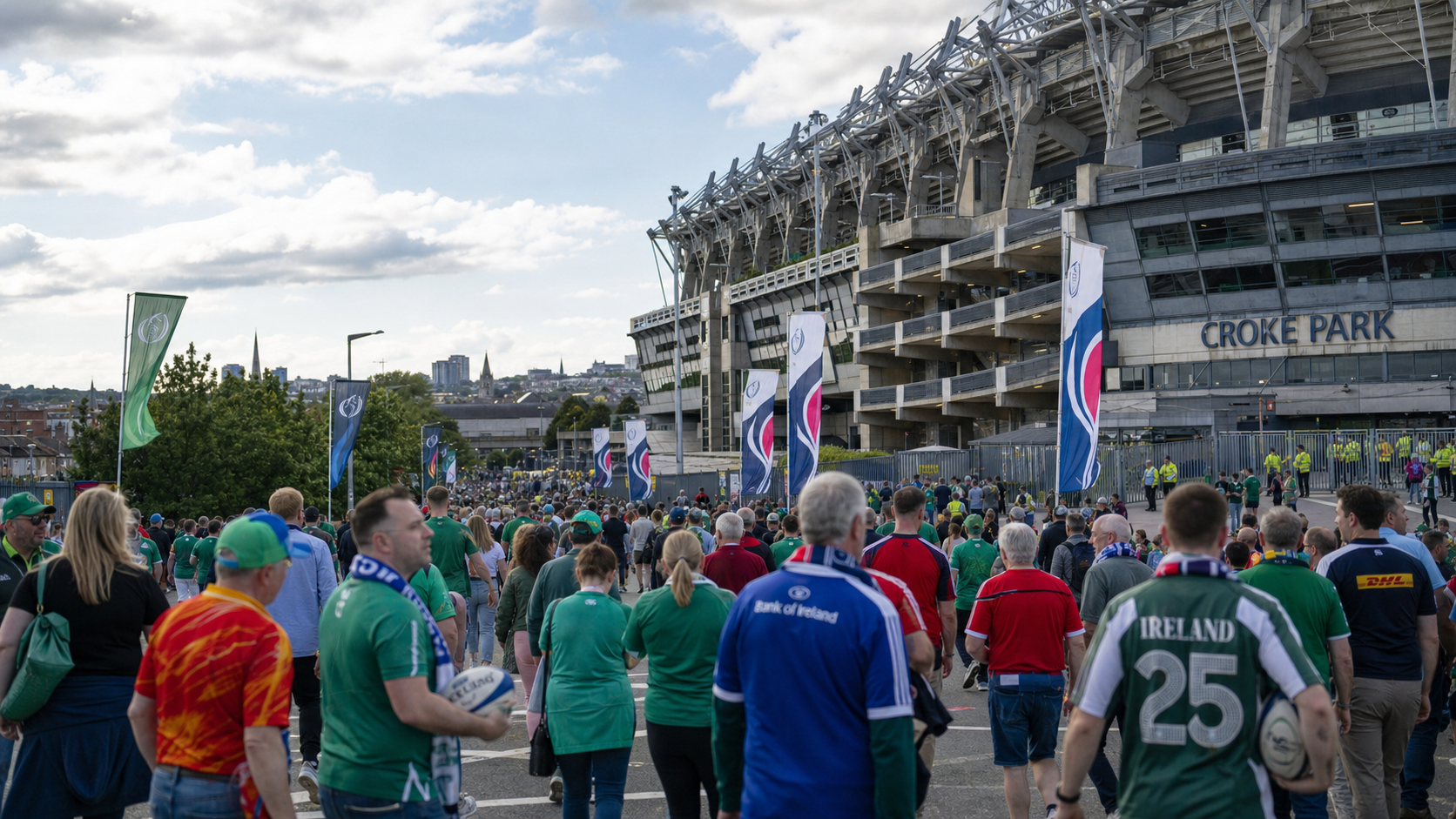
The atmosphere at Croke Park was described by those present as unlike anything they had experienced at a sporting event in Ireland. The crowd, which included fans who had travelled from across the country and from the Irish diaspora in Britain, the United States, and Australia, created a wall of noise from the opening bell that sustained itself throughout the evening. Taylor's entrance, accompanied by a light show and a roar that shook the stadium, was a moment that will be remembered by everyone who witnessed it.
After the final bell, Taylor performed the traditional boxing farewell — leaving her gloves in the centre of the ring — before addressing the crowd in an emotional speech that acknowledged the journey from Bray to Croke Park, from amateur gyms to world title fights, and from a sport that barely existed for women to one that fills the largest stadium in Ireland. "This was definitely the highlight of my whole career," she said. "I'm blown away by the reception."
Why It Matters
Katie Taylor's retirement matters because her career was not just a sporting achievement — it was a cultural and social one. She fought at a time when women's professional boxing was not taken seriously by the mainstream sports media, when female fighters were paid a fraction of what their male counterparts earned, and when the infrastructure of the sport — the promoters, the broadcasters, the venues — was not designed with women in mind. She changed all of that, not through advocacy or argument, but through the simple and irrefutable evidence of her performances.
The Croke Park fight was the culmination of that transformation. A sold-out crowd of 80,000 people did not gather to watch a novelty — they gathered to watch the greatest female boxer in history fight her final fight, and they treated the occasion with the reverence it deserved. That is a measure of how far women's sport in Ireland has come, and Taylor's career is the single most important reason for that progress.
Her legacy extends beyond Ireland. She is the most significant figure in the history of women's professional boxing, and her influence on the next generation of female fighters — in Ireland, in Britain, in the United States, and across the world — will be felt for decades. The sport she leaves behind is unrecognisably better than the one she entered.
Local Impact
In Bray, County Wicklow, where Taylor grew up and learned to box, the reaction to her retirement was one of immense pride mixed with the particular sadness of knowing that a great career has ended. The Bray Boxing Club, where she trained as a child, has been a focal point for local celebrations, and the town's community has been united in its recognition of what she has achieved. Irish Rail provided special late-night services to Belfast and Athenry to accommodate the thousands of fans who travelled to Croke Park from across the country, and the DART and Luas networks operated extended services to manage the post-fight crowds in Dublin city centre.
What's Next
Taylor has indicated that she intends to remain involved in boxing in some capacity, though she has not specified what form that involvement will take. Matchroom Boxing promoter Eddie Hearn has suggested that she would be a natural fit for a role in boxing promotion or broadcasting, and several media organisations have expressed interest in her as a pundit and analyst. The Irish Sports Council has indicated that it will work with Taylor to develop a legacy programme that uses her story to inspire the next generation of Irish athletes, with a particular focus on girls and young women in sport.