Japan Issues Earthquake Warning After Magnitude 7.4 Tremor Triggers Tsunami Alert on Northern Coast
Japan issued a special advisory on Monday warning of an increased risk of a magnitude 8.0 or stronger earthquake after a powerful 7.4 magnitude tremor struck the country's northern coast, triggering a tsunami wave of up to 80 centimetres and prompting the evacuation of more than 180,000 people in coastal communities across Iwate, Hokkaido, Aomori, Miyagi, and Fukushima prefectures.
Background
Japan is one of the world's most seismically active countries, situated on the Pacific Ring of Fire — a horseshoe-shaped zone of intense tectonic activity that encircles the Pacific Ocean and accounts for around 90 per cent of the world's earthquakes. The country has a sophisticated earthquake and tsunami warning system developed in the wake of the devastating 2011 Tōhoku earthquake and tsunami, which struck off the coast of Iwate Prefecture — the same region affected by Monday's tremor — and killed approximately 18,500 people while triggering the Fukushima nuclear disaster.
The Sanriku coast of northern Japan, where Monday's earthquake was centred, has a long and tragic history of tsunami disasters. The region was also severely affected by the 1896 Meiji Sanriku earthquake, which generated waves of up to 38 metres and killed around 22,000 people, and the 1933 Shōwa Sanriku earthquake, which caused further devastation. This history has fostered a high level of public awareness and preparedness in the region, with evacuation routes, tsunami shelters, and warning systems all well established.
Japan's earthquake preparedness infrastructure is among the most advanced in the world. The Japan Meteorological Agency (JMA) operates a network of seismometers and ocean-floor pressure sensors that can detect earthquakes and issue warnings within seconds of a tremor being detected. The country also has a comprehensive public alert system that sends warnings directly to mobile phones, and a network of tsunami barriers and seawalls along its most vulnerable coastlines.
Key Developments
The magnitude 7.4 earthquake — later upgraded to 7.7 by the JMA — struck at 4:53 PM local time on Monday 20 April, with its epicentre located off the coast of Iwate Prefecture near Sanriku, at a depth of approximately 19 to 20 kilometres. A tsunami warning was issued for waves of up to 3 metres for the coastal areas of Iwate, Hokkaido, and Aomori prefectures, with evacuation orders given to more than 180,000 people across five prefectures.
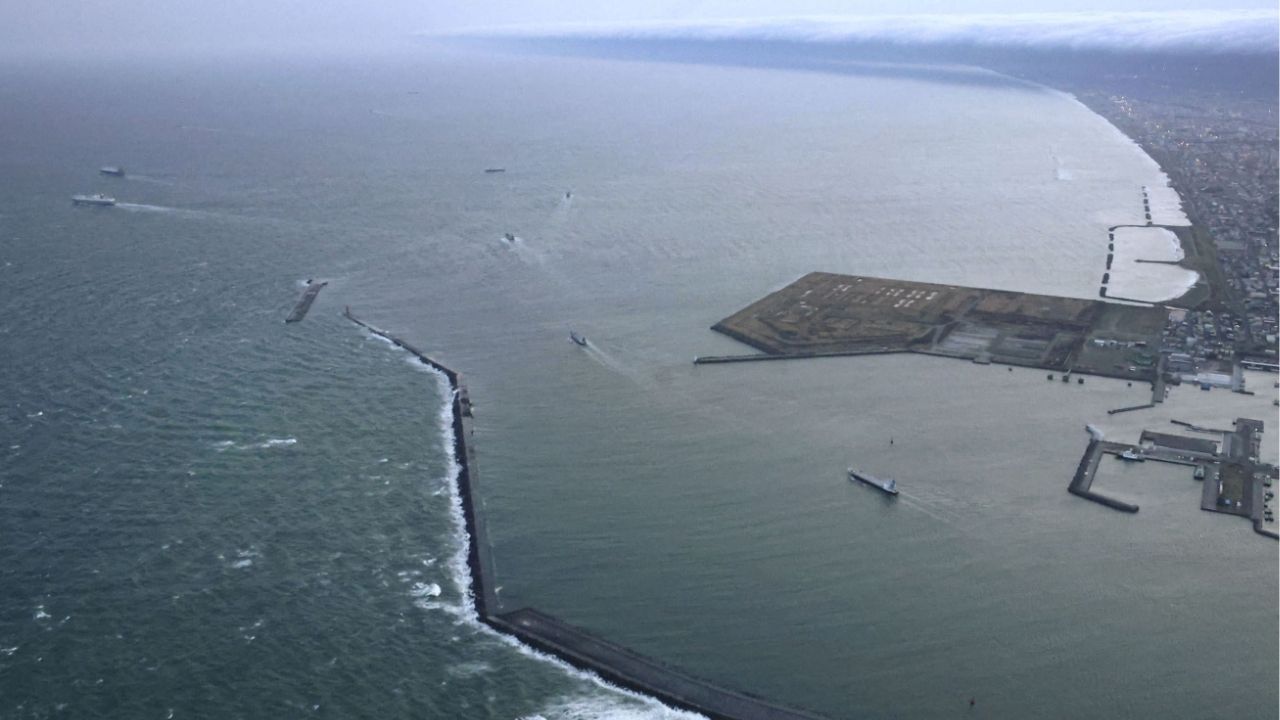
The highest observed tsunami wave was 80 centimetres at Kuji Port in Iwate Prefecture — significantly below the most dangerous thresholds, but sufficient to prompt the departure of vessels from affected ports as a precautionary measure. No immediate reports of casualties or significant structural damage were received, though two people sustained minor injuries from falls during the evacuation, and some 26 non-residential buildings in Aomori Prefecture were damaged. Temporary power outages affected between 100 and 200 households.
Following the tremor, the JMA issued a rare special advisory warning of a 1 per cent chance of a magnitude 8.0 or stronger earthquake in the region within the following week. Such advisories are issued only in exceptional circumstances and reflect a significant elevation in seismic risk. Authorities urged residents in coastal areas to remain vigilant, to reconfirm their evacuation routes, and to check their emergency supplies. The tsunami warning was subsequently downgraded to an advisory and then lifted as wave heights remained below dangerous levels.
Why It Matters
Japan's earthquake warning system is among the most advanced in the world, but the country remains acutely vulnerable to major seismic events. A magnitude 8.0 or stronger earthquake in the Sanriku region — the area most affected by the 2011 disaster — could cause significant casualties and infrastructure damage, and could trigger a much larger tsunami than Monday's event. The special advisory serves as a reminder of the ongoing seismic risks facing Japan and the importance of preparedness, even in a country that has invested heavily in earthquake resilience.
The 2011 Tōhoku disaster demonstrated that even the most sophisticated warning systems and the most prepared populations can be overwhelmed by a sufficiently powerful earthquake and tsunami. The subsequent Fukushima nuclear disaster added a further dimension to the risk, highlighting the potential for cascading failures in critical infrastructure. Japan has since invested billions of yen in strengthening its coastal defences and improving its nuclear safety protocols, but the fundamental seismic risk remains unchanged.
Local Impact
For the United Kingdom, Monday's earthquake is a reminder of the global interconnectedness of modern economies and supply chains. Japan is one of the UK's most important trading partners and a major source of advanced manufacturing components, particularly in the automotive and electronics sectors. A major earthquake in Japan's industrial heartland could disrupt supply chains in ways that would be felt by British businesses and consumers. The UK government's Foreign, Commonwealth and Development Office has confirmed that no British nationals are known to have been affected by Monday's tremor, and the British Embassy in Tokyo is monitoring the situation closely.
What's Next
Japanese authorities are monitoring seismic activity closely and have urged residents in affected areas to remain prepared for further tremors. The special advisory is expected to remain in place for several days as scientists assess the evolving seismic situation. Emergency services have been deployed to affected areas, and infrastructure checks are being carried out on roads, bridges, and public buildings in the affected prefectures. The JMA has said it will provide regular updates on the seismic situation as new data becomes available.
Sources: Al Jazeera; The Japan Times