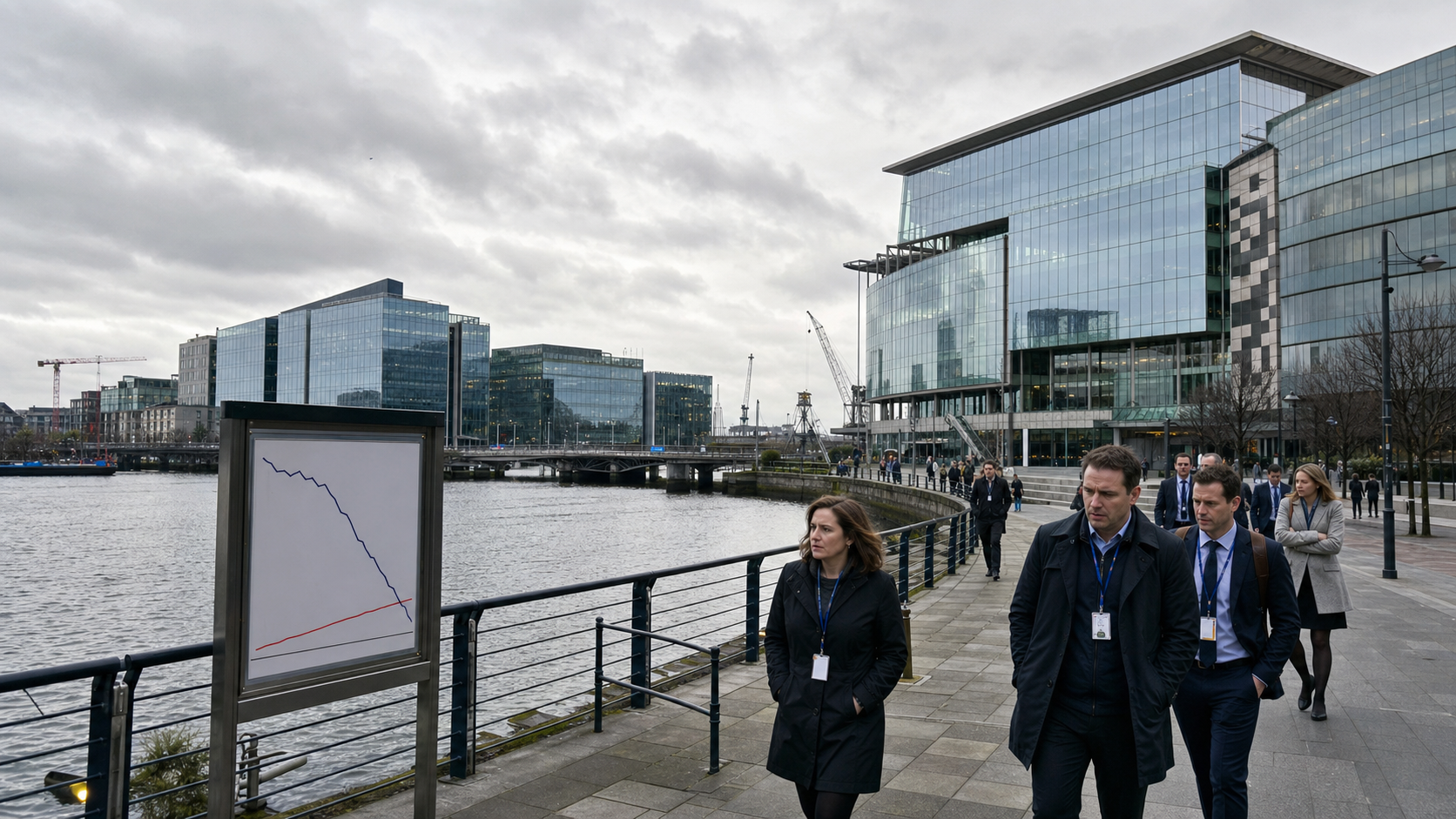
Irish Economy Contracts 7.1% in First Quarter of 2026 as Pharma Export Surge Unwinds
The Irish economy experienced a sharp contraction of 7.1% in the first quarter of 2026, according to figures from the Central Statistics Office. This significant decline in Gross Domestic Product is largely attributed to the unwinding of a massive export surge from 2025, which saw multinational pharmaceutical companies front-loading shipments to the United States in anticipation of potential tariffs. Despite the dramatic headline figure, the domestic economy has shown more stability, with Modified Domestic Demand recording modest growth of 0.3% in the same quarter.
The Headline Figures
The CSO's quarterly national accounts data for the first quarter of 2026 make for striking reading. A 7.1% contraction in GDP in a single quarter is, by any measure, a dramatic figure — one that would, in most countries, signal a severe economic crisis. In Ireland's case, however, the headline GDP figure is widely understood to be a poor guide to the actual state of the economy, due to the enormous influence of a small number of large multinational corporations on the national accounts.
The contraction follows an equally dramatic period of growth. In 2025, Ireland's GDP grew at an accelerated rate of 12.6%, driven in large part by a surge in pharmaceutical exports as multinational companies front-loaded shipments to the United States in anticipation of potential tariff changes. This activity created an artificial "bulge" in the 2025 economic data, and its subsequent reversal has now dragged down the headline figures for 2026. The pattern is a familiar one in Ireland — the country's GDP figures have long been distorted by the activities of a small number of large multinationals, making international comparisons extremely difficult.
The Domestic Economy
The more meaningful measure of Ireland's economic performance is Modified Domestic Demand, which strips out the distorting effects of multinational activities and provides a better picture of the underlying health of the domestic economy. MDD recorded modest growth of 0.3% in the first quarter of 2026, suggesting that consumer spending, local business investment, and other domestic economic activities remain resilient despite the challenging global environment.
An economist from the Department of Finance sought to contextualise the figures, stating: "This was an expected correction. The exceptional export performance in 2025 was always going to lead to a statistical unwinding. The key takeaway is the continued, albeit slower, growth in the domestic economy, which is a more accurate reflection of where we stand." The government has been at pains to emphasise that the headline GDP contraction does not reflect a genuine deterioration in the living standards of Irish people or the health of the domestic economy.
International Implications
The sharp contraction in Ireland's GDP has had implications beyond the country's borders. The International Monetary Fund has noted that the Irish figures have acted as a drag on the overall growth forecast for the euro zone in 2026, as Ireland's GDP is included in the aggregate figures for the currency area. This has led to some frustration among European partners, who argue that Ireland's distorted national accounts make it difficult to get an accurate picture of the euro zone's economic performance.
The European Commission has been in discussions with the CSO and the Department of Finance about the best way to present Ireland's economic data in a manner that is more informative and less susceptible to distortion by multinational activities. The development of new statistical measures, including a modified version of Gross National Income, has been one response to this challenge, but the fundamental problem of Ireland's economic structure — its heavy dependence on a small number of large multinationals — remains.
The Broader Economic Outlook
Looking beyond the first quarter figures, the outlook for the Irish economy in 2026 is mixed. The domestic economy is expected to continue growing, supported by strong employment, rising wages, and continued consumer spending. However, the global environment presents significant risks, including the ongoing conflict in the Middle East, which is pushing up energy prices and creating supply chain disruptions, and the uncertainty surrounding US trade policy, which continues to weigh on business confidence.
The Bank of Ireland has warned that the potential bursting of an "AI bubble" could have severe consequences for Ireland, given the country's heavy concentration of technology companies. While the AI boom has been a significant driver of investment and job creation in Ireland in recent years, the bank has cautioned that the valuations of many AI-related companies may not be sustainable, and that a correction could have significant knock-on effects for the Irish economy.
Policy Response
The government has indicated that it does not intend to change its fiscal policy in response to the first quarter GDP figures, arguing that the contraction is a statistical artefact rather than a genuine economic downturn. The Minister for Finance has reiterated the government's commitment to maintaining a prudent fiscal stance, building up the National Reserve Fund, and investing in infrastructure and public services. The government's medium-term economic strategy remains focused on diversifying the economy, reducing dependence on a small number of large multinationals, and building a more resilient and sustainable economic base for the future.