Ireland's Name Debate: Official Files Reveal Decades of Diplomatic Sensitivity Over 'Éire' vs 'Republic of Ireland'
Newly released official files have shed fresh light on the long-standing and historically sensitive debate over the official name of the Irish state, revealing decades of diplomatic manoeuvring over whether to use 'Ireland', 'Éire', or 'Republic of Ireland' in legal and international contexts — a question that has caused genuine diplomatic friction between Dublin and London for generations.
Background
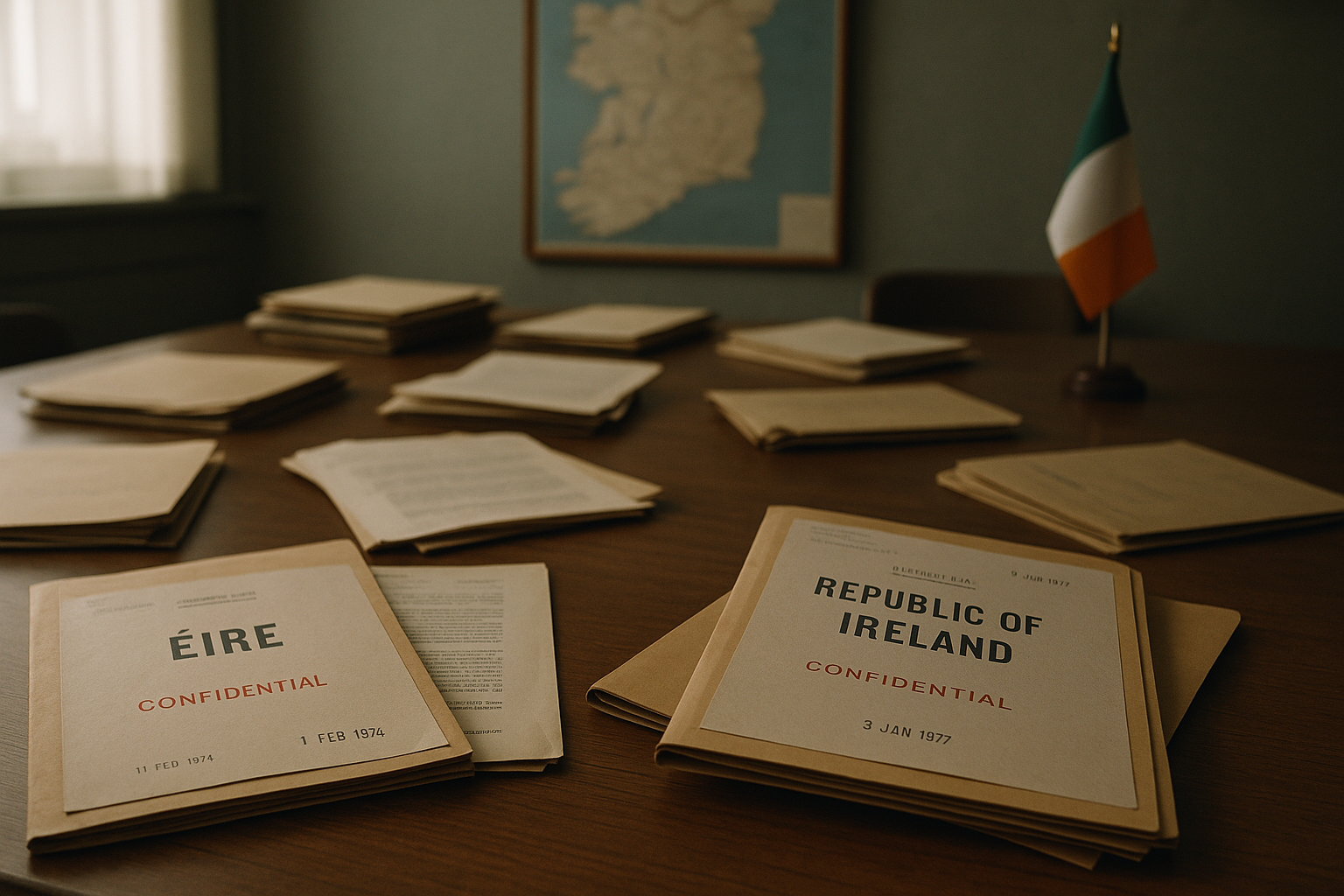
Under Article 4 of the Irish Constitution, the name of the state is "Éire," or in the English language, "Ireland." The term "Republic of Ireland" is legally considered the "description" of the state, not its formal name — a distinction that may appear technical but has had significant legal and diplomatic ramifications over the decades. The Ireland Act 1949, passed by the Westminster Parliament, recognised the Republic of Ireland as no longer part of His Majesty's dominions, but the naming conventions used in British legislation and official correspondence have remained a persistent source of tension.
The sensitivity of the issue is rooted in the partition of Ireland in 1921 and the subsequent decades of political and constitutional uncertainty about the relationship between the two jurisdictions on the island. For Irish governments, the insistence on the correct use of the state's name was not mere pedantry — it was an assertion of sovereignty and a rejection of any implication that the state's legitimacy was conditional or partial. The naming question became particularly charged in the context of the Troubles, when the relationship between Dublin and London was under sustained strain and every diplomatic signal carried weight.
Key Developments
A 1953 government memorandum, re-examined in the 1990s, explicitly stated that in no circumstances was the term "Republic of Ireland" to be used to denote the state. This position came to a head in 1990 during the extradition case of Dessie Ellis, when the Irish Attorney General, John Murray, intervened to state that any British arrest warrants using the name "Republic of Ireland" should not be acted upon. The resulting compromise saw legal documents from Great Britain use "Ireland," while those from Northern Ireland would omit the state's name entirely to avoid the contentious issue.
The sensitivity of the naming convention was also demonstrated in a 1982 diplomatic incident when British Prime Minister Margaret Thatcher referred to the state as the "Irish Free State" — a term the Irish ambassador described as not only "archaic but also offensive." The Irish Free State had ceased to exist in 1937 with the adoption of the new constitution, making Thatcher's usage a significant diplomatic misstep that required careful management by both governments.
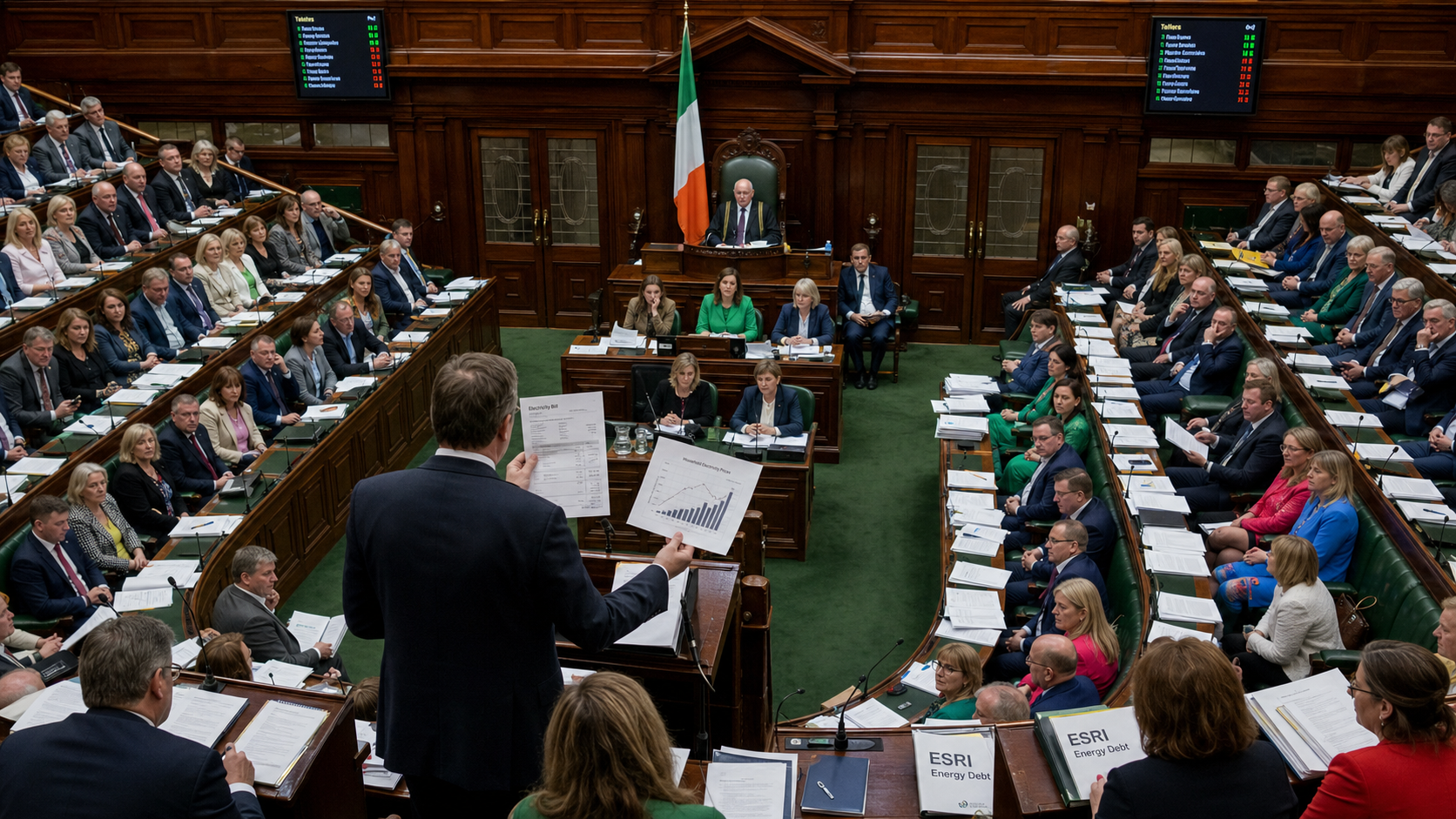
The newly released files also shed light on the broader question of North-South living standards, which has become increasingly relevant to contemporary debates about Irish unity. A claim by Cambridge University academic Graham Gudgin that living standards are 20 per cent higher in Northern Ireland has been challenged by economists pointing to more comprehensive metrics. A study by the Economic and Social Research Institute (ESRI), using household disposable income controlled for prices, found that in 2017 the Republic held a 12 per cent advantage over the North. The same study highlighted that poverty rates were considerably higher in Northern Ireland, at 23.8 per cent compared to 15.9 per cent in the Republic.
Why It Matters
The naming question may appear arcane, but it touches on fundamental issues of identity, sovereignty, and the relationship between the two jurisdictions on the island of Ireland. As discussions about Irish unity continue to feature in political discourse on both sides of the border — and as the constitutional implications of Brexit continue to be worked through — the historical context provided by these official files offers a valuable reminder of the complexity and sensitivity of the issues involved. The files demonstrate that what might appear to be bureaucratic formalities are often proxies for deeper political and constitutional questions that remain live and contested. A striking divergence in life expectancy has also emerged since 2005, with a child born in the Republic in 2018 expected to live 1.4 years longer than a child born in the North — a statistic that adds a human dimension to the abstract constitutional debate.
Local Impact
For communities in Belfast and across Northern Ireland, the naming debate is not merely a historical curiosity — it reflects ongoing questions about identity, belonging, and the constitutional future of the island. The Good Friday Agreement of 1998 carefully navigated many of these sensitivities, but the underlying tensions have not disappeared. The release of these files will be of particular interest to historians, constitutional lawyers, and politicians on both sides of the border who are engaged in the ongoing conversation about the island's future. In Belfast, where questions of identity and constitutional status remain deeply felt, the historical record provided by these documents adds important context to contemporary debates.
What's Next
The release of these files is likely to prompt renewed academic and political discussion about the constitutional and diplomatic dimensions of Irish identity. The debate over the state's name remains unresolved in practical terms, with different conventions still used in different contexts across the island and in international settings. Further reading is available via The Irish Times and the Economic and Social Research Institute, whose research on North-South living standards provides essential context for the broader debate.