Ireland Signals Personal Tax Cuts in Next Budget as Bye-Elections Set for May
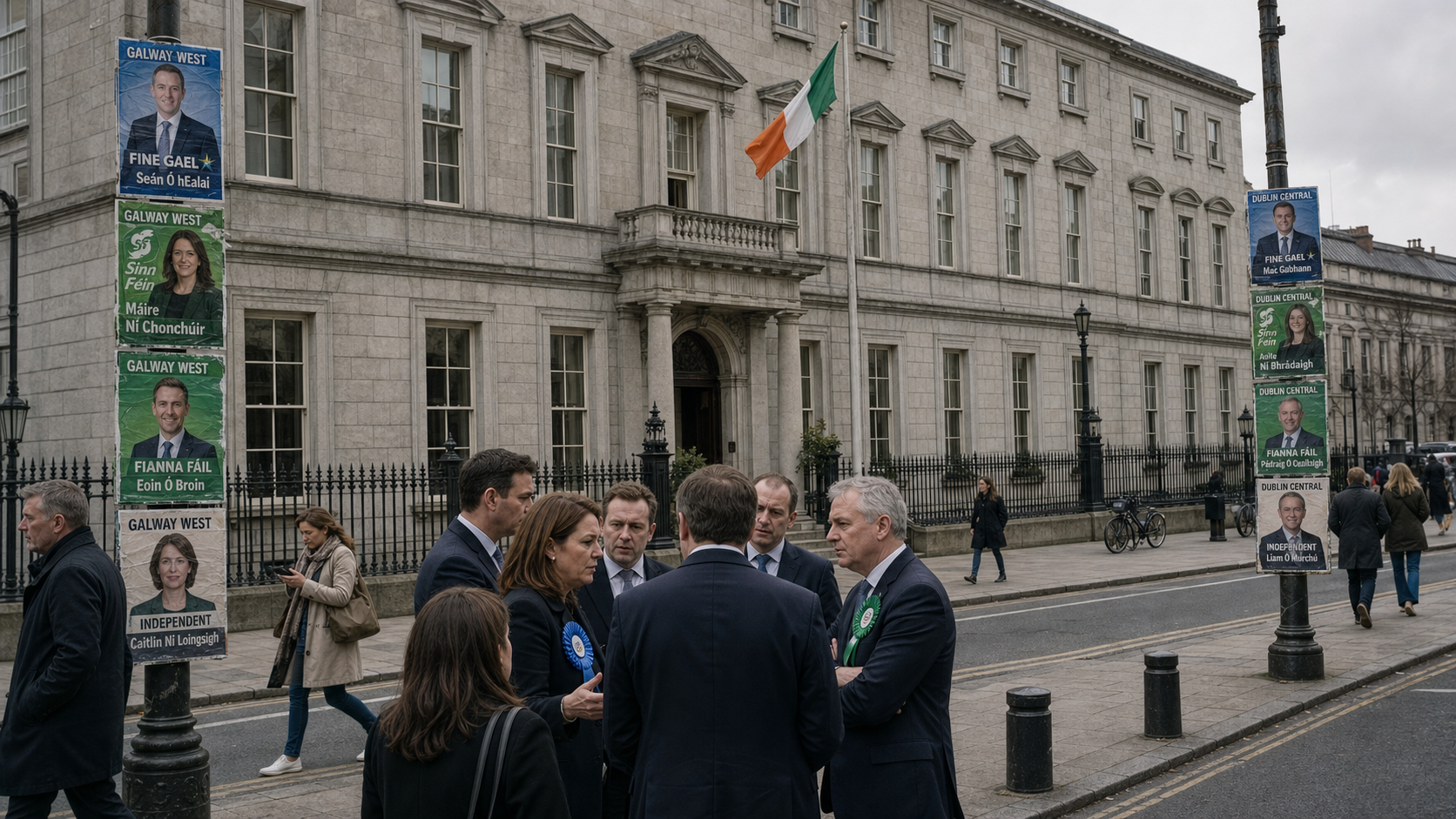
The Irish government has signalled that strong public finances will allow for a significant personal income tax package in the forthcoming budget, as the country prepares for two Dáil bye-elections on 22 May that will serve as the first major electoral test of the new coalition's performance.
Taoiseach Micheál Martin and Finance Minister Paschal Donohoe have indicated that Ireland's robust fiscal position, bolstered by record corporation tax receipts, will give the government room to deliver meaningful tax relief for workers in Budget 2026. Tánaiste Simon Harris confirmed the government's strong financial position would allow for a personal income tax package, comments welcomed by business groups who have long argued that Ireland's income tax burden is too high and acts as a barrier to attracting and retaining talent.
Background
Ireland's public finances have been transformed in recent years by a surge in corporation tax receipts, largely driven by the presence of major US technology and pharmaceutical companies. In 2025, these receipts reached a record €32.9 billion on an underlying basis — a 17.2% increase from 2024 — with foreign-owned multinationals accounting for 84% of all corporation tax revenues. This windfall has given successive governments significant fiscal headroom, though economists have consistently warned that the country should not become overly reliant on receipts that are concentrated among a small number of firms and therefore inherently volatile.
Ireland's projected general government surplus for 2026 stands at €5.1 billion, equating to 1.4% of gross national income, with total tax revenues forecast at €109.2 billion. Key economic indicators are stable: modified domestic demand is forecast to grow by 2.3%, inflation is expected to remain around 2%, and unemployment is holding at approximately 4.8%. General government debt is projected to fall to 58.6% of national income by year end, reflecting a sustained trend of fiscal consolidation.
The personal income tax burden, however, remains a source of considerable political debate. The standard rate of 20% applies to earnings up to €44,000, with all income above that threshold taxed at 40%. When combined with the Universal Social Charge and Pay Related Social Insurance — the latter set to increase from 4.2% to 4.35% during 2026 — marginal tax rates for higher earners can reach 52%, a figure frequently cited as a competitiveness concern.
Key Developments
Budget 2026, announced in October 2025, adopted a cautious approach to personal taxation, eschewing broad income tax cuts in favour of targeted relief. The ceiling for the 2% USC rate band was increased by €1,318 to €28,700, primarily to ensure full-time workers on the new minimum wage of €14.15 per hour do not enter a higher USC band. The Rent Tax Credit, valued at up to €1,000 per person, was extended for three years until the end of 2028, while the Mortgage Interest Tax Credit was extended but tapered, with the maximum credit reducing from €1,250 in 2025 to €625 in 2026.
The government's signals about Budget 2027 suggest a more ambitious approach to income tax relief, with ministers pointing to the continued strength of corporation tax receipts — further bolstered by the OECD's Pillar II global minimum effective tax rate of 15%, which is expected to generate additional revenue from June 2026 — as providing the fiscal space for more meaningful personal tax changes.
Sinn Féin's finance spokesperson has called on the Taoiseach to admit that the previous budget left ordinary workers "high and dry," arguing that the benefits of Ireland's economic success have not been felt by those on middle and lower incomes. The party's alternative budget platform proposes abolishing the USC on the first €40,000 of all workers' earnings, funded by a 3% solidarity tax on individual incomes exceeding €100,000 and increased levies on banks and landlords.
Why It Matters
The budget signals are significant for millions of Irish workers who have seen their purchasing power squeezed by inflation in recent years. A meaningful income tax package could provide a genuine boost to household finances ahead of what is expected to be a challenging economic period, given global uncertainty linked to the ongoing conflict in the Middle East and its impact on energy prices. The political stakes are equally high: the government's ability to demonstrate that Ireland's economic success is being shared broadly will be central to its electoral fortunes. With government parties having won only three of 25 by-elections in the last 30 years, the May contests represent a significant test of public confidence in the coalition's economic management.
Local Impact
For workers in Northern Ireland and the Republic, the divergence in tax policy between the two jurisdictions remains a live political issue. The prospect of meaningful income tax cuts in the Republic will inevitably prompt comparisons with the tax burden facing workers in Northern Ireland, where Westminster's fiscal decisions apply. Cross-border economic activity, already significant in sectors including retail, hospitality, and professional services, is sensitive to tax differentials, and any substantial reduction in the Republic's income tax burden could have implications for labour market dynamics on both sides of the border. The bye-elections in Dublin Central and Galway West will also be watched closely in Belfast, where the political fortunes of Sinn Féin have direct implications for the party's all-island strategy.
What's Next
Budget 2027 is expected to be announced in October 2026. In the meantime, the government will be focused on the May bye-elections, which will be seen as an early test of public opinion on the new coalition's performance. The contests in Dublin Central and Galway West are expected to be closely fought, with Sinn Féin hoping to make gains and the government parties determined to demonstrate their continued electoral appeal. The outcome will shape the political dynamics heading into the budget season. Full political coverage from The Irish Times. More from RTÉ News.