Ireland Men and Women Both Face Decisive Hockey World Cup Pool Matches in Belgium
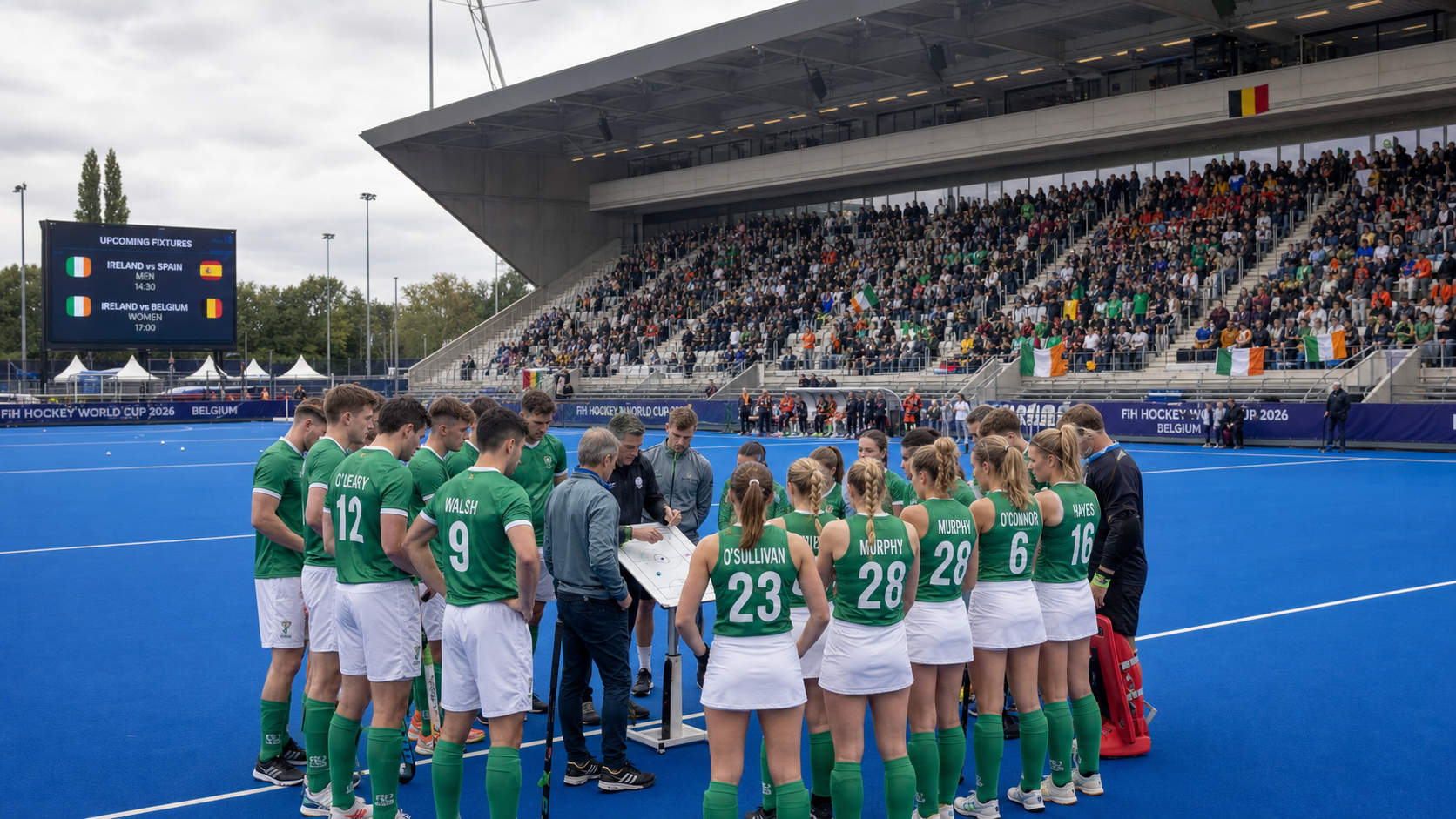
Both the Ireland men's and women's hockey teams face decisive final pool stage matches at the 2026 FIH Hockey World Cup in Belgium on Thursday, with places in the second group stage — and the prospect of a quarter-final berth — at stake in what promises to be one of the most significant days in Irish hockey history.
Background
The 2026 FIH Hockey World Cup, hosted jointly by Belgium and the Netherlands, is the sport's premier international tournament and the culmination of four years of preparation for the teams involved. Ireland's participation in both the men's and women's competitions represents a remarkable achievement for a country that, a generation ago, was not considered a serious force in international hockey. The transformation of Irish hockey over the past decade — driven by investment in coaching, facilities, and player development — has been one of the most impressive stories in Irish sport.
The women's team, in particular, have established themselves as a genuine force in world hockey. Their silver medal at the 2018 World Cup in London — achieved in dramatic fashion through a penalty shootout against the Netherlands — remains the high point of Irish hockey history, and the current squad, captained by Sarah Hawkshaw, is widely regarded as one of the most talented in the programme's history. The men's team, under the management of Mark Tumilty, have also made significant strides, and their presence in the World Cup pool stage is a testament to the depth of talent now available to Irish hockey.
Both teams were placed in Pool C for the tournament, alongside some of the world's strongest hockey nations. The men's pool includes Australia, South Africa, and Spain; the women's pool includes Spain, New Zealand, and host nation Belgium. The format sees the top two teams from each pool advance to a second group stage, from which the semi-finalists are determined.
Key Developments
The Ireland men's team entered Thursday's match against Spain with a record of one win and one loss in Pool C. They lost their opening match 3-1 to Australia on August 16, with Alistair Empey scoring Ireland's lone goal. They then recovered impressively to defeat South Africa 4-1 on August 18, with Benjamin Walker, Lee Cole (twice), and Sam Hyland on the scoresheet. That victory left them in second place in Pool C, level on points with Spain, heading into the final pool match.
The Ireland women's team also split their first two matches. They lost 3-2 to Spain on August 16, with Hannah McLoughlin and Niamh Carey scoring for Ireland, before defeating New Zealand 3-2 on August 18 — a victory secured through goals from captain Sarah Hawkshaw, Róisín Upton (penalty stroke), and Katie Mullan. That result kept Ireland's hopes of a top-two finish alive, but Thursday's match against host nation Belgium — playing in front of their home crowd — represents the most demanding test of the tournament so far.
Why It Matters
The stakes on Thursday are considerable. For the men's team, a win or draw against Spain would guarantee a place in the second group stage and keep alive the prospect of a quarter-final berth. A loss would likely see them drop to the classification pools, where they would compete for positions outside the top eight. For the women's team, the situation is similar: a positive result against Belgium would secure a place in the second group stage, while a defeat could end their tournament at the pool stage.
The significance of the matches extends beyond the immediate tournament context. Irish hockey has invested heavily in the infrastructure and coaching required to compete at World Cup level, and the results on Thursday will be a measure of whether that investment is delivering the outcomes that were hoped for. A strong performance from both teams would validate the development pathway and provide a platform for continued growth; a poor result would prompt difficult questions about the programme's direction.
The broader context of Irish sport is also relevant. Ireland's athletes have had a remarkable summer, with significant achievements at the European Athletics Championships and the European Aquatics Championships. A strong showing from the hockey teams would add to a narrative of Irish sporting excellence that has captured public attention and generated genuine national pride.
Local Impact
In Ireland, the World Cup matches are being broadcast live on RTÉ, and the combination of men's and women's matches on the same day has generated significant public interest. Hockey clubs across the country — from Three Rock Rovers and Monkstown in Dublin to Cork Harlequins and Pembroke Wanderers — have organised viewing events for their members, and the sport's governing body, Hockey Ireland, has reported a significant increase in enquiries about participation in the weeks since the tournament began.
For the players themselves, the World Cup represents the pinnacle of their careers. Many of them are amateur or semi-professional athletes who combine their hockey with full-time employment or study, and the sacrifices required to reach this level — years of training, travel, and commitment — are considerable. Thursday's matches are the reward for that commitment, and the Irish hockey community will be watching with enormous pride and anticipation.
What's Next
The results of Thursday's pool matches will determine the composition of the second group stage, which begins on August 22. Teams finishing in the top two of each pool advance to Pools E and F, where they will face the top finishers from the other pools. The semi-finals are scheduled for August 28, with the final on August 30. Ireland's path to the semi-finals would require a strong performance in the second group stage — a challenge that is achievable but will require the teams to perform at their very best.