Ireland Launches New Diaspora Strategy 2026-2030 to Engage 70 Million People of Irish Descent Worldwide
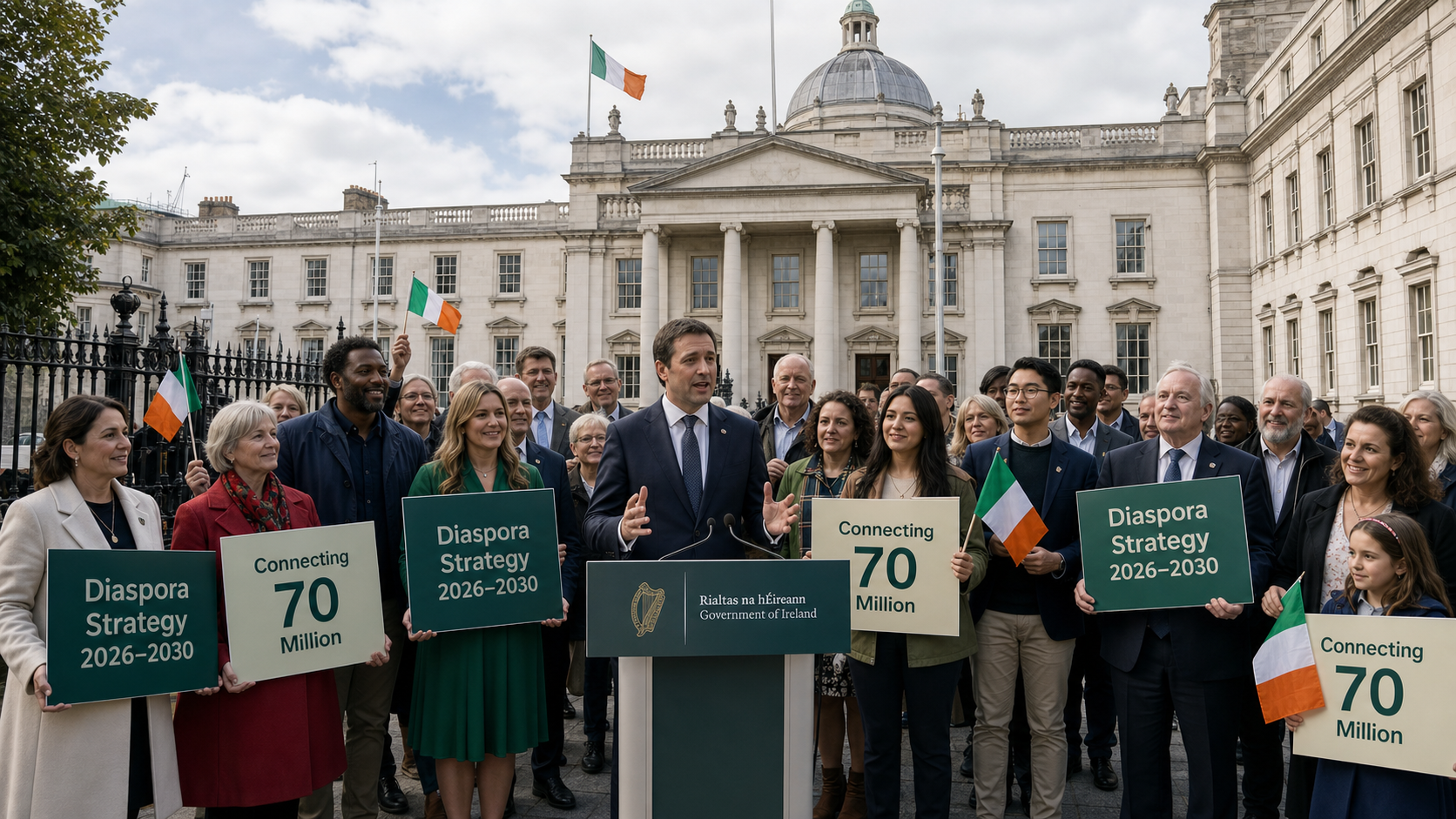
The Irish government has launched its 'Diaspora Strategy 2026-2030,' the most significant overhaul of Ireland's engagement with its global diaspora in a generation, following extensive consultations in 27 cities worldwide — a strategy that shifts focus beyond the traditionally dominant Irish-American community to embrace growing Irish communities in Australia, the Middle East, and Europe, and formally recognises the 'affinity diaspora' of people with no Irish heritage who have lived, worked, or studied in Ireland.
Background
Ireland's relationship with its diaspora is one of the defining features of the country's national identity and international presence. The Irish diaspora — estimated at 70 million people of Irish descent and affinity worldwide — is one of the largest in the world relative to the size of the home country, a legacy of centuries of emigration driven by famine, poverty, political upheaval, and economic necessity. This vast global network has been a source of cultural pride, political influence, and economic connection for Ireland throughout its history.
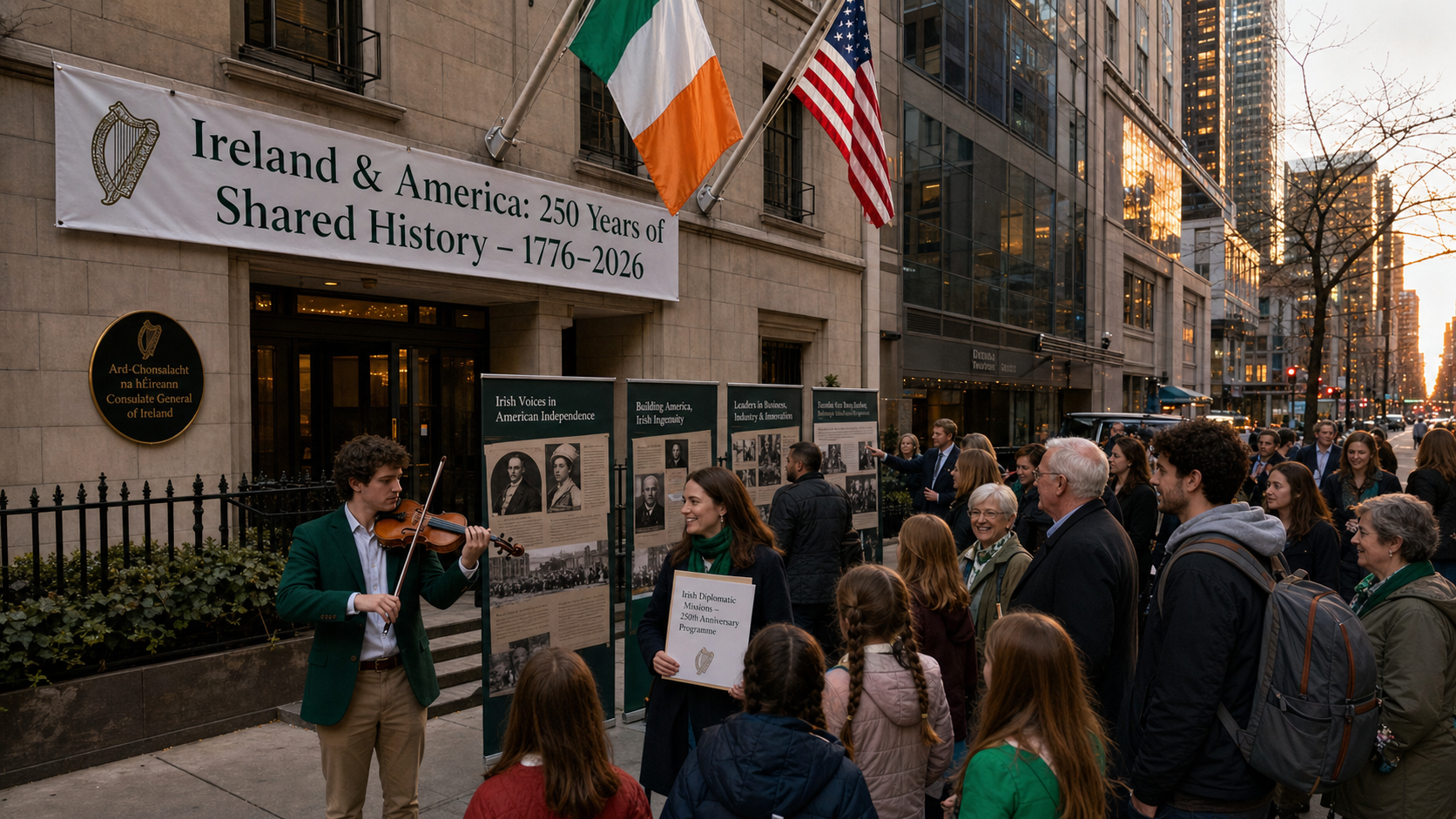
The Irish-American community, concentrated in cities including New York, Boston, Chicago, and Philadelphia, has historically been the most politically influential component of the diaspora, playing a crucial role in the peace process in Northern Ireland and maintaining a powerful lobby in Washington that has been a significant asset for Irish foreign policy. However, the demographics of Irish emigration have changed dramatically in recent decades, with Australia, Canada, and various European countries becoming increasingly important destinations for Irish emigrants.
The government's previous diaspora strategy, published in 2020, was widely regarded as having been overtaken by events — particularly the dramatic changes in emigration patterns accelerated by the pandemic and the housing crisis. The new strategy, developed following consultations in 27 cities across five continents, represents an attempt to develop a more comprehensive and forward-looking approach to diaspora engagement that reflects the realities of the 21st century Irish diaspora.
Key Developments
The 'Diaspora Strategy 2026-2030' is built around several key themes. The first is geographic diversification: the strategy explicitly acknowledges that the Irish diaspora is no longer dominated by the Irish-American community and commits to developing stronger engagement with Irish communities in Australia — where approximately 13,500 people emigrated from Ireland in the year to April 2025, more than double the 6,100 who moved to the United States — as well as in the Middle East, continental Europe, and other emerging destinations.
The second key theme is the formal recognition of the 'affinity diaspora' — individuals with no Irish heritage who have lived, worked, or studied in Ireland and maintain a strong connection to the country. This broader, more inclusive definition of 'Irishness' reflects the reality of a country that has been transformed by immigration over the past three decades and that now has a significant population of people who identify with Ireland without having Irish ancestry.
The strategy also includes commitments to better support and represent the stories of LGBTQI+ members of the diaspora and those of multi-heritage backgrounds, reflecting a more inclusive understanding of Irish identity. The government views the diaspora as a crucial asset for a militarily neutral state, a source of soft power that can be leveraged to advance Ireland's trade, investment, and geopolitical interests.
Why It Matters
The Diaspora Strategy matters because the Irish diaspora is one of Ireland's most significant national assets — a network of connections, goodwill, and influence that extends to every corner of the world and that has been a crucial factor in Ireland's economic and political success. The strategy's recognition of the changing demographics of the diaspora is particularly important, as it signals a willingness to move beyond the nostalgic, heritage-focused approach that has characterised much of Ireland's diaspora engagement in the past and to develop a more dynamic, forward-looking relationship with the global Irish community. However, the strategy has also attracted criticism for its failure to address the structural barriers — particularly the housing crisis — that prevent many emigrants from returning home. Up to 35% of the Irish abroad wish to return, but the high cost of living and the chronic shortage of affordable housing make this aspiration unrealisable for many. A diaspora strategy that does not address these barriers risks being seen as a mechanism for managing emigration rather than solving the problems that cause it.
Local Impact
The strategy's impact will be felt most directly by the organisations and individuals who work to support Irish communities overseas. The Emigrant Support Programme, which funds a network of Irish community organisations around the world, will receive additional resources under the new strategy, with a particular focus on organisations supporting newly arrived emigrants and those facing difficulties in their host countries. In Ireland itself, the strategy's recognition of the 'affinity diaspora' has implications for how the country engages with the large population of people who have lived in Ireland but are not Irish citizens — a group that has historically been somewhat marginalised in discussions of Irish identity and belonging. The strategy's commitment to supporting returning emigrants, through organisations like the Irish Diaspora Support Project, will also be welcomed by the growing number of people who are attempting to come home after years abroad.
What's Next
The government will publish a detailed implementation plan for the Diaspora Strategy in the autumn, setting out specific actions, timelines, and resource commitments for each of the strategy's key themes. The Department of Foreign Affairs, which has lead responsibility for diaspora policy, will establish a new diaspora advisory council to provide ongoing input from community organisations and diaspora representatives. The strategy will be reviewed at the midpoint of its five-year term, in 2028, with a full evaluation planned for 2030. The government has also indicated its intention to expand the network of Irish cultural centres overseas, providing new focal points for diaspora engagement in cities where the Irish community is growing rapidly.