Ireland's Housing Market Shows Signs of Stabilisation as Price Growth Eases to Slowest Pace in Two Years
Ireland's housing market is showing signs of stabilisation in mid-2026, with national asking price growth easing to 3.7% annually — the slowest pace in over two years — as affordability constraints begin to cap the rapid appreciation that has characterised the market since the pandemic. A distinct two-speed dynamic has emerged, with Dublin experiencing improved supply and moderated price increases while rural regions in Connacht-Ulster and Leinster continue to see faster growth of 5% to 8% due to persistent and acute housing shortages.
Background
Ireland's housing market has been one of the most discussed and contested aspects of the country's economic life for the past decade. The combination of rapid population growth, constrained supply, and strong demand from both domestic buyers and international workers has driven prices to levels that have placed homeownership beyond the reach of many working households, particularly in Dublin and the major cities.
The government has responded with a range of policy interventions — the Help-to-Buy scheme, the First Home Scheme, the Residential Zoned Land Tax, and a series of planning reforms designed to accelerate the delivery of new homes. The results have been mixed. Supply has increased, but not at the pace needed to close the gap between demand and availability. The number of second-hand homes on the market increased by 6% in early 2026, but total inventory remains less than half of pre-pandemic levels — a structural deficit that continues to underpin prices even as the rate of growth moderates.
The ECB's interest rate cuts in 2024 and 2025 have provided some relief to mortgage holders, with average rates stabilising at around 3.5% to 3.7% in 2026. That stabilisation has reduced the monthly cost of servicing a mortgage relative to the peak of the rate cycle, but it has not fundamentally altered the affordability equation for first-time buyers in the most expensive markets.
Key Developments
The latest data from Daft.ie, analysed by Trinity College Dublin economist Ronan Lyons, shows national asking prices rising by 3.7% in the year to March 2026 — a significant deceleration from the double-digit growth rates seen in 2022 and 2023. In Dublin, asking prices rose by just 2.5% annually, and transaction prices have seen some quarterly declines as inventory levels recover. The gap between asking and final sale prices has narrowed to 5.8%, reflecting a reduction in the aggressive bidding wars that characterised the market at its most heated.
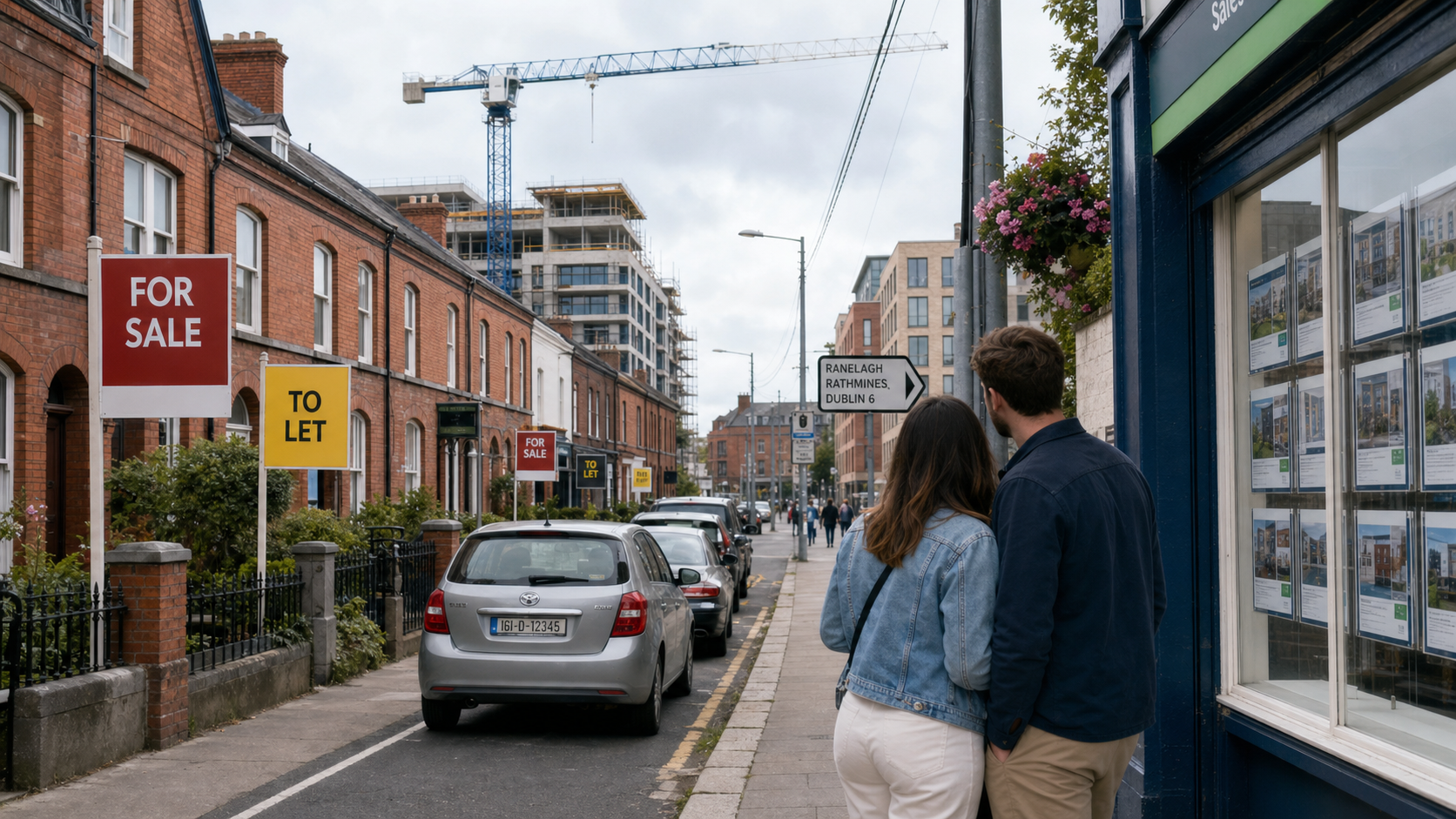
The two-speed dynamic is most visible in the contrast between Dublin and the rest of the country. While the capital is showing genuine signs of market cooling, regions such as Connacht-Ulster and parts of Leinster outside Dublin continue to experience price growth of 5% to 8%, driven by acute supply shortages in areas where construction activity has been insufficient to meet demand. Development land deals performed strongly in the first quarter of 2026, rising 55% compared to the same period in 2025, suggesting that the pipeline of new supply is building — but the lag between land acquisition and completed homes means that relief is still some years away for many buyers.
Energy efficiency has emerged as a primary driver of value in the current market. Homes with high Building Energy Rating certificates, particularly B2 or above, are selling faster and commanding premium prices as buyers prioritise long-term energy costs in a market where heating bills have risen significantly.
Why It Matters
The stabilisation of Ireland's housing market matters because it suggests that the extraordinary price growth of the post-pandemic period may be moderating to a more sustainable trajectory. That is good news for affordability, but it needs to be kept in perspective: prices remain at historically high levels, and the moderation in growth does not mean that homes have become affordable for the households that have been priced out of the market. A 3.7% annual increase on top of a decade of rapid appreciation still represents a significant barrier to entry for first-time buyers.
The two-speed dynamic also raises questions about regional equity. The cooling of the Dublin market is welcome, but the continued rapid price growth in rural and regional areas suggests that the housing crisis is not a Dublin problem — it is a national problem that manifests differently in different places. The government's housing policy has been heavily focused on the capital, and the data suggests that more attention needs to be paid to the specific supply constraints affecting smaller cities and rural areas.
Local Impact
In Dublin, the moderation in price growth is most visible in areas that saw the sharpest increases during the pandemic — Fingal, south County Dublin, and the commuter belt towns of Kildare and Meath. In Cork, Galway, and Limerick, where the housing market has been tighter relative to local incomes than in Dublin, the picture is more mixed. The approval of 800 new homes in Saggart and Lucan in south Dublin is among the supply-side developments that analysts expect to contribute to further moderation in the capital's market over the coming year. Irish Rail's planned expansion of services on the Cork and Galway lines is expected to open up new commuter catchments and ease pressure on urban housing markets.
What's Next
The next comprehensive housing market data will be published by Daft.ie in October 2026, covering the third quarter of the year. The government's Housing for All strategy is due for its mid-term review in the autumn, which will assess progress against the targets set for new home completions and affordability. Budget 2027, confirmed for October 6, is expected to include measures targeted at housing supply and affordability, with the Help-to-Buy scheme and the First Home Scheme both under review.