Iran War Triggers Economic Shockwaves Across UK Economy
The UK economy is facing severe headwinds from the ongoing conflict in the Middle East, with soaring energy prices, rising inflation, and collapsing consumer confidence threatening to derail any hopes of a sustained recovery in 2026.
As of 24 April 2026, Brent crude oil prices had surged to over $107 a barrel, their highest level since the ceasefire began, directly feeding into higher costs for businesses and households across the country.
Background
The conflict, which began when US and Israeli forces launched strikes against Iran's nuclear facilities, has disrupted global energy markets by closing the Strait of Hormuz — a critical chokepoint through which a significant proportion of the world's oil and gas supplies pass. The resulting supply shock has sent energy prices soaring worldwide, but the UK, as a major energy importer, has been particularly exposed.
Key Developments
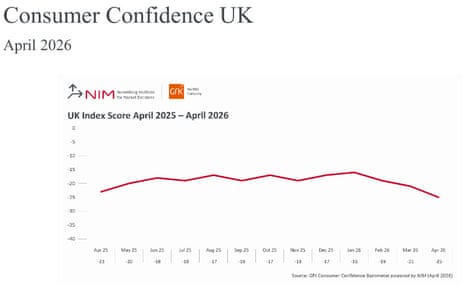
UK inflation rose to 3.3% in March, an increase primarily driven by an 8.7% year-on-year jump in fuel prices, according to data reported on 24 April. A GfK consumer confidence survey showed that public sentiment has fallen for the third consecutive month to its lowest point since autumn 2023. Archie Norman, chairman of Marks & Spencer, warned that a rise in food price inflation by the autumn is now "inevitable" due to escalating energy and fuel costs affecting farmers and retailers. The government has announced a £600 million energy support scheme for businesses, though many industry groups say it falls far short of what is needed. The Bank of England has noted that the protracted conflict is expected to suppress business investment, reversing earlier improvements in capital spending intentions.
Why It Matters
The economic pain is being felt across the country, from households struggling with higher fuel and food bills to businesses facing squeezed margins and reduced demand. The government's fiscal position is also under strain, with projections suggesting the UK's fiscal buffer could be reduced by as much as £16 billion due to the conflict's impact on public finances.
What's Next
The Chancellor is expected to face growing pressure to announce additional support measures for households and businesses. The Bank of England's Monetary Policy Committee will be closely watching inflation data as it considers whether to adjust interest rates. Much will depend on the trajectory of the conflict and whether diplomatic efforts to reopen the Strait of Hormuz succeed. For the latest business conditions, see the Bank of England's April 2026 Agents' Summary.