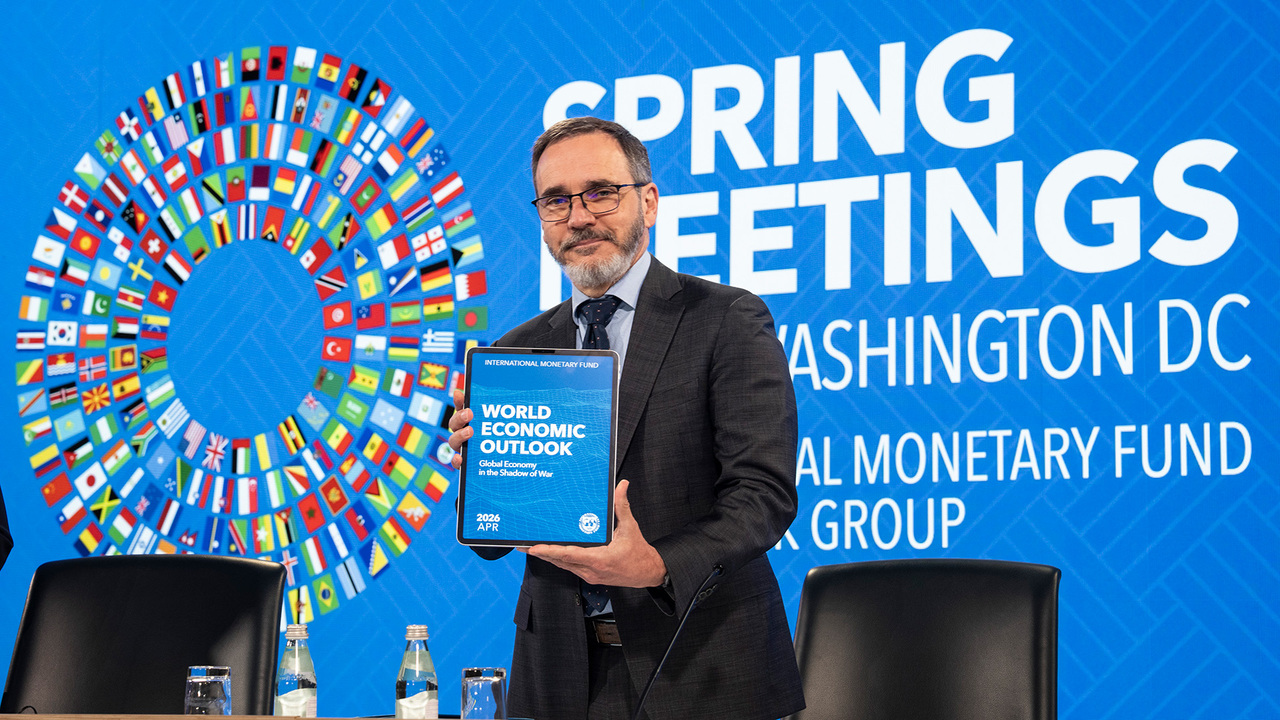
IMF Warns of Global Recession Risk as Iran War Drives Sharpest UK Growth Downgrade Among G7
The International Monetary Fund has cut its global growth forecast and warned that a prolonged war in Iran could trigger a worldwide recession, with the United Kingdom receiving the sharpest downgrade among G7 nations due to its particular vulnerability to soaring energy prices.
In its World Economic Outlook published on 14 April 2026, the IMF lowered its global growth projection for 2026 to 3.1%, down from 3.3%, citing the economic fallout from the conflict in West Asia and the US naval blockade of the Strait of Hormuz.
Background
The war in Iran, which began on 28 February 2026, has driven oil prices above $100 a barrel and severely disrupted global energy supplies. The Strait of Hormuz — through which approximately 20% of the world's oil and liquefied natural gas exports pass — has been blockaded by US naval forces, with Iran threatening to retaliate by blocking trade through the Red Sea.
The IMF's chief economist, Pierre-Olivier Gourinchas, warned that the world is "drifting more towards the adverse scenario" as the conflict continues, with global inflation now projected to rise to 4.4% — a 0.6 percentage point increase from January forecasts.
Key Developments
The UK received the sharpest growth downgrade among G7 nations, with its 2026 forecast cut by 0.5 percentage points to just 0.8%. The IMF warned that UK inflation could climb to almost 4%, double the government's 2% target, as energy costs surge. Chancellor Rachel Reeves, currently in Washington, has publicly questioned whether US-Israeli military strikes have made the world safer, signalling a degree of divergence between UK and US foreign policy approaches.
In a severe scenario where oil prices remain above $110 into 2027, the IMF warned global growth could collapse to approximately 2% — a level historically associated with worldwide recession, reached only four times since 1980. Iran's own GDP is forecast to decline by 6.1% in 2026.
Why It Matters
For UK households and businesses, the IMF's warning translates into higher energy bills, rising inflation, and slower economic growth at a time when the cost-of-living crisis is already acute. The Bank of England faces a difficult balancing act between fighting inflation and supporting growth.
What's Next
Diplomatic efforts to end the conflict are ongoing, with US-Iran talks reportedly taking place in Pakistan. The IMF has urged governments to focus on temporary, targeted emergency support rather than broad price caps, and called on central banks to remain vigilant. Sources: The Guardian, Reuters


