HSE Warns of High-Risk Synthetic Cannabinoids Found in Vapes Sold in Irish Shops as Psychosis Cases Rise
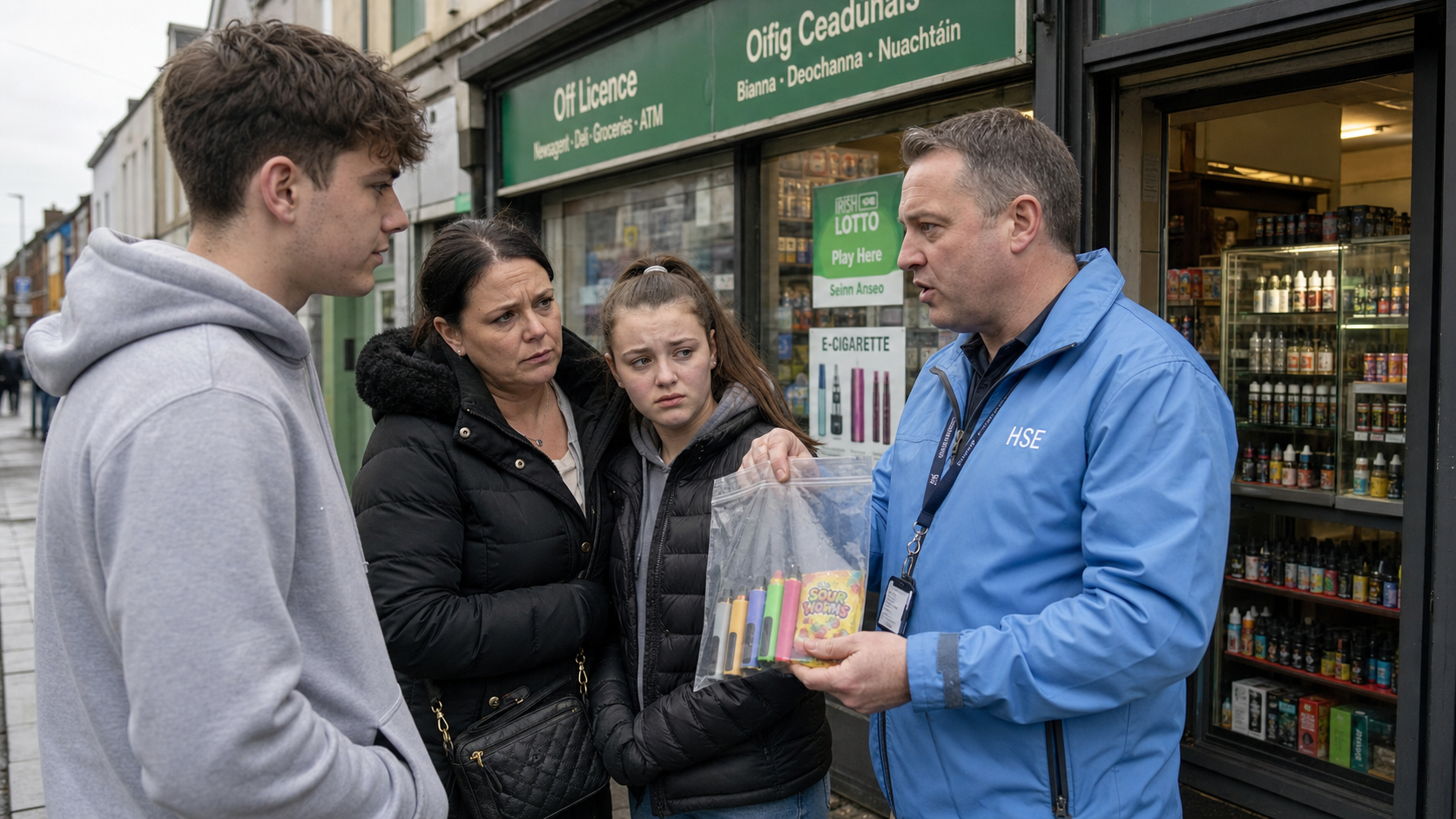
The HSE has issued an urgent public health warning after its Emerging Drug Trends Laboratory discovered high-risk synthetic and semi-synthetic cannabinoids in vapes, vape liquids, and edible products being sold in Irish shops and on the illicit market, with psychiatrists reporting a significant increase in young people presenting to emergency departments with psychosis, hallucinations, and severe intoxication after using products they believed to be legal or CBD-based.
Background
The vaping market in Ireland has grown dramatically over the past decade, driven by the perception that vaping is a safer alternative to smoking and by the aggressive marketing of vaping products to young people. While nicotine vapes are regulated under tobacco legislation, the market for CBD and other cannabinoid-based vaping products has operated in a regulatory grey area, with limited oversight of the substances contained in products sold in shops and online.
The emergence of synthetic cannabinoids — laboratory-created compounds that mimic the effects of cannabis but are often significantly more potent and more dangerous — has added a new and alarming dimension to this already complex landscape. Synthetic cannabinoids, sometimes known as "spice" or "mamba", have been associated with severe adverse health effects including psychosis, seizures, kidney failure, and death. They are typically much more potent than natural cannabis, and the dose-response relationship is unpredictable, meaning that small variations in the amount consumed can produce dramatically different effects.
The HSE's Emerging Drug Trends Laboratory, which monitors the Irish drug market for new and emerging substances, has been tracking the presence of synthetic cannabinoids in vaping products for several months. The findings published this month represent the most comprehensive analysis of the problem to date and have prompted the HSE to escalate its public health response.
Key Developments
The laboratory analysed 76 vape and vape juice samples collected from retail shops and the illicit market. The results were alarming: 28 samples contained hexahydrocannabinol (HHC) or related semi-synthetic cannabinoids; 8 samples contained potent synthetic cannabinoids of the "spice" variety; and 10 samples contained acetate-containing compounds associated with lung damage. Many of these products were being sold as CBD or nicotine vapes, with no indication on the packaging that they contained synthetic cannabinoids.
Professor Eamon Keenan, the HSE's Clinical Lead for Addiction Services, said the findings were "deeply concerning" and called for the establishment of a cross-stakeholder group involving the Department of Health, the Department of Justice, and the Health Products Regulatory Authority to develop a coordinated response. He also called for "agile legislation" capable of keeping pace with the constant evolution of new synthetic compounds, noting that the current regulatory framework was not designed to address the speed at which new substances are being developed and introduced to the market.
Psychiatrists working in emergency departments across Ireland have reported a significant increase in young people presenting with psychotic states, hallucinations, and delusions following the use of vaping products. In several cases, patients were unaware that the products they had used contained synthetic cannabinoids, having purchased them from shops as legal CBD products.
Why It Matters
The presence of synthetic cannabinoids in products sold legally in Irish shops represents a serious and immediate public health risk. Unlike illicit drugs, which are typically purchased through channels that at least carry some implicit acknowledgement of risk, these products are being sold in mainstream retail environments — newsagents, vape shops, and online retailers — in packaging that gives no indication of their true contents. Young people, whose brains are still developing and who are particularly vulnerable to the effects of potent psychoactive substances, are at greatest risk.
The regulatory gap that allows this situation to persist is a failure of the State's duty to protect public health. The HSE's call for a cross-stakeholder group and agile legislation is a reasonable response, but the urgency of the situation demands action on a faster timescale than the normal legislative process allows. Emergency powers to remove dangerous products from sale should be considered as an immediate measure while longer-term regulatory solutions are developed.
Local Impact
The impact of synthetic cannabinoids is being felt in emergency departments across Ireland, from the Mater and St Vincent's in Dublin to Cork University Hospital and University Hospital Galway. Psychiatrists and emergency medicine consultants have described the presentations as among the most challenging they encounter — patients in acute psychotic states who are often unable to communicate what they have taken and who require intensive monitoring and treatment. The burden on already stretched emergency services is significant, and the human cost to the young people affected and their families is immeasurable.
What's Next
The HSE has called on the public to be aware of the risks associated with vaping products that claim to contain CBD or other cannabinoids, and to seek medical attention immediately if they or someone they know experiences unusual symptoms after using such products. The Department of Health has indicated that it will convene a meeting of relevant agencies in the coming weeks to develop a coordinated response to the synthetic cannabinoid problem. The HSE's Safer Nightlife Programme will be expanding its outreach to include specific messaging about the risks of synthetic cannabinoids in vaping products, targeting young people in the settings where they are most likely to encounter these substances.