HSE Responds to Midlands Prison Overdose Crisis as Drone Drug Deliveries Expose Gaps in Prison Healthcare
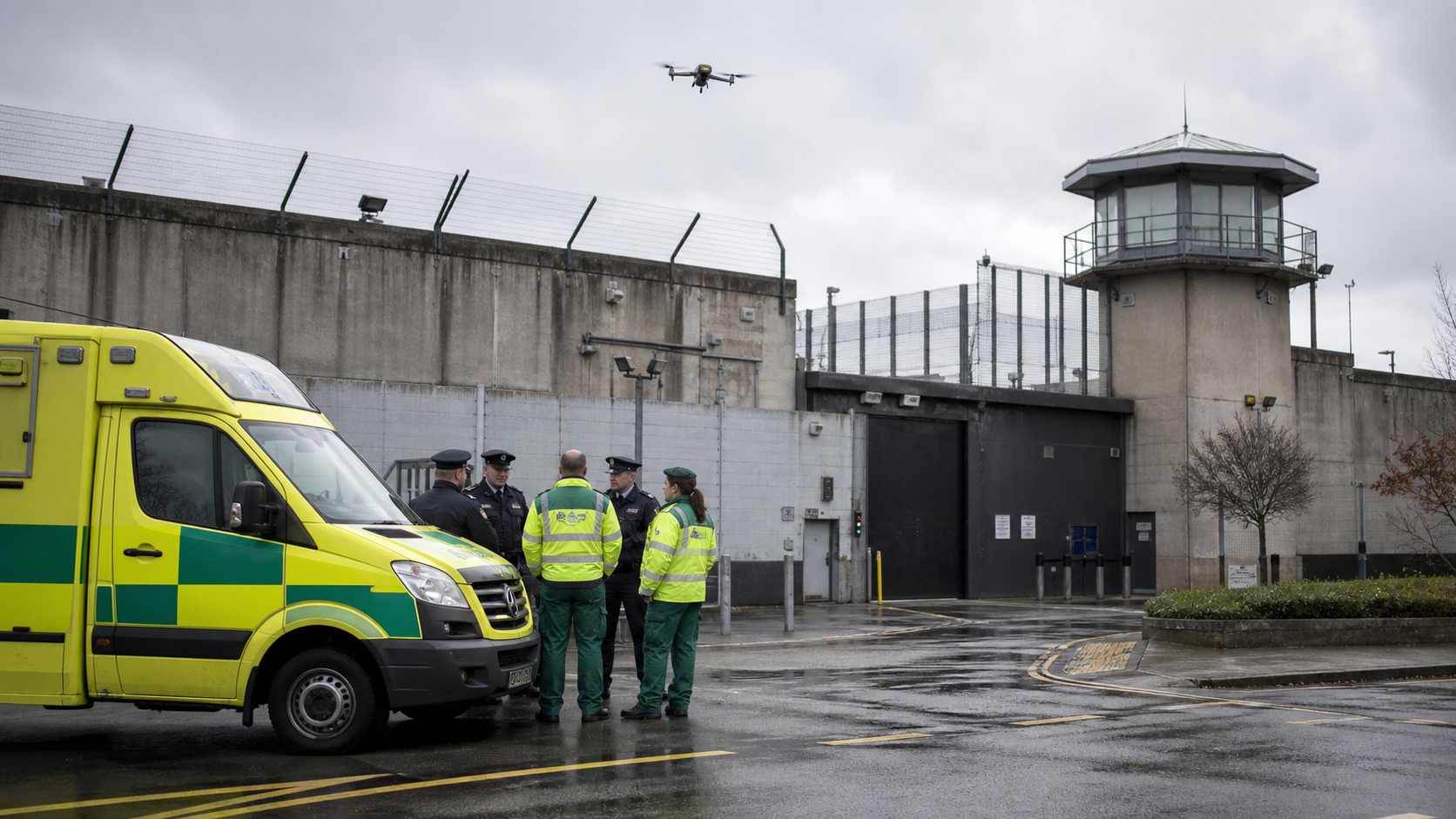
The HSE is working closely with the Irish Prison Service to manage the medical aftermath of Friday's mass overdose at the Midlands Prison in Portlaoise, where nine inmates consumed toxic drugs dropped by drone into the facility's exercise yard, with one prisoner remaining in an induced coma and the incident exposing significant gaps in prison healthcare provision and the management of drug dependency among Ireland's prison population.
Background
Drug dependency is one of the most significant health challenges facing Ireland's prison population. Studies consistently show that a substantial proportion of people entering Irish prisons have pre-existing drug dependency issues — estimates suggest that between 50% and 70% of prisoners have used illegal drugs in the period before their imprisonment, and a significant proportion are dependent on opioids, benzodiazepines, or other substances. The prison environment, with its stresses, its social dynamics, and its ready supply of contraband, can exacerbate rather than address these dependencies. The HSE provides healthcare services to Irish prisons through a dedicated prison healthcare programme, which includes addiction treatment, mental health services, and general medical care. However, the programme has been consistently underfunded relative to the scale of need, and the quality of healthcare available to prisoners varies significantly between facilities. The introduction of synthetic drugs — including novel psychoactive substances and synthetic opioids — into Irish prisons has created a new and particularly dangerous dimension to the drug dependency problem. These substances, which are often of unknown composition and potency, pose a significantly higher risk of overdose than traditional drugs, and the prison environment — where substances are consumed quickly and covertly to avoid detection — makes the risk even greater.
Key Developments
The HSE's response to Friday's overdose crisis at the Midlands Prison has involved the deployment of additional medical personnel to the prison's healthcare unit and close coordination with the Midland Regional Hospital in Portlaoise, which received several of the most seriously affected prisoners. One prisoner remains in an induced coma, and the HSE has confirmed that it is providing intensive care support to that individual. The other prisoners who required hospital treatment have been assessed and are receiving ongoing medical care. The HSE has also activated its toxicology services to identify the specific substances involved in the overdoses, which will inform both the immediate medical response and the longer-term public health response. The Irish Prison Service has implemented a series of security measures in response to the incident, including heightened surveillance, increased cell searches, and the deployment of canine units. The IPS has also launched an information campaign warning prisoners about the dangers of consuming contraband substances — a campaign that the HSE's addiction services team is supporting with harm reduction messaging.
Why It Matters
The Midlands Prison overdose crisis is a stark illustration of the consequences of inadequate investment in prison healthcare and addiction treatment. If the prisoners who consumed the drone-delivered drugs had access to effective addiction treatment — including medication-assisted treatment for opioid dependency — they would be less likely to seek out and consume dangerous contraband substances. The harm reduction approach that has proven effective in community settings — including needle exchange programmes, naloxone distribution, and supervised consumption facilities — has been only partially implemented in Irish prisons, leaving a significant gap in the safety net for the most vulnerable members of the prison population. The use of drones to deliver drugs into prisons is a security challenge, but it is also a public health challenge. The substances being delivered are increasingly potent and increasingly dangerous, and the prison population — with its high rates of pre-existing dependency and its limited access to healthcare — is particularly vulnerable to their effects.
Local Impact
The Midland Regional Hospital in Portlaoise has been managing the medical consequences of the prison overdoses, with its emergency department and intensive care unit under additional pressure. The HSE's Midlands area has been asked to provide additional support to the prison's medical unit, and the HSE's national addiction services team is reviewing the harm reduction resources available at the Midlands Prison. The Irish Prison Officers' Association has called for an urgent review of healthcare provision at the prison and has expressed concern about the safety of staff who were assaulted during the incident.
What's Next
The HSE will continue to provide medical support to the prisoners affected by the overdoses, with the prisoner in an induced coma receiving intensive care at the Midland Regional Hospital. The HSE's toxicology services will publish their findings on the substances involved in the overdoses in the coming days. The Oireachtas Health Committee is expected to request a briefing from the HSE and the Irish Prison Service on the incident and on the broader challenge of drug dependency in Irish prisons. The Minister for Health has been asked to provide a statement on the government's plans to improve healthcare provision in Irish prisons, including addiction treatment and harm reduction services.