HSE €580 Million Over Budget as Health Spending Crisis Deepens Ahead of Budget 2027
The Health Service Executive is €580 million over budget as of the end of July 2026, according to figures that have emerged in the run-up to Budget 2027, with the overrun driven by rising staff costs, increased demand for services, and the structural pressure of waiting lists that now affect nearly one million patients on acute hospital lists alone. The Department of Health is expected to seek a significant supplementary estimate before the end of the financial year, and the overrun will be a central issue in the Budget negotiations as the government seeks to balance fiscal responsibility with the urgent need to invest in health services.
Background
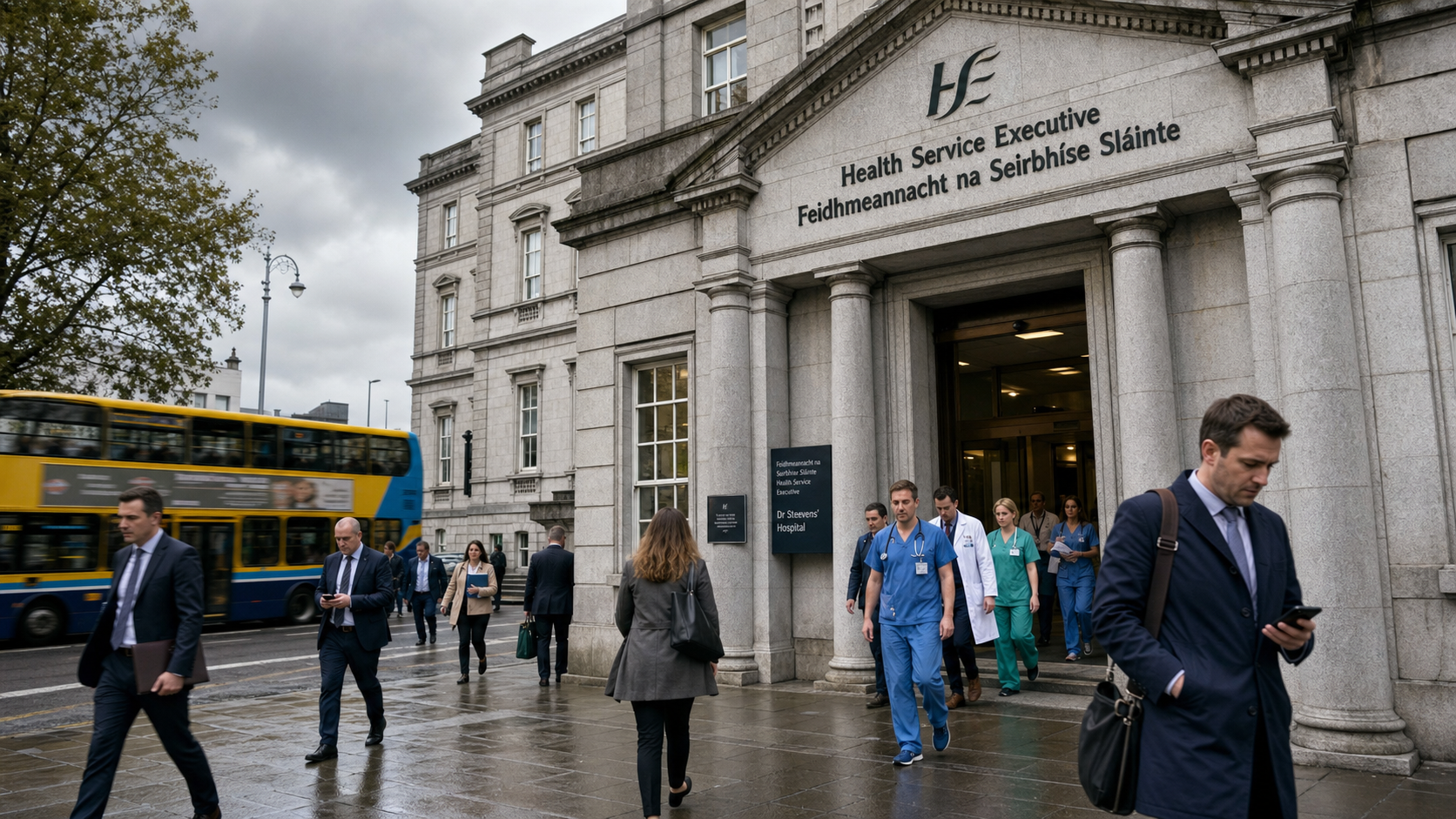
The HSE is the largest public sector organisation in Ireland, employing more than 130,000 people and managing an annual budget of approximately €22 billion. It is responsible for the delivery of health and social care services across the Republic of Ireland, from primary care and community services to acute hospital care and specialist services. The scale and complexity of the organisation make it inherently difficult to manage within a fixed budget, particularly in a period of rising demand, increasing staff costs, and growing public expectations about the quality and accessibility of health services.
The HSE has been over budget in most recent years, reflecting the structural mismatch between the resources allocated to health and the actual cost of delivering the services that the population needs. The government has responded to previous overruns with supplementary estimates — additional allocations of funding approved by the Dáil — but this approach has been criticised by the Irish Fiscal Advisory Council and by opposition parties as a failure of financial management that undermines the credibility of the budgetary process.
The 2026 overrun of €580 million as of the end of July is particularly concerning because it is running at a rate that suggests the full-year overrun could be significantly larger. If the current trajectory continues, the HSE could be €800 million to €1 billion over budget by the end of December — a figure that would represent one of the largest health spending overruns in the history of the state.
Key Developments
The €580 million overrun as of the end of July has been driven by several factors. Staff costs, which account for the largest share of the HSE's expenditure, have risen significantly as a result of the public sector pay agreements of recent years and the ongoing pressure to recruit and retain staff in a competitive labour market. The HSE has been paying significant amounts in agency and overtime costs to cover staffing gaps, which are more expensive than employing permanent staff but are necessary to maintain service levels.
Demand for services has also increased significantly, driven by population growth, an ageing population, and the backlog of care that built up during the Covid-19 pandemic. The acute hospital waiting list, which now affects nearly one million patients, is a direct consequence of this demand pressure, and the cost of managing the waiting list — through additional clinics, extended hours, and outsourcing to private hospitals — is a significant contributor to the overrun.
The Department of Health has indicated that it will seek a supplementary estimate before the end of the year to cover the overrun, but has not yet specified the amount. The supplementary estimate will need to be approved by the Dáil, and opposition parties have indicated that they will use the debate on the estimate to press the government on its plans for reforming the management of health spending.
Why It Matters
The HSE's budget overrun matters for several reasons. First, it represents a failure of financial management that has real consequences for the credibility of the government's fiscal strategy. If the HSE is consistently over budget, it undermines the government's ability to plan public finances with confidence and creates uncertainty about the sustainability of health spending. Second, the overrun reflects the structural underfunding of the health service, which has been operating under significant pressure for many years without the investment needed to address the underlying causes of the problem. Third, the overrun will be a central issue in the Budget 2027 negotiations, with the government under pressure to provide additional funding for health while also meeting its commitments on tax cuts and other spending priorities.
For patients, the overrun is a reminder that the health system is under severe strain. The nearly one million people on acute hospital waiting lists are waiting for care that they need, and the HSE's budget difficulties make it harder to address those waiting lists in a timely way. The primary care waiting list, which affects more than 284,000 people, adds to the picture of a health system that is struggling to meet the needs of the population it serves.
Local Impact
The HSE's budget overrun has direct implications for health services across Ireland. In Dublin, the major acute hospitals — the Mater, St Vincent's, Beaumont, and Tallaght — are all operating under significant pressure, with emergency departments frequently on diversion and elective procedures being deferred to manage costs. In Cork, the Mercy University Hospital and Cork University Hospital are facing similar pressures. In Galway, University Hospital Galway has been one of the most consistently overcrowded hospitals in the country, with patients regularly waiting on trolleys in emergency departments. In Northern Ireland, the situation is managed separately by the Department of Health and the five health and social care trusts, but the pressures are similar, with waiting lists among the longest in the United Kingdom.
What's Next
The Department of Health is expected to present a supplementary estimate to the Dáil before the end of October, seeking additional funding to cover the HSE's overrun. The amount of the supplementary estimate will depend on the trajectory of spending in August and September, and on the government's assessment of the likely full-year position. Budget 2027, scheduled for 14 October, will include a significant health allocation, but the scale of the overrun means that the additional funding provided in the Budget may be largely absorbed by the cost of covering the 2026 deficit rather than providing new investment in services. The Oireachtas Health Committee is expected to hold a series of hearings on the overrun in September and October, with the HSE director general and the Secretary General of the Department of Health expected to appear before the committee.