Housing Completions Hit 15-Year High in Record Start to 2026, But Supply Gap Persists
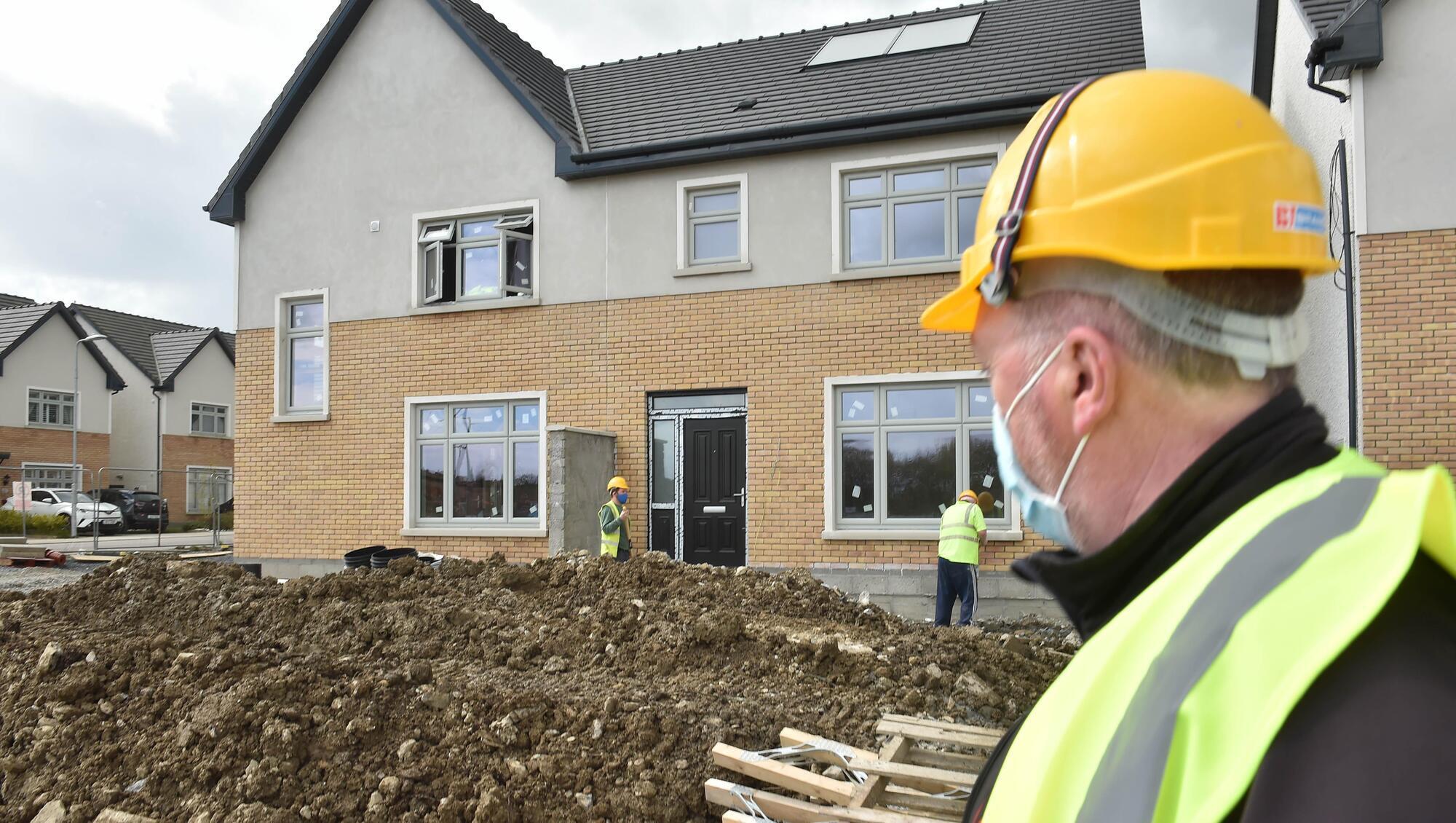
Ireland recorded 7,856 new home completions in the first quarter of 2026, a 32.9% increase on the same period last year and the highest Q1 figure since 2011, according to data published by the Central Statistics Office — a milestone that the government has welcomed as evidence of progress on the housing crisis, but which analysts warn still falls far short of the annual supply needed to address Ireland's chronic housing shortage.
Background
Ireland's housing crisis has been the defining domestic policy challenge of the past decade. The collapse of the construction sector during the financial crisis of 2008-2012 left a legacy of severely depleted supply that has taken years to address. At the nadir of the crisis, fewer than 5,000 new homes were completed annually — a fraction of the number needed to meet population growth, household formation, and the replacement of obsolete stock. The consequences have been severe: record rents, soaring house prices, a homelessness crisis that has proved stubbornly resistant to policy intervention, and a generation of young people who have effectively been priced out of homeownership.
The recovery in construction output that began in the mid-2010s has been gradual and uneven. Progress has been hampered by a range of structural constraints, including a shortage of skilled construction workers, high land costs, planning delays, and the elevated cost of building materials. The government has introduced a succession of housing plans — Rebuilding Ireland, Housing for All, and the current Housing Action Plan — each promising to accelerate supply, with mixed results.
The Q1 2026 figures represent the most encouraging data point in several years, suggesting that the sector's capacity is greater than previously assumed and that the various policy interventions — including the Help to Buy scheme, the Land Development Agency, and the Croí Cónaithe apartment subsidy — may be beginning to have a meaningful impact on output.
Key Developments
The CSO data shows that 7,856 new homes were completed in the first three months of 2026, compared with 5,910 in Q1 2025 — an increase of 32.9%. The apartment sector performed particularly strongly, with 2,355 units completed, a 33.3% increase on the previous year. Dublin accounted for 32.3% of all completions, reflecting the concentration of apartment development in the capital, while the rest of Leinster, Munster, and Connacht-Ulster all recorded significant increases.
Bank of Ireland economists have revised their full-year forecast for 2026 upwards to as high as 40,000 completions, which would represent the highest annual total since the peak of the Celtic Tiger era. However, they have been careful to note that even 40,000 completions would fall well short of the estimated annual requirement of over 50,000 units — a figure that takes into account population growth, household formation rates, and the need to replace obsolete and substandard housing stock.
The ESRI has sounded a note of caution about the medium-term outlook, warning that the pipeline of new housing projects — as measured by planning permissions and commencement notices — may be weakening. If this trend continues, the strong Q1 figures may not be sustained into 2027 and beyond. Housing charities have also warned that the increase in completions, while welcome, has not yet translated into a meaningful reduction in rents or house prices, and that the homelessness figures remain at record levels.
Why It Matters
The Q1 2026 figures are significant not just as a data point but as a signal about the direction of travel. After years of disappointing output, the construction sector appears to be demonstrating a capacity for growth that had been questioned by some analysts. If the momentum can be maintained — and if the pipeline of projects in planning and under construction is sufficient to sustain it — Ireland could be on course for its highest annual housing output in nearly two decades.
But the gap between supply and demand remains enormous, and the consequences of that gap are felt every day by the hundreds of thousands of people who are paying unaffordable rents, living in overcrowded conditions, or waiting on social housing lists. The record Q1 figures are a necessary but not sufficient condition for resolving the housing crisis. What is also needed is a sustained commitment to supply over many years, a planning system that can process applications quickly and consistently, and a construction sector that has the workforce and the financial capacity to deliver at scale.
The apartment sector's strong performance is particularly encouraging, given that apartments are the most efficient use of urban land and the most important component of any strategy to increase density in cities and towns. The Croí Cónaithe subsidy, which provides financial support for apartment development in urban areas, appears to be having a positive effect, though housing economists have warned that the subsidy needs to be maintained and potentially expanded if the apartment pipeline is to be sustained.
Local Impact
In Dublin, which accounted for nearly a third of all completions, the new homes are being delivered across a range of locations, from large-scale apartment developments in the Docklands and along the Luas lines to more traditional housing estates in the outer suburbs. The Dublin City Council area, Fingal, South Dublin, and Dún Laoghaire-Rathdown all recorded increases in completions, though the pace of delivery varies significantly between local authority areas.
In Cork, Galway, and Limerick — the three largest cities outside Dublin — completions also increased, though from a lower base. The government's regional cities programme, which aims to accelerate development in these centres as an alternative to Dublin, has had some success in attracting investment, but planning and infrastructure constraints continue to limit the pace of delivery. Irish Rail and Bus Éireann have flagged that transport infrastructure in several of the fastest-growing suburban areas is struggling to keep pace with housing development.
What's Next
The CSO will publish Q2 2026 housing completion figures in October, which will provide a clearer picture of whether the strong Q1 performance is being sustained. The government's Housing Action Plan is due for its mid-year review in July, with the Minister for Housing expected to announce any adjustments to policy or targets. The Land Development Agency is expected to bring several large-scale social and affordable housing projects to construction commencement before the end of the year, which will add to the pipeline for 2027 and beyond.