Homebirth Options in Underserved West of Ireland Could Be Expanded Under New HSE Proposals as Midwife-Led Care Gains Ground
New HSE proposals under development could significantly expand homebirth options in the underserved west of Ireland, where women in counties including Galway, Mayo, Clare, and Roscommon currently face significant barriers to accessing midwife-led care — with the proposals forming part of a broader effort to reduce Ireland's high caesarean section rate and to give women more choice and control over their birth experiences.
Background
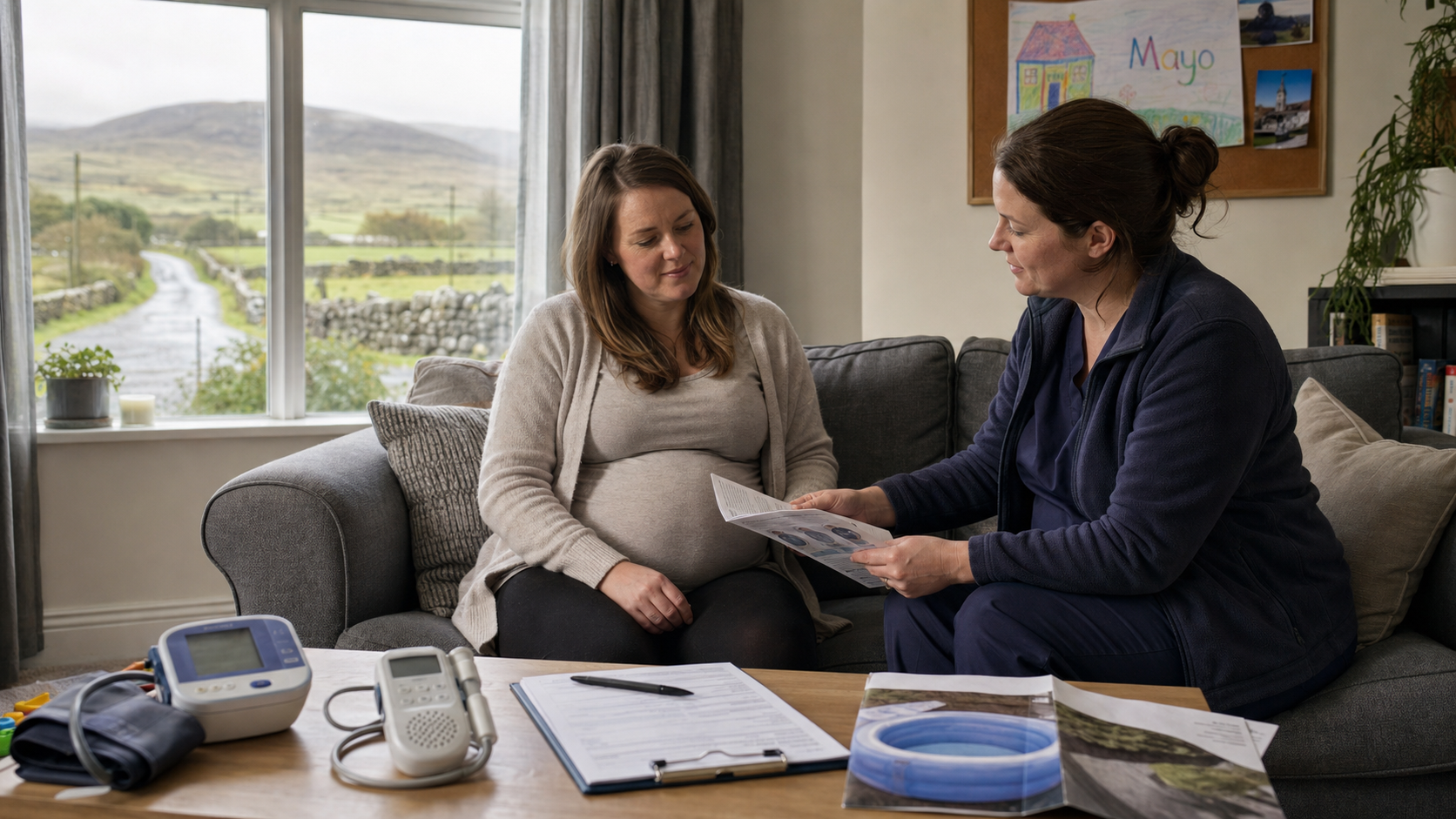
The homebirth service in Ireland is provided through the HSE's National Home Birth Service, which uses self-employed community midwives who have entered into a memorandum of understanding with the HSE. The service is available to women with low-risk pregnancies who meet specific eligibility criteria, and it provides care during pregnancy, labour, birth, and up to 14 days postnatally, free of charge to eligible women.
The service has historically been unevenly distributed across the country, with significantly better coverage in the greater Dublin area and in parts of Munster than in the west and northwest of Ireland. Women in counties including Galway, Mayo, Roscommon, Sligo, and Leitrim have faced particular difficulties in accessing homebirth services, either because there are no self-employed community midwives operating in their area or because the nearest midwife is too far away to provide the required level of care.
The National Maternity Strategy, published in 2016, committed to expanding access to homebirth services as part of a broader effort to give women more choice in how and where they give birth. Progress on this commitment has been slow, however, and the gap between the strategy's ambitions and the reality of service provision in many parts of the country remains significant. The transition to the public-only model of maternity care has added complexity to the homebirth service, as the role of self-employed community midwives within the new framework has needed to be clarified.
Key Developments
The HSE is understood to be developing proposals that would increase the number of self-employed community midwives operating in the west of Ireland, with a particular focus on counties where homebirth services are currently unavailable or very limited. The proposals would involve the HSE actively recruiting midwives to work in these areas and providing them with the support and infrastructure they need to establish sustainable practices.
The proposals are part of a broader effort to expand midwife-led care in Ireland, which includes the development of midwife-led units attached to maternity hospitals and the expansion of community midwifery services. Research consistently shows that midwife-led care is associated with lower intervention rates, higher levels of maternal satisfaction, and comparable or better outcomes for mothers and babies compared to consultant-led care for low-risk pregnancies.
The Midwest region, which covers counties Limerick, Clare, and Tipperary, has been without a HSE homebirth service since a temporary suspension was put in place in April 2026 pending the outcome of an external review. The review is expected to report in the coming months, and its findings will inform decisions about the future of the service in the region. Women in the Midwest who wish to have a homebirth are currently required to engage a private midwife, which involves additional costs and the absence of the HSE's clinical indemnity cover.
Why It Matters
The expansion of homebirth options in the west of Ireland matters for several reasons. At the most immediate level, it would give women in these areas the same choices that are available to women in Dublin and other parts of the country — a basic question of equity in access to healthcare. The principle that a woman's birth choices should not be determined by her postcode is one that the HSE and the government have committed to in principle, and the proposals under development represent an attempt to make that commitment a reality.
More broadly, the expansion of homebirth services is part of a wider effort to reduce Ireland's high caesarean section rate and to shift the culture of maternity care toward a model that respects women's autonomy and supports physiological birth where it is safe to do so. The evidence base for midwife-led care is strong, and the expansion of homebirth services is one of the most cost-effective ways of improving outcomes and satisfaction for low-risk pregnancies.
For context, the homebirth rate in Ireland is approximately 0.5% of all births — significantly lower than in countries such as the Netherlands, where homebirth accounts for approximately 13% of births, and the United Kingdom, where the rate is approximately 2.4%. The low Irish rate reflects both the limited availability of homebirth services and the cultural preference for hospital birth that has developed over decades of a highly medicalised maternity system.
Local Impact
In the west of Ireland, the expansion of homebirth services would be particularly significant for women in rural areas who currently face long journeys to reach their nearest maternity unit. In County Mayo, for example, women in the north and west of the county can face journeys of over an hour to reach Mayo University Hospital in Castlebar, and the prospect of making that journey in active labour is a source of significant anxiety for many families. Access to a community midwife who can provide care at home would transform the birth experience for these women.
In Galway, where the University Hospital Galway maternity unit serves a large and geographically dispersed population, the expansion of community midwifery services would help to reduce pressure on the hospital and to provide women with more appropriate care in their own communities. The Galway Roscommon Community Healthcare Organisation has been working with the HSE to develop proposals for expanded community midwifery in the region.
What's Next
The HSE proposals for expanding homebirth services in the west of Ireland are expected to be finalised in the coming months, with a public consultation process likely to be conducted before any decisions are made. The review of the Midwest homebirth service is expected to report before the end of 2026. Budget 2027 is expected to include funding for the expansion of community midwifery services, though the scale of the investment will depend on the outcome of the budget negotiations. The Oireachtas Committee on Health is expected to consider the proposals as part of its broader review of maternity services.