Historic 1926 Irish Census Released: Over 1,000 People Recorded Are Still Alive Today
A moment of profound historical significance unfolded on 18 April 2026 with the public release of the complete records from the 1926 Census of the Irish Free State, with the remarkable discovery that over 1,000 individuals recorded in the census are still alive today, exactly 100 years after it was taken.
Background
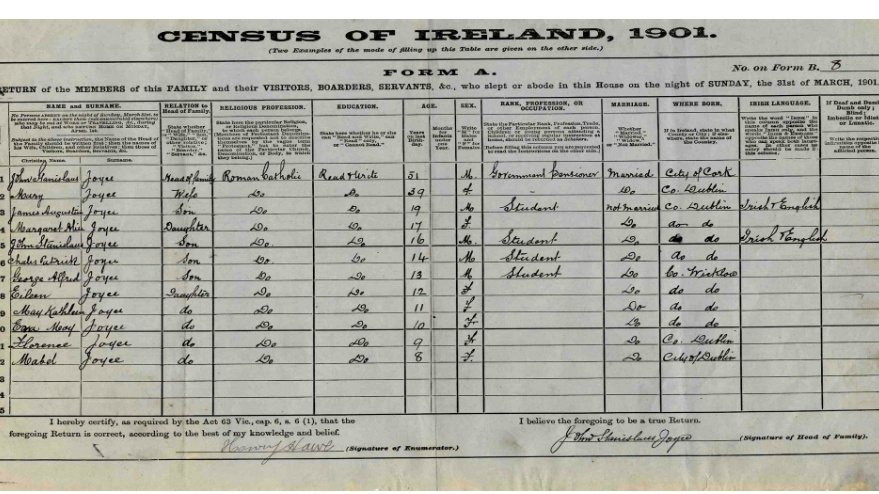
The 1926 Census was the first census conducted by the independent Irish Free State following the establishment of the new nation in 1922, taken on the night of 18 April 1926. It recorded a population of 2,971,992 people across the 26 counties, capturing a snapshot of Irish society at a pivotal moment — just years after the tumultuous War of Independence and the Civil War. The census forms, available in either Irish or English, collected 13 key pieces of information for each person, including name, age, sex, marital status, birthplace, religion, occupation, and ability to speak the Irish language.
The National Archives of Ireland undertook a monumental three-year project to bring these records to the public, supported by a €5 million government investment. The work involved the meticulous conservation, preservation, and high-resolution digitisation of over 700,000 individual household returns. The result is a fully searchable, freely accessible database available to anyone in the world through the National Archives website.
The release fills a critical ten-year gap in Irish genealogical records left by the cancellation of the 1921 census during the War of Independence, making it an invaluable resource for the millions of people of Irish descent around the world who are tracing their family history.
Key Developments
The digitised database went live at midnight on 18 April 2026, exactly 100 years to the day after the census was taken. The release provoked widespread public interest, with genealogists, historians, and members of the public eager to explore the records and discover information about their ancestors. Remarkably, it is estimated that over 1,000 individuals recorded in the census are still alive today, bridging the gap between past and present in a deeply personal way.
Orlaith McBride, Director of the National Archives, remarked: "The 1926 Census marks an incredible moment in Irish history. We had just had a decade of revolution, upheaval and conflict. History records the big moments, the big events in people's lives, but actually the census returns tell the stories and the colour of people's lives across Ireland." Taoiseach Micheál Martin described the release as an opportunity for deeper understanding, stating: "I'm honoured to mark the official release of Census 1926 by the National Archives, the first census undertaken by the independent Irish Free State. It brings history out of the abstract and into the everyday."
The release was accompanied by a major free exhibition at the Coach House Gallery in Dublin Castle, titled 'The Story of Us: Census 1926', running from 19 April 2026 to 15 August 2027. The exhibition uses contemporary documents, photographs, and audio-visual displays to explore the daily lives of ordinary people in the new state, with international tour stops planned for London and Boston.
Why It Matters
The release of the 1926 Census is a landmark event for Irish cultural heritage and genealogy. For the millions of people of Irish descent around the world — including the substantial Irish diaspora communities in Britain, the United States, and Australia — the database provides an invaluable resource for tracing family history and connecting with their roots. The fact that over 1,000 people recorded in the census are still alive adds a remarkable human dimension to the historical record, making the past feel immediate and tangible in a way that few archival releases can achieve.
The census also provides historians and social scientists with a rich source of data about Irish society in the early years of independence, offering insights into occupations, family structures, religious affiliations, and living conditions that can inform our understanding of how modern Ireland came to be. The €5 million investment in digitisation reflects a recognition of the cultural and economic value of making such records freely accessible to a global audience.
Local Impact
For communities in Northern Ireland and the border counties, the 1926 Census carries particular resonance. Many families on both sides of the border have roots in the 26 counties recorded in the census, and the release offers a new avenue for exploring those connections. Belfast's substantial Irish-heritage community, along with genealogical societies across Northern Ireland, are expected to make extensive use of the newly available records. The cross-border dimension of Irish genealogy means that the release is as significant for communities in the North as it is for those in the Republic, reinforcing shared historical ties that transcend political boundaries.
What's Next
The National Archives has indicated that the database will be continuously improved and expanded with additional contextual information. The accompanying exhibition at Dublin Castle is expected to draw significant visitor numbers throughout its run to August 2027. Full access to the census records is available at the National Archives of Ireland, while further details on the government's investment in the project are available via Gov.ie.