A Bill Under Fire
The Irish government is facing intense criticism from opposition parties and civil society organisations over its handling of the Occupied Territories Bill, with accusations that the legislation has been significantly weakened by the exclusion of services from its scope. The bill, which is intended to prohibit trade with illegal Israeli settlements in the occupied Palestinian territories, was originally conceived as a comprehensive measure covering both goods and services. However, the government has indicated that the legislation as currently drafted will apply only to goods, leaving a significant gap that critics argue renders it largely ineffective.
The decision to exclude services from the bill has been attributed in part to pressure from the United States, which has expressed concerns about the potential implications of the legislation for American companies operating in the region. Ireland's embassy in Washington is understood to have warned of potential consequences if the bill passes in its current form, adding a diplomatic dimension to what is already a highly charged political debate.
Opposition Reaction
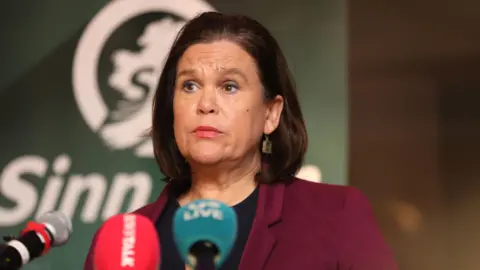
Opposition parties have reacted with fury to the government's position, accusing ministers of capitulating to American pressure and betraying Ireland's longstanding commitment to Palestinian rights. Sinn Féin, the Social Democrats, and People Before Profit have all called for the bill to be strengthened to include services, arguing that a goods-only measure will have limited practical impact given the nature of modern economic activity in the settlements.
Several opposition TDs have vowed to introduce amendments to the bill in the Dáil to restore the services provisions, setting up a potentially significant confrontation with the government. The outcome of this battle will be closely watched by human rights organisations, the Palestinian community in Ireland, and international observers who have been following Ireland's approach to the Israeli-Palestinian conflict.
The Government's Defence
Government ministers have defended their approach, arguing that the bill as drafted represents a significant and meaningful step in Ireland's response to the situation in the occupied territories. They have pointed to the legal and diplomatic complexities involved in extending the legislation to services and have argued that a goods-only measure is both legally robust and practically significant.
The Tánaiste has indicated that the government remains open to exploring how services might be addressed in future legislation or through EU-level action, and has pointed to Ireland's role in pushing for a stronger EU response to the situation in the occupied territories. However, critics have argued that these assurances are insufficient and that the government is using procedural and diplomatic arguments to avoid taking the stronger action that the situation demands.
The Broader Context
The debate over the Occupied Territories Bill is taking place against the backdrop of Ireland's assumption of the EU Council Presidency on July 1, 2026. Ireland has indicated that it intends to use its presidency to push for a stronger EU response to the situation in Gaza and the occupied territories, including the possibility of EU-wide legislation similar to the Occupied Territories Bill. This ambition sits in some tension with the government's decision to weaken the domestic legislation, and critics have argued that Ireland's credibility as an advocate for Palestinian rights will be undermined if it fails to pass a robust domestic bill.
The Occupied Territories Bill has been a long-running saga in Irish politics, having been first introduced in the Seanad in 2018 and having faced numerous obstacles in the years since. The current controversy over the exclusion of services is the latest chapter in this story, and it remains to be seen whether the government will face sufficient political pressure to restore the services provisions before the bill is finally enacted.