Foyle Cup 2026 Breaks All Records as Over 1,000 Teams Register for Derry's Six-Day Football Festival
The O'Neills Foyle Cup has crossed a milestone that once seemed unimaginable: for the first time in its 34-year history, more than 1,000 teams have registered to compete, with 1,013 sides from Ireland, Europe and North America confirmed for the July 2026 edition of what has become one of the most celebrated youth football tournaments on the continent.
Background
The Foyle Cup was founded in 1992 with just eight teams and a simple ambition — to give young footballers in the north-west of Ireland a competitive platform and a reason to stay connected to the game. What began as a modest local initiative has grown, year by year, into a genuinely international event that draws clubs from across the British Isles, continental Europe and North America, all converging on Derry and the surrounding counties for six days of football each July.
The tournament has long been regarded as a cornerstone of the north-west's sporting calendar, but its growth in recent years has been remarkable even by its own standards. The 2024 edition attracted around 850 teams; the 2025 edition pushed past 950. The 1,000-team barrier was spoken of as a long-term aspiration, something to aim for rather than expect. That it has arrived in 2026 — and been exceeded — has caught even the tournament's most optimistic organisers by surprise.
The competition is named after the River Foyle, which runs through the heart of Derry city, and it carries with it a strong sense of civic pride. For many families in the north-west, the Foyle Cup is as much a community gathering as a sporting event — a week when the city fills with accents from across the world and the pitches of Donegal, Derry and Tyrone ring with the sound of youth football at its most joyful.
Key Developments
The record registration was announced at an official launch event held at the North West Regional College, where Derry City FC captain Michael Duffy — himself a former Foyle Cup participant — helped unveil the group stage draws for all age categories. Duffy paid tribute to the late Gerry "Doc" Doherty, the pioneering figure whose vision helped establish the tournament in its early years and whose legacy continues to shape its ethos.
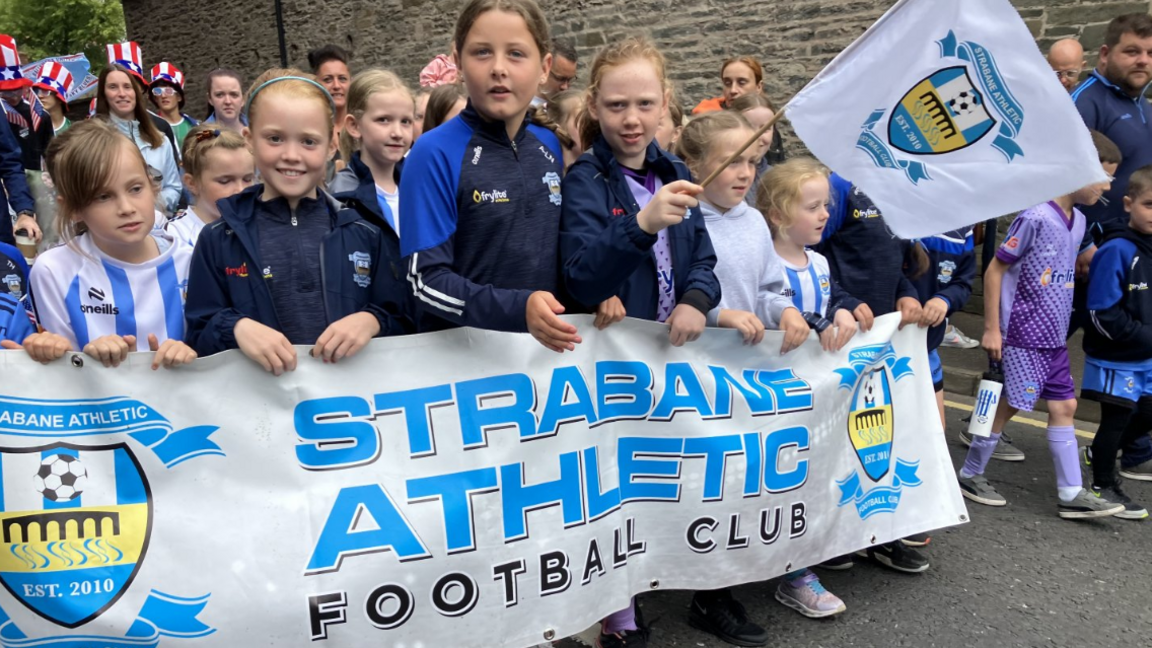
The 1,013 confirmed teams will produce 3,942 matches across the six-day period from 20 to 25 July, totalling more than 191,000 minutes of competitive football. Matches will be spread across more than 60 venues, taking in locations across Derry city, Strabane, Limavady, Claudy, Greysteel, Coleraine, Dungiven, Castledawson, Inishowen and across County Donegal. Boys', girls' and disability categories are all represented, with age groups ranging from Under-8 to Under-19.
John Carrigan, a key figure in the tournament's organisation, described the milestone as a reflection of the event's growing international reputation. "This is a testament to the work of everyone who has given their time to this tournament over three decades," he said. "We started with eight teams and a dream. To be here now, with over a thousand teams from across the world, is something that would have seemed impossible in 1992."
Why It Matters
The Foyle Cup's record registration is not merely a sporting statistic — it is a significant economic and cultural event for a region that has historically faced challenges in attracting large-scale investment and tourism. The tournament is expected to generate between £8 million and £10 million for the north-west economy across the six days, with hotels, guesthouses, restaurants and retailers in Derry, Strabane and the wider area all benefiting from the influx of more than 200,000 expected spectators.
For context, the Foyle Cup now rivals some of the largest youth football tournaments in Europe in terms of participation numbers. Events such as the Dana Cup in Denmark and the Gothia Cup in Sweden have long been benchmarks for international youth football; the Foyle Cup's 2026 edition places it firmly in that company. That this is happening in Derry — a city of around 90,000 people — makes the achievement all the more striking.
There is also a broader significance in the tournament's cross-community and cross-border character. Teams from both traditions in Northern Ireland compete alongside clubs from the Republic, from Britain and from further afield, in an environment that is defined by sport rather than division. In a week when Northern Ireland has been in the news for less welcome reasons, the Foyle Cup offers a reminder of what the north-west is capable of when it comes together.
Local Impact
The practical impact on Derry city and the surrounding area will be felt across every sector of the local economy. Hotels in the city centre and along the Waterside have already reported strong bookings for the tournament week, with many fully committed months in advance. The Inishowen peninsula in Donegal, which hosts a number of the tournament's venues, will also see a significant boost to its hospitality sector during what is traditionally a quieter period before the main summer holiday rush.
For the young players themselves — many of whom will be visiting the north-west for the first time — the tournament offers an experience that extends well beyond football. Families travel with teams, exploring the Walled City, the Causeway Coast and the wider north-west during their stay. Local schools and community organisations have historically used the tournament as an opportunity to showcase the region's culture and heritage to international visitors.
What's Next
The group stage draws have now been completed, and teams will begin receiving their fixture schedules in the coming weeks. Tournament organisers will hold a series of briefing sessions for participating clubs throughout June and early July, covering logistics, venue access and the competition format. The opening ceremony is scheduled for the evening of 20 July at a central Derry venue, with the first matches getting under way the following morning. The final will take place on 25 July, bringing six days of record-breaking football to a close.