Four Endangered Curlew Chicks Released into Wild After Dramatic Rescue from Slieve Beagh Wildfire
Four endangered curlew chicks have been released back into the wild on Slieve Beagh, the upland bog straddling counties Fermanagh, Tyrone, and Monaghan, following a remarkable 80-day conservation effort that began when their eggs were snatched from the path of a wildfire in late April. The release, confirmed by RTÉ News on Sunday, marks one of the most dramatic individual conservation interventions in the history of Ireland's curlew recovery programme.
Background
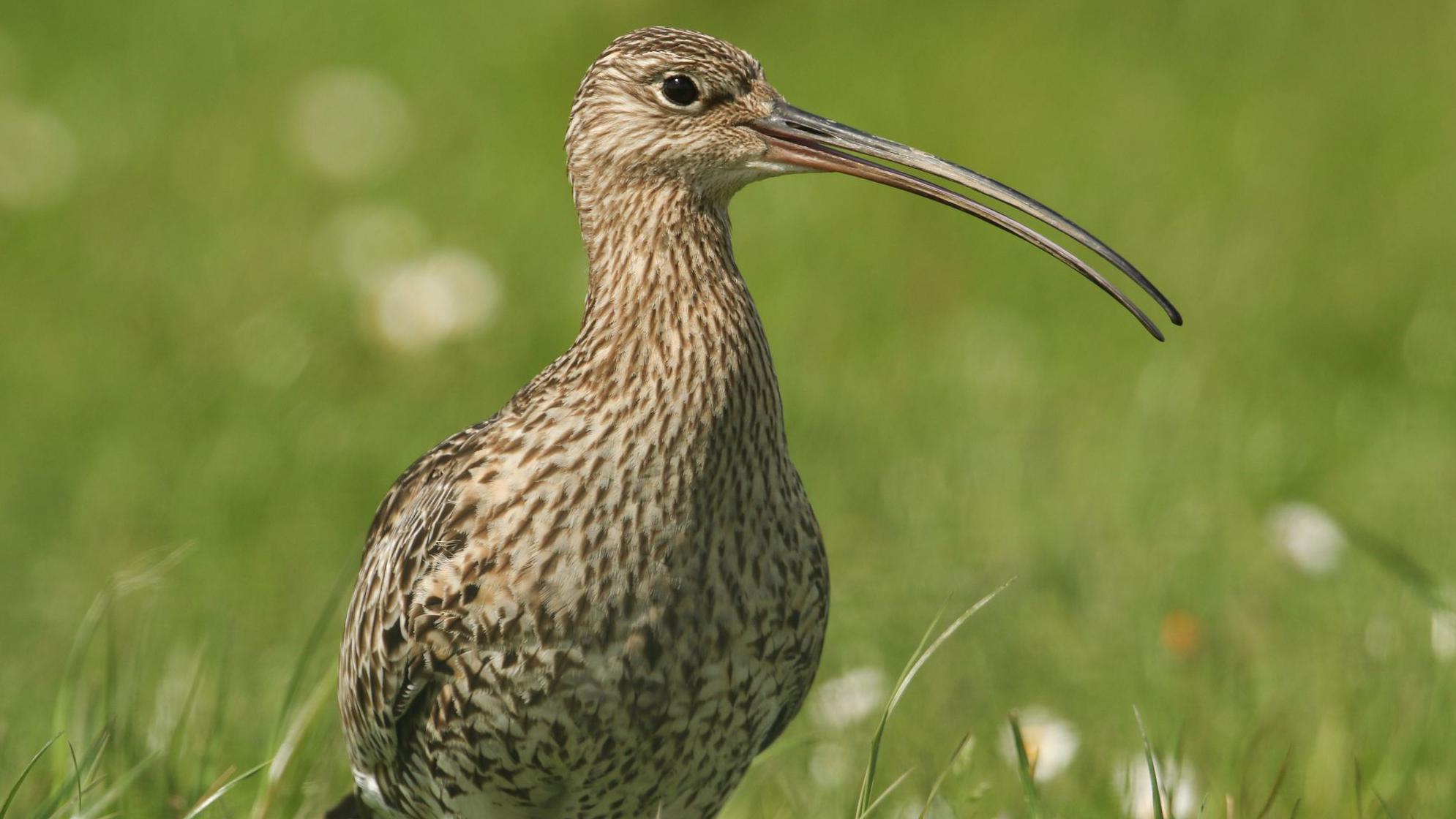
The Eurasian curlew — its haunting, bubbling call once a defining sound of Irish bogland — has suffered one of the most catastrophic population collapses of any bird species on the island. Since the 1980s, Ireland's breeding curlew population has declined by approximately 98%, driven by habitat loss, agricultural intensification, and predation pressure on ground-nesting birds. Where tens of thousands once bred across Irish uplands and wet grasslands, fewer than 150 pairs now remain, making the curlew one of the most critically endangered breeding birds in the country.
Slieve Beagh has become one of the focal points of Ireland's recovery effort. The Sliabh Beagh Curlew Conservation Trust, working alongside the Royal Society for the Protection of Birds (RSPB) and the Breeding Waders European Innovation Partnership — a collaboration involving the National Parks and Wildlife Service and the Department of Agriculture, Food and the Marine — has been running a headstarting programme on the mountain for several years. Headstarting involves collecting eggs from wild nests, incubating them in controlled conditions, rearing the chicks in captivity until they are strong enough to survive independently, and then releasing them into suitable habitat.
The technique has shown genuine promise. Earlier in 2026, conservationists celebrated a landmark moment when a curlew that had been headstarted and released in County Leitrim two years previously was identified establishing a breeding territory on Slieve Beagh — the first confirmed instance of a headstarted bird returning to breed in Ireland. That single data point, modest as it sounds, represents a proof of concept that has energised the entire programme.
Key Developments
The story of this latest release began on 30 April, when a wildfire broke out on the Slieve Beagh bog, spreading rapidly across the peatland in dry, windy conditions. RSPB Conservation Adviser Róisín Normanly and members of the Sliabh Beagh Curlew Conservation Trust were alerted to the fact that a well-established curlew pair had an active nest directly in the fire's path. With no time to spare, the team intervened and extracted the eggs before the flames reached the nest site.
The eggs were transported to an incubation facility, where temperature and humidity were carefully monitored for approximately four weeks. All four eggs hatched successfully. The chicks were then moved through a staged rearing process — from brooding lamps to a brooding tub, then to a small outdoor aviary, and finally to a larger enclosed aviary on Slieve Beagh itself, allowing them to acclimatise to the mountain environment before release.
By mid-July, the four fledglings were deemed ready. Prior to their release, each bird was fitted with a GPS tag and coloured identification rings, enabling conservationists to track their movements and survival in the weeks and months ahead. The data gathered will inform future headstarting decisions and help identify which areas of Slieve Beagh the birds favour as they establish their home ranges.
Why It Matters
The release of four chicks may seem a small number in isolation, but in the context of Ireland's curlew crisis, it is anything but. With fewer than 150 breeding pairs remaining on the entire island, every individual bird that survives to adulthood and potentially breeds represents a meaningful contribution to the species' recovery. The headstarting programme is not a silver bullet — habitat restoration and predator management remain equally critical — but it provides a direct intervention at the most vulnerable stage of the curlew's life cycle, when ground-nesting eggs and chicks face the highest predation risk.
What makes this particular rescue especially significant is the circumstances. The eggs were not collected as part of a routine headstarting operation; they were saved from imminent destruction by a wildfire. The fact that the conservation infrastructure existed to respond rapidly — that trained personnel were on the ground, that incubation facilities were available, that the rearing protocol was established — speaks to the maturity of the programme. A decade ago, those eggs would simply have been lost.
The GPS tagging also represents an important step forward. Real-time tracking data from released birds will allow the team to understand survival rates, habitat use, and dispersal patterns in a way that was not previously possible, generating evidence that can be used to make the case for further investment in curlew recovery across Ireland.
Local Impact
Slieve Beagh is a remote upland area, but the curlew's fate resonates deeply with farming and rural communities across Fermanagh, Tyrone, and Monaghan. Many of the landowners whose fields and bogs provide potential curlew habitat are actively engaged with the conservation trust, participating in agri-environment schemes that reward sympathetic land management. The success of the headstarting programme strengthens the case for continued investment in those schemes and for the cross-border cooperation that Slieve Beagh's geography demands — the mountain sits on the border, and effective curlew conservation requires coordinated action on both sides.
For local communities, the curlew carries cultural as well as ecological significance. Its call is woven into the fabric of Irish rural life, referenced in poetry, song, and folklore. The prospect of hearing it again across Slieve Beagh's bogland is not merely an environmental aspiration — it is a connection to a landscape and a way of life that many fear is slipping away.
What's Next
Conservationists will monitor the four released birds closely over the coming weeks, tracking their movements via GPS and conducting regular field surveys. The data gathered this summer will feed into planning for the 2027 headstarting season. The Breeding Waders European Innovation Partnership is also expected to publish updated population estimates for Ireland's curlew later this year, which will provide a clearer picture of whether the recovery programme is beginning to stabilise numbers at a national level. A review of agri-environment scheme payments for curlew-friendly land management is due before the end of 2026, with conservationists lobbying for enhanced rates to incentivise greater landowner participation across the species' remaining strongholds.