Archaeologists Uncover 4,000-Year-Old Stone Circle Hidden Beneath Belfast Suburb in Stunning QUB Discovery
Archaeologists at Queen's University Belfast have made a remarkable discovery beneath the streets of a Belfast suburb — a previously unknown stone circle estimated to be at least 4,000 years old, placing its construction in the Late Neolithic or Early Bronze Age. The find, announced by the university this week, is being described as one of the most significant archaeological revelations in the city's recorded history and has prompted immediate calls for the site's protection and further excavation.
Background
Belfast is not typically associated with prehistoric monuments. Its archaeological identity has long been defined by its industrial heritage — the shipyards, the linen mills, the Victorian streetscapes — and by the medieval and early modern layers that lie beneath its city centre. Yet the land on which Belfast now stands was inhabited long before the first settlers arrived in the post-medieval period, and the surrounding hills and river valleys were home to communities stretching back thousands of years.
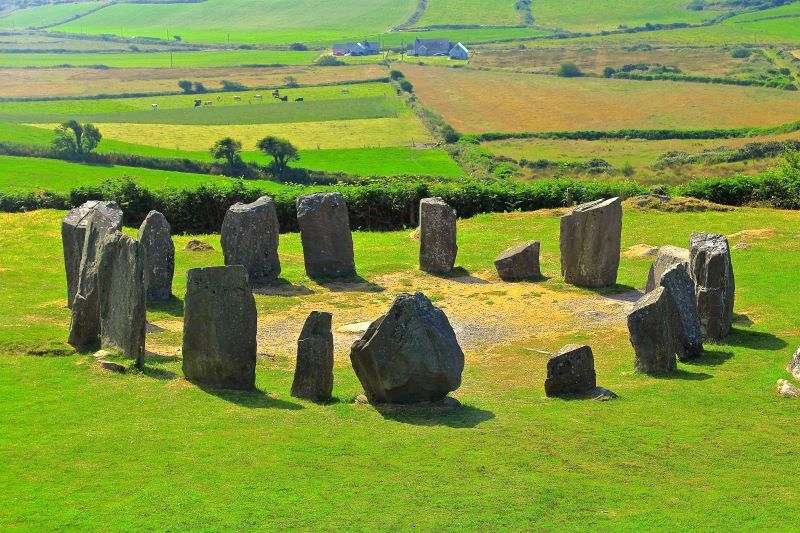
Northern Ireland has a rich prehistoric landscape. The Neolithic and Bronze Age periods, roughly spanning 4000 to 800 BC, saw the construction of megalithic tombs, stone circles, and ceremonial enclosures across the island. The Giant's Ring at Ballynahatty, just south of Belfast, is one of the most impressive Neolithic henge monuments in Ireland, enclosing a dolmen at its centre. The Beaghmore stone circles in County Tyrone, the Drombeg stone circle in Cork, and the Lough Gur complex in Limerick all speak to a sophisticated prehistoric culture that left its mark across the landscape.
What has been largely absent from the archaeological record, until now, is evidence of comparable prehistoric ceremonial activity within what is now the Belfast urban area itself. The discovery of a stone circle beneath a suburban neighbourhood fundamentally changes that picture and raises profound questions about the extent of prehistoric settlement and ritual activity in the greater Belfast basin.
Key Developments
The discovery was made by a team from Queen's University Belfast's School of Natural and Built Environment during a survey of a suburban site. The precise location has not been publicly disclosed pending further investigation and the implementation of protective measures, but the university confirmed that the circle comprises a series of standing stones arranged in a roughly circular formation consistent with Late Neolithic or Early Bronze Age construction techniques.
Ground-penetrating radar and geophysical survey work identified the monument's outline before any excavation took place, allowing archaeologists to map its extent without disturbing the site. Preliminary analysis of the stone arrangement and associated soil deposits suggests a date of construction of at least 4,000 years ago, though further radiocarbon dating of organic material recovered from the site will be required to establish a more precise chronology.
The discovery follows a separate QUB announcement from late June 2026, when researchers identified a 3,000-year-old Bronze Age site in Northern Ireland as a potential early settlement of town-like complexity — a finding that has already prompted a reassessment of the sophistication of prehistoric communities in the region. Together, the two discoveries suggest that the greater Belfast area was a far more significant centre of prehistoric activity than previously understood.
Why It Matters
Stone circles are among the most evocative monuments of prehistoric Ireland, but their distribution has historically been concentrated in rural upland areas — the Sperrins, the Mournes, the Wicklow Mountains. The identification of one within the Belfast urban footprint is genuinely unexpected and carries significant implications for how the city understands its own deep history. It suggests that the river valleys and drumlins of the greater Belfast area were not peripheral to prehistoric life but were, in fact, actively used for ceremonial and possibly astronomical purposes by communities living in the region thousands of years before the city existed.
For archaeologists, the find also raises the possibility that other prehistoric monuments may lie undiscovered beneath Belfast's suburban sprawl, obscured by centuries of development. The application of non-invasive survey techniques — the same ground-penetrating radar and geophysical methods used at this site — to other parts of the city could yield further surprises. This discovery is, in that sense, not just an end point but a beginning.
Local Impact
The discovery has generated considerable excitement among Belfast's heritage community and among residents of the area where the circle was found. The Historic Environment Division of the Department for Communities in Northern Ireland has been notified and is expected to assess the site for scheduling as a protected monument, a designation that would place it under the same legal protection as the Giant's Ring and other significant prehistoric sites across Northern Ireland.
Queen's University Belfast has indicated that it intends to conduct further excavation at the site in the coming months, subject to the necessary consents. The university's archaeology department has a strong track record of community engagement, and there is already interest in developing a public outreach programme around the discovery that would allow Belfast residents to connect with this newly revealed chapter of their city's history. Schools in the surrounding area have expressed interest in educational visits once the site is properly assessed and secured.
What's Next
A full archaeological assessment of the site is expected to begin in the autumn of 2026, with radiocarbon dating results anticipated by early 2027. The Historic Environment Division will make a scheduling decision within the coming weeks. Queen's University Belfast is also expected to publish a preliminary report on the discovery in a peer-reviewed journal before the end of the year. The find will feature prominently at the upcoming Irish Post-Medieval Archaeology Group conference in Belfast in October, where it is expected to generate significant academic discussion about the prehistoric landscape of the greater Belfast area.