Forest Fire and Road Deaths Cast Shadow Over Northern Ireland's Bank Holiday
A major forest fire and a “catastrophic” weekend on the roads have cast a dark shadow over the bank holiday weekend in Northern Ireland, with emergency services being stretched to their limits and a joint appeal being issued for greater public vigilance. The two separate incidents have served as a stark reminder of the dangers that can arise from both natural and human causes, and they have prompted a renewed focus on public safety.
Background
Bank holiday weekends are traditionally a time for people to relax and to enjoy the great outdoors. However, they can also be a time of increased risk, with more people on the roads and a greater chance of accidents and emergencies. The recent spell of dry weather has also increased the risk of forest fires, and the emergency services have been on high alert.
Key Developments
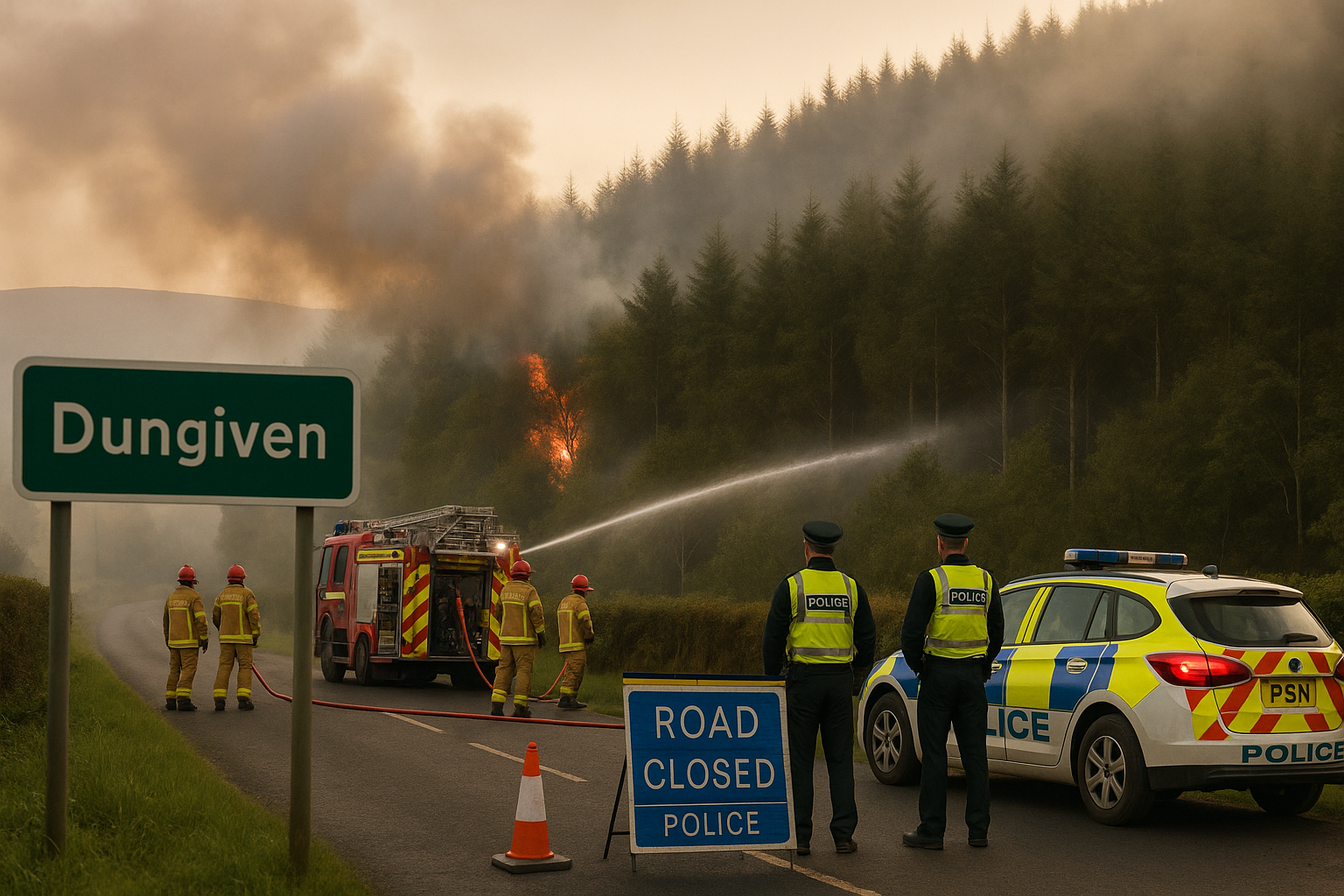
On April 30, a large forest fire broke out at Loughermore Forest in Dungiven. The fire front was estimated to be around 500 metres long, and 49 firefighters were deployed to tackle the blaze. The Northern Ireland Fire and Rescue Service (NIFRS) Area Commander, David Doherty, described it as a “protracted incident” due to the difficult terrain, which prevented fire appliances from getting close to the flames. Crews were forced to beat out the flames with shovels, in a long and arduous operation. The cause of the fire is not yet known, but it is a stark reminder of the dangers of wildfires, particularly during periods of dry weather. Separately, the roads of Northern Ireland have witnessed a “catastrophic” weekend, with five people being killed in separate collisions. The total number of road fatalities in 2026 now stands at 29, which is double the number for the same period in 2015. The Infrastructure Minister, Liz Kimmins, and the Assistant Chief Constable of the PSNI, Melanie Jones, have issued a joint appeal for safer driving ahead of the bank holiday. Kimmins said that 29 deaths in four months was the equivalent of “one fatality every four days”. The PSNI has announced that it will have an increased presence on the roads over the bank holiday weekend, with a focus on the “fatal five”: speeding, drink/drug driving, mobile phone use, not wearing a seatbelt, and inattention. For more on the forest fire, see the report from the Northern Constitution.
Why It Matters
The forest fire and the road deaths are a tragic reminder of the fragility of life and of the importance of taking care, both of ourselves and of our environment. The incidents have also highlighted the incredible work of the emergency services, who have once again shown their dedication and professionalism in the face of adversity. The joint appeal from the Infrastructure Minister and the PSNI is a timely one, and it is a reminder that we all have a role to play in making our roads safer. As ITV News reports, the recent spate of road deaths has caused widespread shock and grief, and it has led to renewed calls for a change in driver behaviour.
Local Impact
The forest fire in Dungiven has had a major impact on the local community, with many residents being concerned about the damage to the environment and the risk to their homes. The fire has also had a major impact on the local wildlife, with many animals being forced to flee their habitats. The road deaths have had a devastating impact on the families and friends of the victims, and they have sent a shockwave through the local communities. The incidents have also had a major impact on the emergency services, who have been working tirelessly to deal with the aftermath.
Northern Ireland's Safety Challenges
Northern Ireland's forests and upland areas are particularly vulnerable to fire during dry spells, and the Loughermore Forest fire is the latest in a series of significant wildfire incidents that have affected the region in recent years. The Northern Ireland Fire and Rescue Service has been investing in its wildfire response capabilities, but the scale and intensity of fires in difficult terrain continue to present significant challenges. The Loughermore area, in the Sperrins, is a popular destination for walkers and outdoor enthusiasts, and the fire has raised concerns about the safety of visitors to the area.
The road safety crisis in Northern Ireland is a long-standing problem that has resisted repeated efforts to address it. The 29 road fatalities recorded in the first four months of 2026, double the figure for the same period in 2015, represent a significant deterioration in road safety performance that has alarmed both the PSNI and the Stormont Executive. Northern Ireland has historically had higher road fatality rates than other parts of the UK, partly due to the prevalence of rural roads where speeds are higher and emergency response times are longer.
The "fatal five" behaviours identified by the PSNI — speeding, drink and drug driving, mobile phone use, not wearing seatbelts, and inattention — are responsible for the vast majority of serious and fatal collisions on Northern Ireland's roads. The PSNI's decision to increase its road presence over the bank holiday weekend reflects the well-established pattern of higher collision rates during holiday periods, when more vehicles are on the road and some drivers are more likely to take risks. Infrastructure Minister Liz Kimmins' involvement in the public appeal reflects the Stormont Executive's recognition that road safety is not just a policing issue but a public health emergency that requires a coordinated government response across multiple departments.
What's Next
The NIFRS will continue to monitor the situation at Loughermore Forest, and an investigation will be launched to determine the cause of the fire. The PSNI will be out in force on the roads over the bank holiday weekend, and they will be taking a zero-tolerance approach to dangerous driving. The hope is that the recent tragedies will serve as a wake-up call and that people will take extra care to ensure that the rest of the bank holiday weekend is a safe and enjoyable one for everyone.