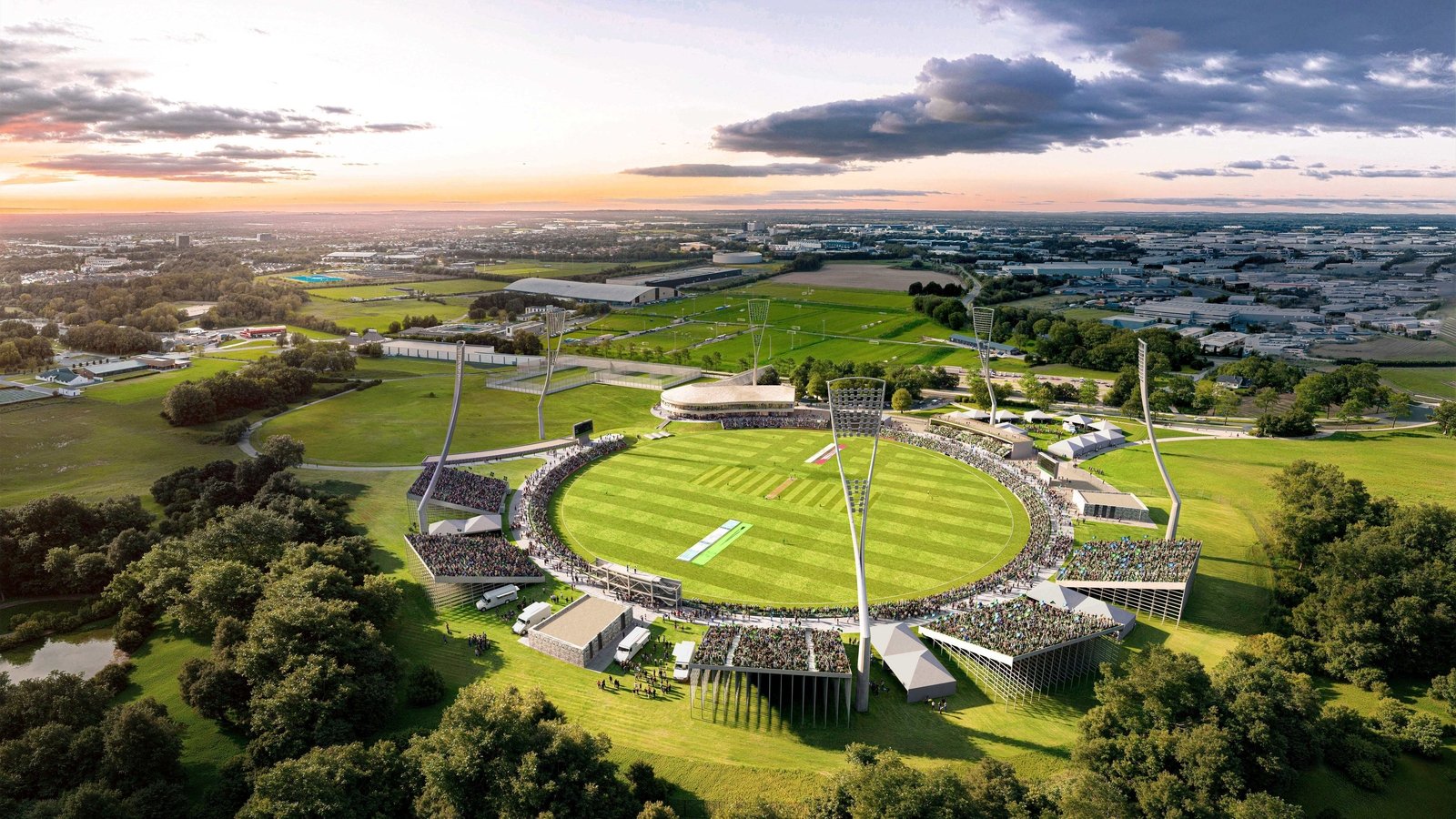
Edinburgh Rockers Claim ETPL Crown at Malahide as Gous Masterclass Sinks Belfast Wolves in Historic Final
The Edinburgh Castle Rockers were crowned the inaugural European T20 Premier League champions on Saturday evening at Malahide Cricket Ground in Dublin, defeating the Belfast Wolves by seven wickets in a final that showcased the extraordinary talent assembled for the tournament and confirmed that the ETPL has the potential to become one of the most significant developments in European cricket in a generation.
Background
The European T20 Premier League was conceived as a response to the growing gap between the major T20 franchise competitions — the IPL, the Big Bash, the SA20 — and the rest of the cricketing world. European cricket, despite producing a number of world-class players and hosting some of the game's most storied international fixtures, had never had a franchise competition capable of attracting the global talent and the broadcast audiences that the format demands. The ETPL, sanctioned by the ICC and featuring six franchise teams from Ireland, Scotland, and the Netherlands, was designed to fill that gap.
The tournament began at the Voorburg Cricket Club in the Netherlands on August 26, before relocating to The Village at Malahide on September 9 for the remainder of the league stage and the playoffs. The six franchises — the Dublin Guardians, Belfast Wolves, Edinburgh Castle Rockers, Glasgow Cosmics, Amsterdam Flames, and Rotterdam Dockers — assembled squads that combined local talent with international stars, including Faf du Plessis, Ravichandran Ashwin, Glenn Maxwell, and Trent Boult.
For Irish cricket, the tournament represented a landmark moment. Malahide has hosted international cricket for over a decade, but the ETPL brought a new level of intensity and spectacle to the ground, with sell-out crowds for the final stages and a broadcast deal that brought the competition to audiences across Europe and beyond. The Belfast Wolves, who drew their squad from across Northern Ireland and attracted significant support from the Ulster cricket community, were one of the tournament's most popular teams.
Key Developments
The Belfast Wolves reached the final via the Qualifier on September 19, where Glenn Maxwell's brilliant batting had been the decisive factor in a seven-wicket victory. In the final, however, the Wolves were unable to replicate that form with the bat, posting a total of 150/5 from their 20 overs — a score that proved to be below par on a good batting surface at Malahide.
The Edinburgh Castle Rockers' chase was built around an extraordinary innings from Andries Gous, the South African-born batter who has become one of the most destructive openers in franchise cricket. Gous, who finished unbeaten on 90 from 52 balls, anchored the chase with a combination of power and precision that left the Wolves' bowling attack with no answer. The Rockers reached their target of 151 in 18.4 overs, winning by seven wickets to claim the inaugural title.
Faf du Plessis finished as the tournament's top run-scorer with 449 runs, while Michael Bracewell and Anrich Nortje tied for the most wickets with 19 each. The individual honours reflected the quality of the competition, which attracted players from across the cricketing world and provided local players from Ireland, Scotland, and the Netherlands with exposure to international-standard cricket that will accelerate their development.
Why It Matters
The ETPL's inaugural season has demonstrated that there is a genuine appetite for franchise cricket in Europe, both among players and among fans. The tournament attracted significant crowds at Malahide and generated substantial broadcast interest, suggesting that the commercial model is viable. For Cricket Ireland, which has been working to grow the game's profile in Ireland since achieving full ICC membership in 2017, the ETPL represents a significant step forward — a competition that puts Irish cricket on the global franchise map and provides a platform for Irish players to develop alongside some of the best in the world.
The Belfast Wolves' run to the final was a particular source of pride for the Ulster cricket community, which has long felt that the game's profile in Northern Ireland does not reflect the strength of the grassroots base. The Wolves' matches at Malahide attracted significant numbers of supporters from Belfast and across the north, and the team's performance has generated renewed interest in the game at club level. Cricket Ireland has confirmed that the ETPL will return in 2027, with discussions underway about expanding the tournament to include additional teams.
Local Impact
For Malahide in County Dublin, the ETPL final was the culmination of a month-long festival of cricket that has transformed the village's profile as a sporting venue. The Cricket Club, which has hosted international matches since 2013, reported record attendances during the tournament's Malahide leg, with the final attracting a capacity crowd of over 11,000. Local businesses in the village reported a significant boost in trade during the tournament period, and Fingal County Council has indicated that it will work with Cricket Ireland to develop the ground's infrastructure ahead of the 2027 tournament. The success of the ETPL has also strengthened the case for Ireland hosting a future ICC event, with Cricket Ireland in discussions with the ICC about the possibility of staging a World T20 qualifier at Malahide.
What's Next
Cricket Ireland will hold a debrief on the inaugural ETPL season in October, with a view to confirming the format and schedule for the 2027 tournament. The six franchise owners have all indicated their intention to participate in the second edition, and there is interest from potential new franchise holders in Wales and Denmark. The Irish national team's next major fixture is a home series against Zimbabwe in October, which will provide an opportunity for players who featured in the ETPL to carry their form into international cricket. Cricket Ireland's high-performance director has indicated that the ETPL experience will be a significant factor in the selection of Ireland's squad for the 2027 ICC World T20 Qualifier.