E-Scooter Age Ban and Mandatory Helmets Among New Irish Road Safety Measures as Injury Data Alarms Doctors
Emergency doctors are set to call for an import ban on non-road-legal e-scooters and e-bikes at an upcoming Oireachtas committee session, as the Irish government presses ahead with legislation to ban under-18s from riding e-scooters and to make helmets and high-visibility clothing mandatory, following alarming injury data showing that e-scooters are now the leading cause of paediatric brain injury admissions at the Mater Hospital in Dublin.
Background
The proliferation of e-scooters and e-bikes on Irish streets has created a public health challenge that has developed faster than the legislative and regulatory response. The vehicles, which can reach speeds of 25 kilometres per hour or more, have been widely available for purchase in Irish shops and online for several years, marketed to children and adults alike without adequate safety information or legal clarity about where they can be ridden. The result has been a significant increase in serious injuries, particularly among children, who are disproportionately represented in the injury data.
The Mater Hospital in Dublin, as the national neurosurgical centre for the Republic of Ireland, receives the most serious brain injuries from across the country. Its emergency department data therefore provides a particularly sensitive indicator of the scale of the e-scooter injury problem. The hospital has been tracking e-scooter and e-bike admissions since 2021, and the trend has been consistently and alarmingly upward. E-scooters are now the leading cause of paediatric brain injury admissions to the national neurosurgical centre — a designation that would have been unimaginable five years ago.
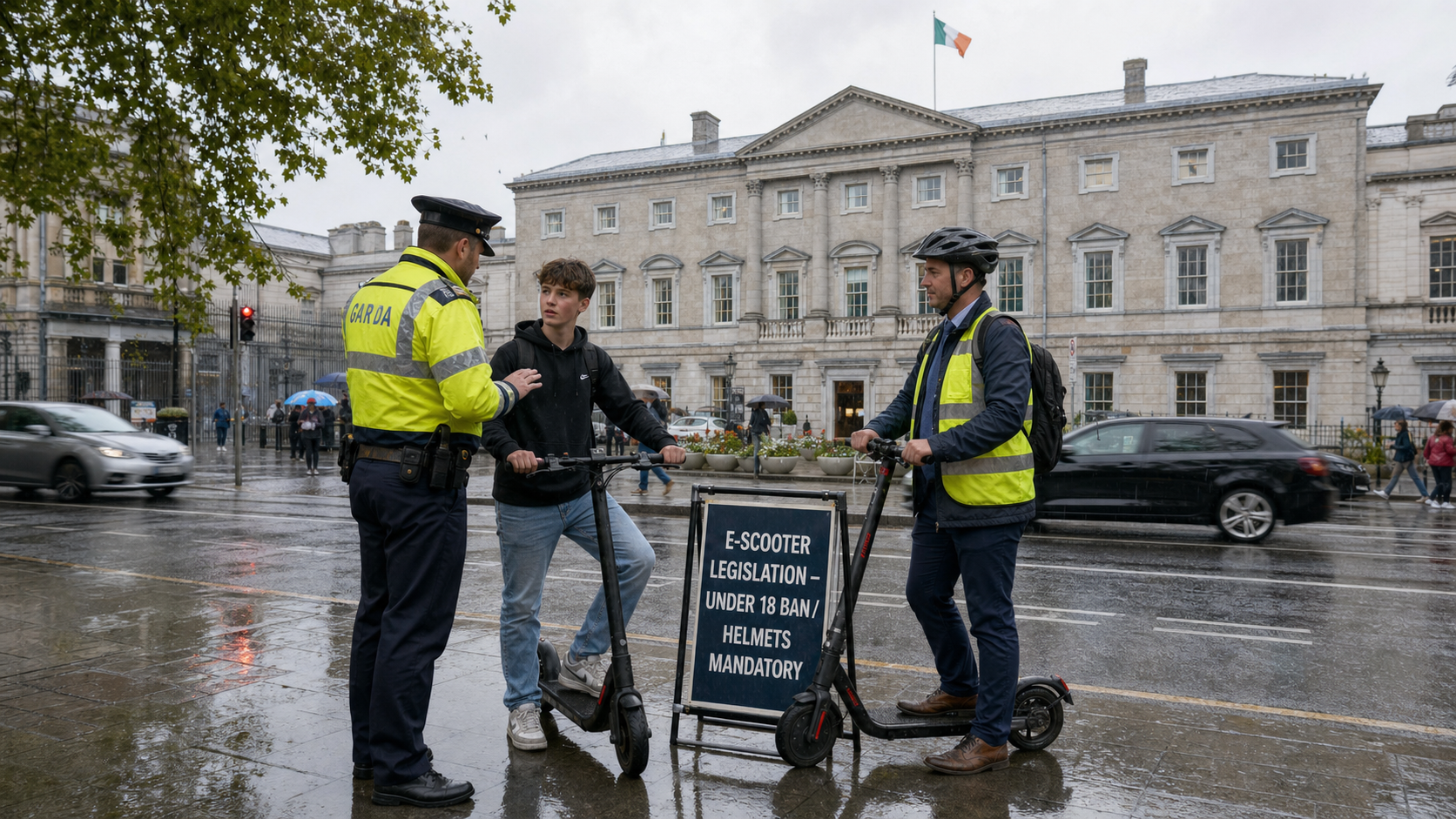
The government's legislative response has been developing since 2025, when the scale of the injury data first became publicly available. The proposed measures include banning under-18s from riding e-scooters, making helmets and high-visibility clothing mandatory for all riders, and requiring mandatory registration and licensing of e-scooters as mechanically propelled vehicles. Emergency doctors are now calling for an additional measure — an import ban on non-road-legal vehicles — to address the problem at source.
Key Developments
Emergency doctors are expected to present their case for an import ban on non-road-legal e-scooters and e-bikes to an Oireachtas committee in the coming weeks. The doctors' argument is straightforward: as long as non-road-legal vehicles can be purchased legally in Ireland, the injury problem will continue regardless of what enforcement measures are put in place. An import ban would prevent the most dangerous vehicles from entering the market in the first place, reducing the pool of non-compliant vehicles on Irish streets over time.
The government's existing legislative proposals — the age ban, mandatory helmets, and registration requirements — are expected to be included in a Road Traffic Bill to be published before the end of 2026. The Road Safety Authority has been asked to develop a public awareness campaign on e-scooter safety, and the Garda Síochána has indicated it will increase enforcement activity in the interim. As of July 2026, Gardaí had seized 1,412 e-scooters and initiated 793 prosecutions for possession of non-road-legal vehicles.
Children's Health Ireland has reported that one to two children are presenting to emergency departments daily with e-scooter-related injuries, and that e-scooter crashes account for over one-third of all paediatric traumatic brain injury admissions at Temple Street Hospital. Our Lady of Lourdes Hospital in Drogheda reported that patient attendances for e-scooter or e-bike crashes quadrupled in 2026 compared to 2025.
Why It Matters
The e-scooter injury crisis is a public health emergency that has been allowed to develop in plain sight. The vehicles have been sold to children and adults alike without adequate safety information, without mandatory protective equipment, and without a clear legal framework governing their use. The result is a generation of young people who have grown up riding e-scooters on footpaths and roads without helmets, without training, and without any meaningful enforcement of the rules that do exist. The injury data from the Mater Hospital and Children's Health Ireland is not a statistical abstraction — it represents real children with real brain injuries, many of whom will face long-term consequences from those injuries.
The call for an import ban is a recognition that the problem cannot be solved by enforcement alone. There are already tens of thousands of non-road-legal e-scooters in circulation in Ireland, and it will take years for enforcement to reduce that number significantly. An import ban would prevent the problem from getting worse while the existing stock is gradually removed from the streets through enforcement and natural attrition.
Local Impact
In Dublin, Cork, Galway, and Limerick — where e-scooter use is most concentrated — the proposed legislation will affect thousands of young people who currently use the vehicles for school commutes and leisure. Schools have been asked to communicate the new rules to pupils and parents ahead of the legislation's commencement. The Road Safety Authority has indicated that it will work with schools to develop age-appropriate safety education materials on e-scooters and e-bikes. Parents of children who have been injured in e-scooter accidents have welcomed the proposed measures and have called for their implementation to be accelerated.
What's Next
The Road Traffic Bill containing the e-scooter measures is expected to be published before the end of 2026 and to be enacted in early 2027. Emergency doctors are expected to present their case for an import ban to an Oireachtas committee in October. The Road Safety Authority will launch its public awareness campaign on e-scooter safety in October, ahead of the winter months when reduced visibility increases the risk of accidents. The Garda Síochána has indicated it will continue to increase enforcement activity, with a particular focus on under-18 riders and riders without helmets.