DeSantis Unveils Aggressive Florida Map as Redistricting War Reshapes House Battle
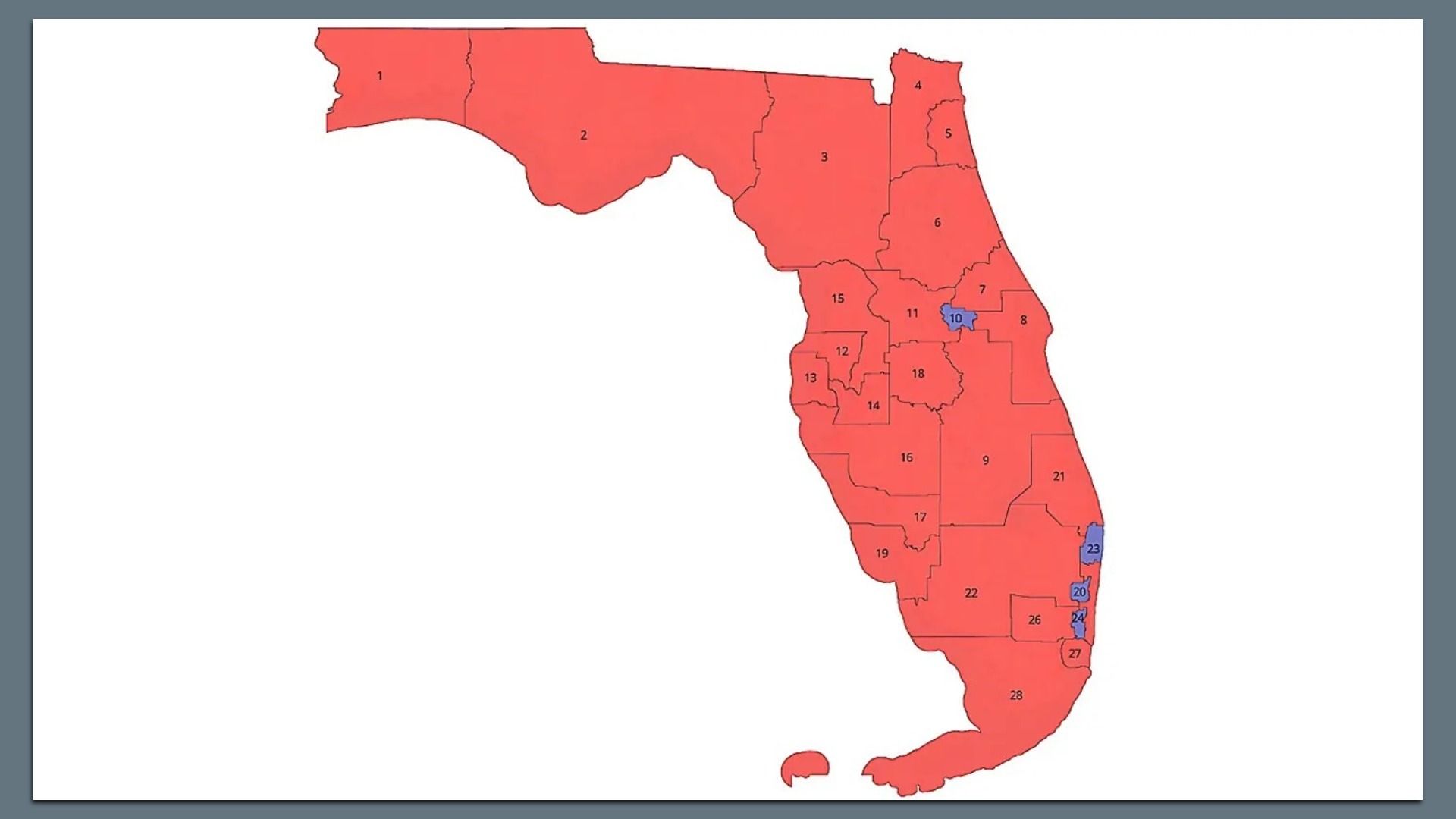
Governor Ron DeSantis released a new congressional map on April 27 designed to carve four additional Republican-leaning House seats out of Florida, while Democrats in Virginia simultaneously advanced a redrawn map that could deliver the party up to four new seats — launching a national mid-decade redistricting war that will directly determine which party controls the House of Representatives after the 2026 midterms.
Background
Congressional redistricting typically follows the decennial census, but a growing number of states have embraced mid-decade map redrawing as a partisan weapon. The practice gained momentum after North Carolina Republicans redrew their map in 2023, a move the Supreme Court ultimately allowed to stand. Former President Donald Trump has since pushed Republican-controlled states to follow suit, framing aggressive gerrymandering as a necessary counterweight to Democratic gains in states like New York and Illinois.
Florida, with 28 congressional seats, is one of the largest prizes in any redistricting fight. DeSantis has previously clashed with the state legislature over maps, most notably in 2022 when he personally drew a map that dismantled a majority-Black congressional district — a move that courts later struck down. The governor's latest proposal arrives as Republicans hold a narrow House majority and are looking to pad their margins ahead of what promises to be a fiercely contested midterm cycle.
Key Developments
DeSantis unveiled his proposed map on April 27, ahead of a special legislative session called to consider redistricting. The map is engineered to create four additional Republican-leaning districts, potentially shifting Florida's congressional delegation from its current 16-12 Republican advantage to a 20-8 split. The Florida Legislature, controlled by Republicans, is expected to take up the proposal in the coming days.
In Virginia, the situation unfolded in the opposite direction. Voters approved a redistricting referendum in April that handed Democrats control of the map-drawing process, and the resulting plan could give Democrats 10 of the state's 11 congressional seats — a net gain of up to four seats. Virginia Republicans filed an emergency challenge with the state Supreme Court on April 28, arguing the approval process violated procedural requirements. The court heard arguments the same day, with a ruling expected within weeks.
The dueling maps represent the sharpest escalation yet in what political analysts are calling a "redistricting arms race." CNN reported that Trump has personally pressured Republican governors in at least six states to pursue mid-decade remapping, viewing it as a low-cost strategy to lock in House control without winning competitive swing districts.
Why Americans Should Care
For voters in Florida's newly redrawn districts — particularly in Central Florida, the Tampa Bay area, and South Florida's suburban corridors — the maps could fundamentally alter who represents them in Washington. Districts that were once competitive, where candidates had to appeal to a broad coalition, would become safe Republican seats where primary elections, not general elections, determine outcomes.
In Virginia, residents of Northern Virginia suburbs, the Richmond metro area, and Hampton Roads could find themselves in newly drawn Democratic districts, shifting the political calculus for their representatives. The stakes extend far beyond state lines: if both maps survive legal challenges, the net effect could swing as many as eight House seats — more than enough to determine majority control. For Americans in states like Ohio, Michigan, and Pennsylvania, where federal legislation on healthcare, infrastructure, and taxation originates, the composition of the House directly shapes the policies that govern their daily lives.
Why It Matters
Mid-decade redistricting represents a structural shift in how American democracy functions. Historically, both parties have gerrymandered when given the opportunity, but the current wave is notable for its scale, coordination, and explicit presidential backing. The Supreme Court's 2019 ruling in Rucho v. Common Cause declared partisan gerrymandering a political question beyond federal court review, effectively removing the most powerful check on the practice.
The consequences are measurable. Political scientists at Princeton's Gerrymandering Project estimate that aggressive partisan maps can shift the effective popular vote threshold for a House majority by three to five percentage points — meaning a party could win a majority of House seats while losing the national popular vote by a significant margin. This dynamic has no parallel in most peer democracies, where independent commissions draw electoral boundaries. In Canada, Australia, and the United Kingdom, nonpartisan boundary commissions insulate the process from legislative manipulation. The United States stands as an outlier, and the current redistricting wave is pushing that outlier status to its logical extreme. The long-term effect is a Congress increasingly insulated from competitive pressure, where members answer to their party base rather than the broader electorate.
What's Next
Florida's legislature is expected to vote on DeSantis's map within days. Legal challenges from civil rights groups and Democratic organizations are certain to follow, with plaintiffs likely arguing the map violates the Voting Rights Act by diluting minority representation. In Virginia, the state Supreme Court's ruling on the Republican challenge could come before the end of May. Federal courts may ultimately weigh in on both maps, though the path to blocking them on partisan grounds alone remains narrow after Rucho. The redistricting battles in Georgia, North Carolina, and Wisconsin are also accelerating, with decisions in those states expected before the summer filing deadlines for 2026 congressional candidates.
Sources: Axios; CNN; Bakersfield Now; Spectrum News