Senate Blocks War Powers Vote on Cuba as Iran Conflict Strains Congressional Oversight
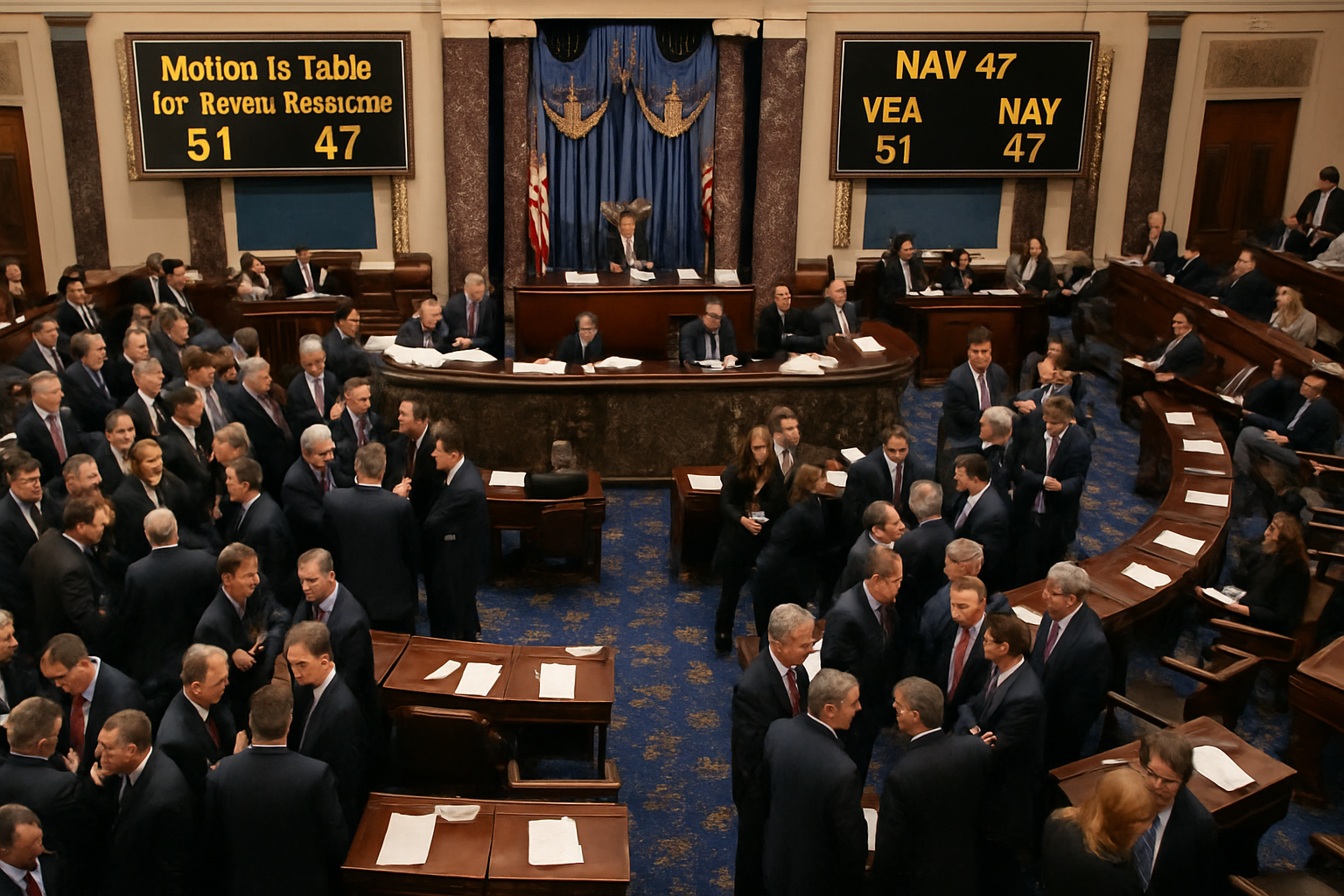
The Senate voted 51-47 on April 28 to sustain a procedural point of order that killed a war powers resolution targeting US military operations related to Cuba, while separately advancing a measure to confirm executive nominees in bulk — a pair of votes that exposed the Senate's deepening reluctance to challenge presidential war authority even as the US-Iran conflict enters its most uncertain phase.
Background
The War Powers Resolution of 1973 requires the president to notify Congress within 48 hours of committing US forces to hostilities and limits unauthorized military engagements to 60 days without congressional approval. In practice, every administration since Nixon has contested the law's constitutionality, and Congress has rarely enforced it. The resolution has been invoked fewer than a dozen times in its 53-year history, with most attempts dying in procedural votes before reaching a floor debate.
Senator Tim Kaine of Virginia has been among the most persistent advocates for reasserting congressional war powers, having previously led efforts to limit US involvement in Yemen and to constrain military action against Iran. His latest resolution, S.J.Res. 124, targeted what he described as unauthorized US military activities connected to Cuba — a reference to operations that the administration has not publicly detailed but which intelligence committee members have characterized as significant.
Key Developments
On April 28, Kaine brought S.J.Res. 124 to the Senate floor under the War Powers Act's privileged status, which is designed to allow such resolutions to bypass normal committee procedures and receive a direct vote. Republicans immediately raised a point of order challenging whether the resolution qualified for privileged status. The Senate voted 51-47 along party lines to sustain the point of order, effectively preventing any debate or vote on the substance of the resolution.
Earlier the same day, the Senate voted 52-47 to proceed to S.Res. 690, a resolution that would allow the chamber to confirm multiple executive branch nominees simultaneously through an "en bloc" process. Majority Leader John Thune of South Dakota filed for cloture on the measure, setting up a final vote within days. The en bloc procedure, which Democrats used sparingly during the Biden administration, allows the majority to bypass individual confirmation debates for lower-profile nominees.
Separately, Vice President J.D. Vance has reportedly raised internal questions about the accuracy of Pentagon assessments regarding the rate of US missile stockpile depletion in the Iran conflict — a disclosure that, if accurate, suggests friction between the White House and military leadership over the war's trajectory. Iran rejected a US proposal to reopen the Strait of Hormuz in exchange for nuclear talks, with President Trump publicly calling the offer unacceptable.
Why Americans Should Care
The war powers debate has direct consequences for Americans in every state. Military families in Virginia, North Carolina, Georgia, and Texas — home to the largest concentrations of active-duty personnel — have the most immediate stake in whether Congress exercises meaningful oversight over where and how US forces are deployed. The Iran conflict has already driven oil prices above $95 a barrel, pushing gas prices past $4 a gallon nationally and squeezing household budgets from California to the Carolinas.
For constituents in states with large defense contractors — including Connecticut, Washington, and California — the pace of missile and munitions expenditure directly affects production contracts and employment. The en bloc nomination process, meanwhile, affects federal agencies that touch every American's life, from the EPA to the Department of Labor, by allowing the administration to fill key positions with reduced Senate scrutiny. Senators from swing states facing 2026 reelection bids cast the most consequential votes, as their constituents are closely divided on the administration's foreign policy approach.
Why It Matters
The Senate's procedural kill of the Cuba war powers resolution continues a pattern that has persisted across administrations of both parties: Congress authorizes military force broadly, then declines to exercise the oversight mechanisms it created for itself. The 1973 War Powers Resolution was passed over President Nixon's veto specifically to prevent open-ended military commitments without legislative buy-in. Its consistent non-enforcement has rendered it largely symbolic.
The current moment is particularly consequential because the US-Iran conflict represents the most significant direct military engagement since the 2003 Iraq invasion. Unlike the Yemen and Libya interventions, which involved limited US participation, the Iran conflict has drawn direct US military assets into active hostilities. Historical precedent from Korea, Vietnam, and Iraq demonstrates that wars begun without formal congressional authorization tend to expand in scope and duration beyond initial projections. The Senate's 51-47 vote reflects a Republican majority unwilling to constrain a president of their own party — a dynamic that mirrors Democratic reluctance to challenge Obama-era drone campaigns. The institutional consequence is a Congress that has effectively ceded its war-making authority to the executive branch, regardless of which party holds the White House.
What's Next
Kaine and other Democratic senators are expected to continue introducing war powers resolutions as the Iran conflict evolves, using each vote to build a public record even when the resolutions fail procedurally. The en bloc nomination vote is expected to clear the Senate within the week, potentially confirming dozens of administration nominees in a single session. On the Iran front, the administration faces a critical decision point: whether to accept a modified Iranian proposal on the Strait of Hormuz or escalate military pressure. Congressional leaders from both parties have requested classified briefings on the conflict's status, with the Armed Services Committee scheduled to meet in closed session next week.
Sources: US Senate Roll Call Votes; Senate Daily Press; Just Security