Derry Girls Stars Siobhán McSweeney and Nicola Coughlan Back Campaign to Give People Legal Ownership of Their Voices
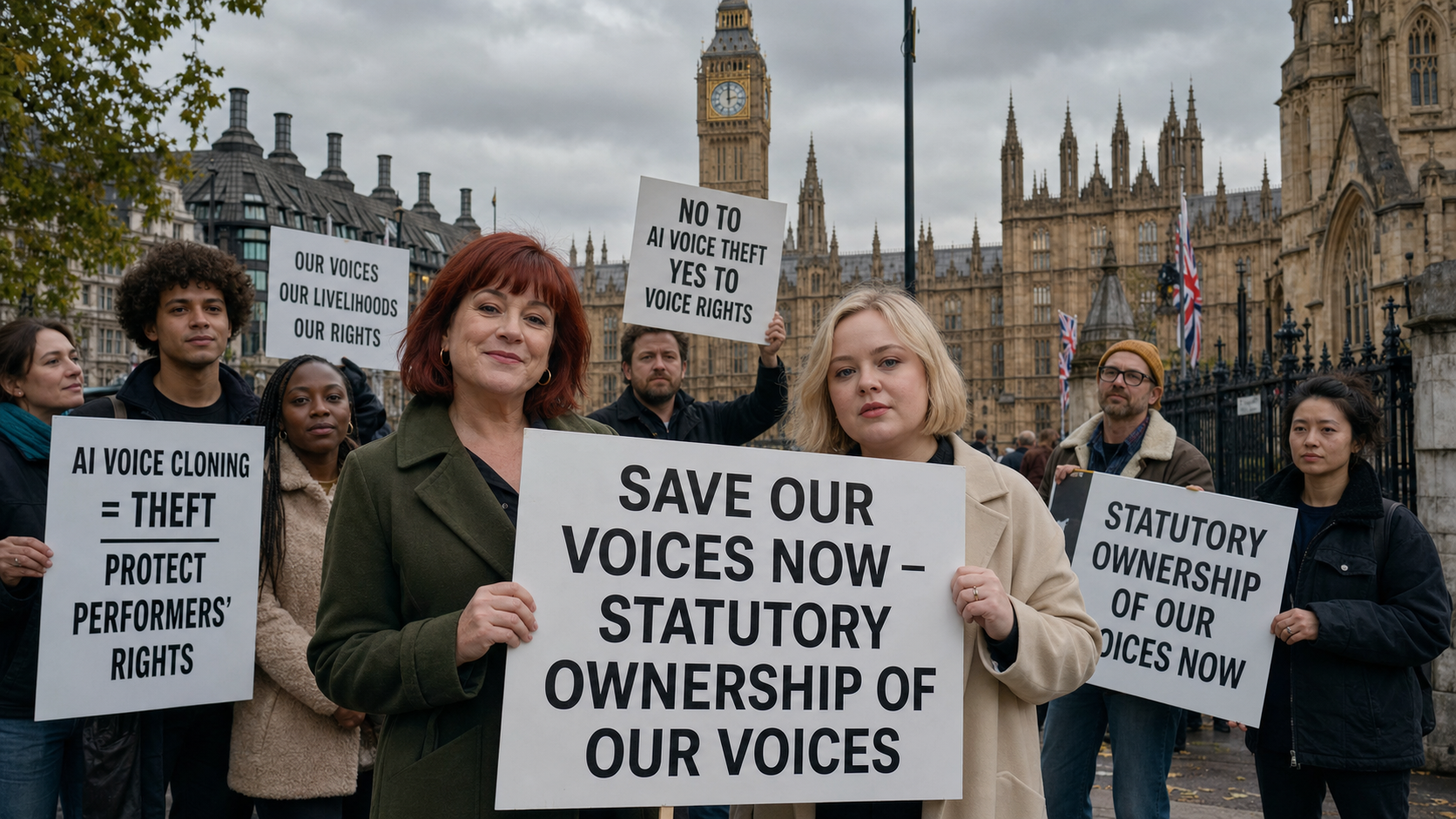
Derry Girls stars Siobhán McSweeney and Nicola Coughlan have joined a coalition of over 80 actors, comedians, and industry professionals in backing the 'Save Our Voices Now' campaign, which is urging the British government to enact legislation granting individuals statutory ownership of their own voices to prevent unauthorised artificial intelligence voice cloning, with Equity Ireland also expressing support for the initiative.
Background
The rapid development of artificial intelligence voice cloning technology has created a new and urgent challenge for performers, broadcasters, and anyone whose voice is a professional asset. Modern AI systems can replicate a person's voice with remarkable accuracy from as little as three seconds of audio, creating the potential for unauthorised use of a person's vocal identity in advertising, entertainment, and criminal fraud. The technology has advanced so rapidly that existing legal frameworks — which were designed for a world in which voice replication required significant technical resources and expertise — are wholly inadequate to address the scale and ease of the threat.
For Irish actors and performers, the issue is particularly acute. Voiceover work — the recording of commercials, audiobooks, animated characters, and corporate content — is a vital income stream for many actors who supplement their screen and stage work with studio sessions. The ability of AI systems to replicate a performer's voice without their consent or compensation threatens to undermine this income stream entirely, as companies that might previously have hired a performer for a voiceover session can instead use an AI-generated version of their voice at a fraction of the cost.
Siobhán McSweeney, who is best known for her role as Sister Michael in Derry Girls, and Nicola Coughlan, who has achieved global recognition through her roles in Derry Girls and Bridgerton, are among the most prominent Irish actors to have joined the campaign. Their involvement brings significant public attention to an issue that has previously been discussed primarily within the entertainment industry, and their willingness to speak publicly about the threat reflects a growing sense of urgency among performers about the pace of AI development.
Key Developments
The 'Save Our Voices Now' campaign was co-founded by audiobook narrator Alice Sockett, who has described the unchecked use of AI voice cloning technology as an "existential threat" to the entertainment industry. The campaign has submitted an open letter to British Prime Minister Andy Burnham and launched a petition on the official government website, calling for statutory rights that would provide every individual in Britain with legal ownership of their voice.
Siobhán McSweeney expressed concern that current legislation, ethical standards, and contracts are failing to keep pace with the speed of AI development. She emphasised that while she believes AI could potentially function as a useful tool, it currently risks rendering human artists obsolete by enabling the unauthorised replication of their most fundamental professional asset. McSweeney highlighted the importance of maintaining the "human connection" in performance, noting that her voice is one of her essential professional tools and that its unauthorised use would represent a fundamental violation of her rights as an artist.
Gerry O'Brien, president of Equity Ireland, noted that voiceover work is a vital income stream for many Irish actors and that the union supports efforts to protect artists' rights against unauthorised AI replication. The campaign has drawn comparisons to legislative efforts in Denmark, where reforms have reportedly been introduced to grant citizens legal ownership over their face, body, and voice — a model that the 'Save Our Voices Now' campaign is seeking to replicate in the UK and, by extension, in Ireland.
Why It Matters
The AI voice cloning issue sits at the intersection of technology, employment rights, and cultural policy, and its resolution will have significant implications for the future of the creative industries in Ireland and across the world. The entertainment industry has historically been slow to adapt to technological disruption — the battles over recorded music, digital downloads, and streaming all followed a similar pattern of technology outpacing regulation — but the speed of AI development has compressed the timeline in ways that make the current moment particularly urgent.
For Ireland, which has a vibrant and internationally recognised creative sector, the protection of performers' rights in the age of AI is both a cultural and an economic imperative. The Irish film and television industry, which has been growing rapidly in recent years, depends on the availability of talented performers who can sustain careers in the industry. If AI voice cloning undermines the economic viability of voiceover work — one of the most accessible and reliable income streams for working actors — the consequences for the broader creative ecosystem could be severe.
Local Impact
In Belfast, where Derry Girls was filmed and where Siobhán McSweeney has strong connections, the campaign has resonated strongly with the local creative community. The Northern Ireland Screen industry, which has grown significantly in recent years on the back of productions including Game of Thrones and Line of Duty, employs a large number of performers for whom voiceover work is an important part of their income. Equity's Northern Ireland branch has been active in raising awareness of the AI voice cloning issue among its members, and the involvement of McSweeney and Coughlan in the campaign has given the issue a profile that it previously lacked in the region. In Dublin, where the Irish film and television industry is centred, the campaign has been welcomed by Screen Ireland and by the Irish Film and Television Academy.
What's Next
The 'Save Our Voices Now' campaign is awaiting a response from the British government to its open letter and petition. The campaign's organisers have indicated that they will escalate their advocacy if the government does not commit to legislative action within a defined timeframe. In Ireland, Equity Ireland is expected to engage with the government on the issue, seeking assurances that Irish performers will be protected by equivalent legislation. The European Union is also considering regulatory approaches to AI-generated content, and the outcome of those deliberations may ultimately provide a more comprehensive framework for protecting performers' rights across the continent.