Depaul Reports 93% Spike in Mental Health Crises Among Homeless as Charity Calls for Earlier Intervention Ahead of Budget
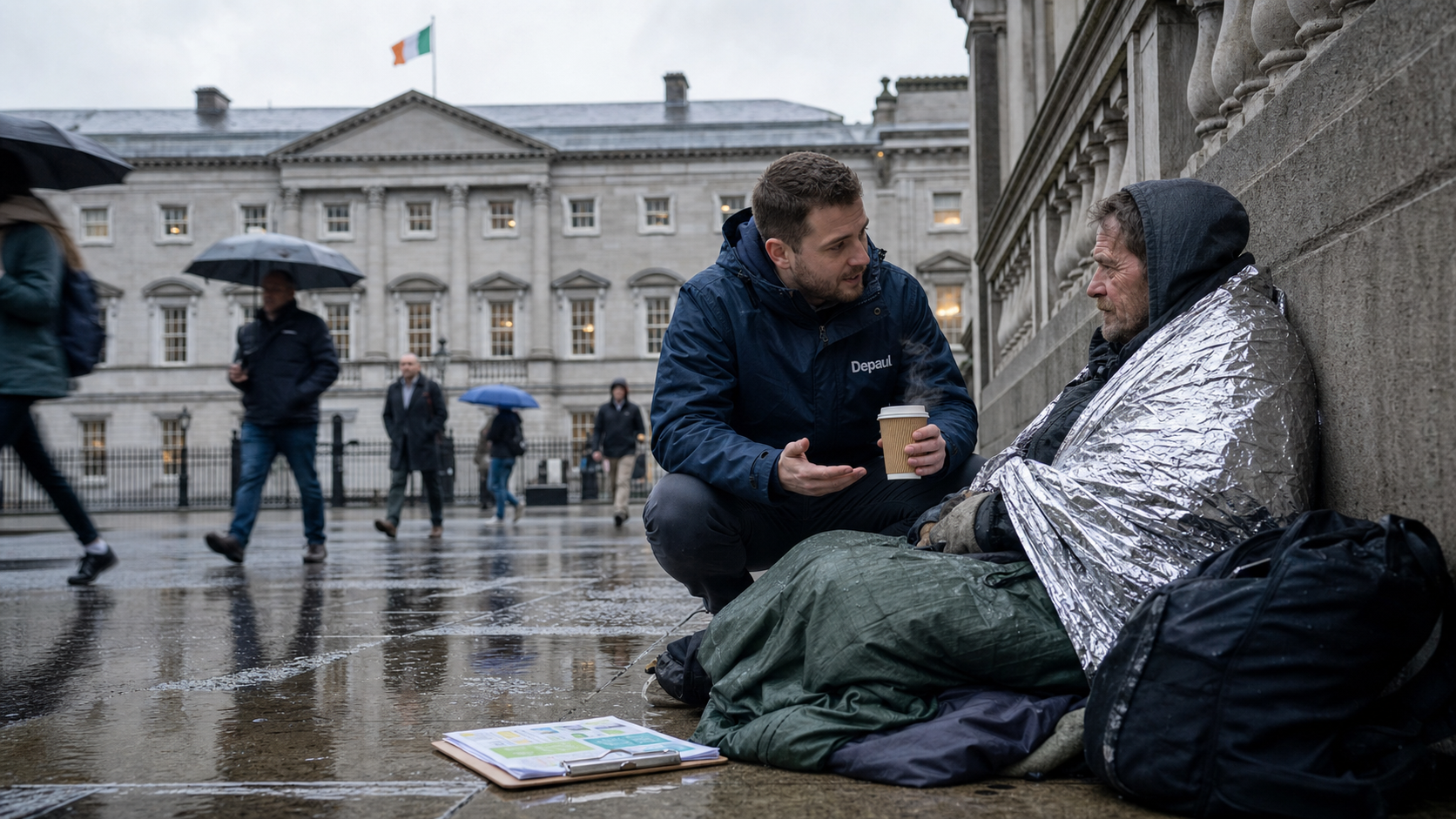
Depaul Ireland has reported a 93% spike in mental health challenges among homeless people in its care, with 273 incidents of suicidal ideation and 129 incidents of self-harm recorded in the past year. The charity, which operates services across Dublin, Cork, Waterford, and Northern Ireland, is calling for earlier mental health intervention, expanded access to therapeutic services, and a fundamental shift away from emergency accommodation towards housing-led solutions ahead of Budget 2027.
Background
The relationship between homelessness and mental health is well established in the research literature. People experiencing homelessness are significantly more likely to have mental health difficulties than the general population, and the experience of homelessness itself — the stress, the uncertainty, the loss of privacy and stability — exacerbates existing mental health conditions and can trigger new ones. The challenge for services like Depaul is to address both the immediate crisis of homelessness and the underlying mental health needs of the people they serve, in a context where resources are limited and demand is growing.
Depaul Ireland was established in 2002 as part of the international Depaul network, which operates homeless services in multiple countries. The Irish organisation has grown significantly since its establishment and now operates a range of services including emergency accommodation, transitional housing, and specialist support programmes for people with complex needs. Its annual impact report provides the most detailed picture available of the mental health challenges facing homeless people in Ireland, drawing on data from across its service network.
The 93% spike in mental health challenges reported in the 2026 impact report is a dramatic increase that reflects both the growing scale of the homelessness crisis and the deepening complexity of the needs of the people experiencing it. The figures — 273 incidents of suicidal ideation and 129 incidents of self-harm in a single year — represent a level of distress that demands an urgent and comprehensive response from the health system and from government.
Key Developments
Depaul Chief Executive David Carroll has described the mental health data as reflecting a "wider fragility" within the population experiencing homelessness, and has called for a fundamental shift in the government's approach to the crisis. The charity's staff provided a record 75,254 individual support sessions in the past year — a figure that reflects both the scale of the need and the extraordinary commitment of Depaul's frontline workers.
In response to the mental health crisis, Depaul has introduced a specialised "mindset programme" that integrates therapy and recovery planning to assist individuals struggling with the psychological strain of homelessness. The programme, which combines individual therapy with group support and practical skills development, has shown promising results in the early stages of its implementation. The charity's Housing First initiative — which provides intensive, long-term support for individuals with complex mental health and addiction needs — successfully assisted 169 people in maintaining their rental tenancies in the most recent reporting period.
Carroll has called for the government to invest in earlier intervention — reaching people before they reach crisis point — as the most effective way to reduce the mental health burden associated with homelessness. He has also called for expanded access to community mental health services for homeless people, noting that the current provision is wholly inadequate to meet the need that Depaul's data documents. The charity's pre-budget submission calls for specific investment in mental health services for homeless people, including the expansion of the Housing First programme and the development of new therapeutic services tailored to the needs of people experiencing homelessness.
Why It Matters
The mental health crisis documented by Depaul is a public health emergency that demands an urgent response. The 273 incidents of suicidal ideation recorded in a single year represent a level of distress that, in any other context, would trigger an immediate and comprehensive public health response. The fact that these incidents are occurring among people who are already in the care of a specialist homeless service — people who have, in some sense, already been identified as needing support — underlines the inadequacy of the current system's capacity to meet the mental health needs of homeless people.
For context, the HSE's mental health services are under significant pressure across the board, with waiting times for community mental health services running into months in many parts of the country. The specific needs of homeless people — who may have complex, co-occurring mental health and addiction difficulties, who may be difficult to engage with traditional service models, and who may lack the stability needed to attend regular appointments — are particularly challenging to meet within the existing service framework. Depaul's call for earlier intervention and for services specifically designed for homeless people reflects a recognition that the standard mental health service model is not adequate for this population.
The connection between mental health and homelessness is also relevant to the broader housing policy debate. Research consistently shows that people with mental health difficulties are at significantly higher risk of homelessness, and that the experience of homelessness significantly worsens mental health outcomes. Breaking this cycle requires both adequate mental health services and adequate housing supply — a combination that Ireland has struggled to provide.
Local Impact
Across Ireland, the mental health crisis among homeless people is being felt in emergency departments, community mental health services, and the services of organisations like Depaul. In Dublin, where the majority of homeless people are concentrated, the HSE's mental health services are under particular pressure, with community mental health teams reporting that the demand for their services from people experiencing homelessness has increased substantially in recent years. In Cork, Waterford, and other cities where Depaul operates, the picture is similar. The charity's call for earlier intervention — reaching people before they reach crisis point — reflects a growing consensus among service providers that the current reactive approach is insufficient and that investment in prevention and early intervention is both more humane and more cost-effective than waiting until people reach crisis.
What's Next
Budget 2027, scheduled for October 2026, will be a critical moment for mental health and homelessness policy. Depaul has submitted a detailed pre-budget submission calling for specific investment in mental health services for homeless people, including the expansion of the Housing First programme, the development of new therapeutic services, and increased funding for community mental health teams to enable them to reach homeless people in the settings where they are most likely to engage with services. The Oireachtas Committee on Health is expected to hold hearings on mental health services in September, and Depaul has indicated that it will seek to give evidence to the committee about the specific needs of homeless people.