Rare Bee Returns: Silver-Sided Nomad Bee Spotted in Offaly for First Time in a Generation
The critically endangered Silver-sided Nomad Bee has been rediscovered in County Offaly, marking the first confirmed sighting of the species anywhere on the island of Ireland in 26 years and delivering a rare piece of genuinely uplifting news for the country's beleaguered pollinator conservation community.
Background
Ireland's bee population has been under sustained pressure for decades. Of the 99 species of wild bee native to the island, a third are currently threatened with extinction, and several have already been lost entirely. The causes are well-documented: intensive agriculture, habitat loss, pesticide use, and the encroachment of scrub on the dry calcareous grasslands and coastal dunes that many specialist species depend upon.
The Silver-sided Nomad Bee, known scientifically as Nomada argentata, is among the most imperilled of all Irish bee species. Listed as Critically Endangered on the Regional Red List of Irish Bees, it had not been recorded anywhere on the island since the year 2000. Prior to this week's discovery, there were only seven confirmed historical records of the species in Ireland, with previous sightings documented in counties Galway, Laois, and Carlow.
The bee is a cleptoparasite — a species that, like the cuckoo bird, lays its eggs in the nests of a host species rather than building its own. Its primary host is the Small-scabious Mining Bee, itself classified as Critically Endangered, which means the Silver-sided Nomad Bee's survival is entirely dependent on the fortunes of another species already on the brink. Both are active between mid-July and mid-September, making this time of year the narrow window in which surveys can be conducted.
Key Developments
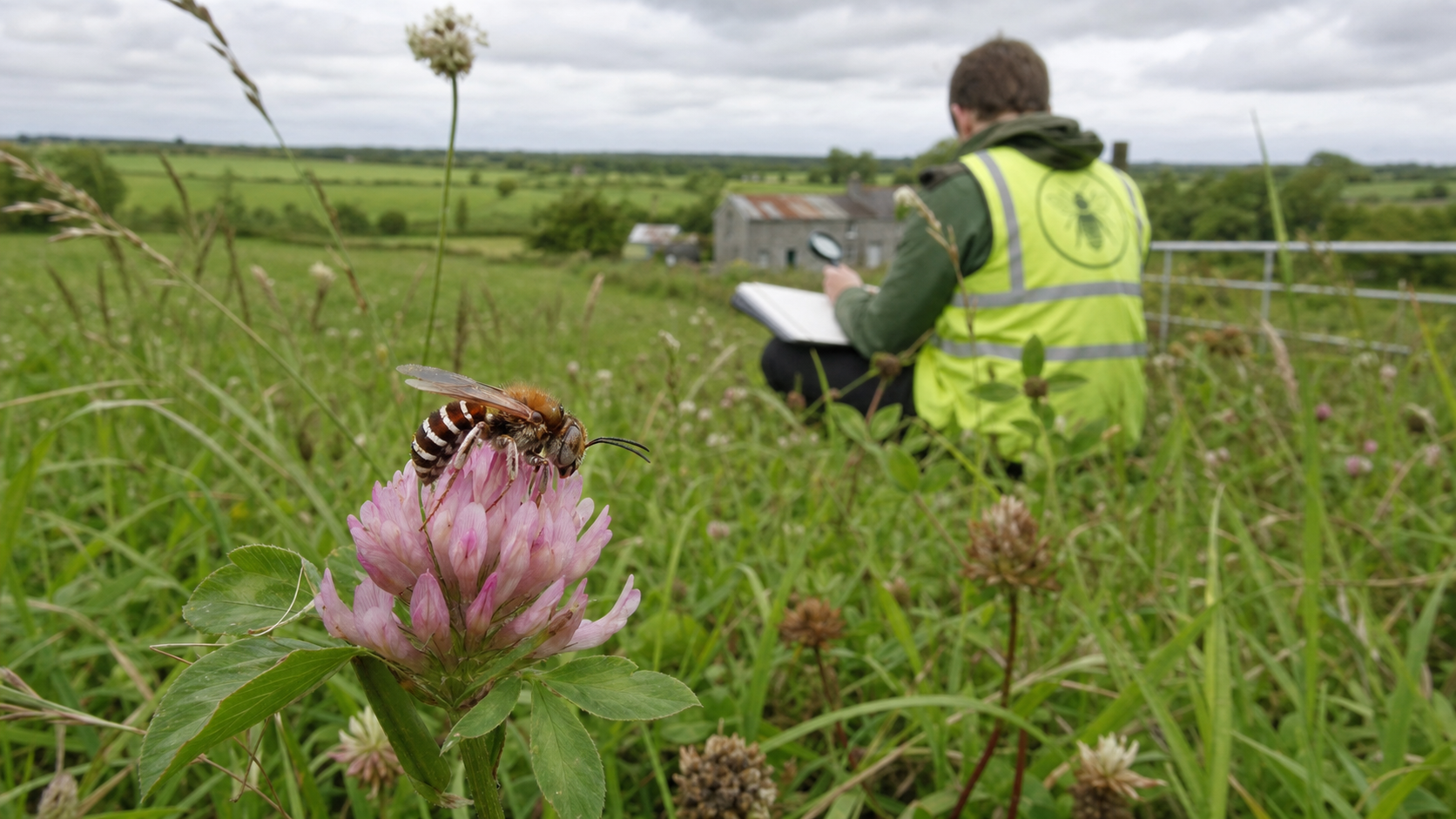
The rediscovery was made on August 11, 2026, by Joshua Clarke, a rare species pollinator officer working under the All-Ireland Pollinator Plan. Clarke identified the bee using net-sweeping techniques on Devil's-bit Scabious plants at a site in County Offaly. The identification was subsequently confirmed by experts, and the National Biodiversity Data Centre has now formally recorded the sighting.
The All-Ireland Pollinator Plan, which operates across both jurisdictions on the island, identifies the Silver-sided Nomad Bee as one of the 15 rarest and most threatened pollinators in Ireland. The plan has been instrumental in training surveyors and coordinating monitoring efforts across the country, and it is this systematic approach that made Clarke's discovery possible.
The find follows a series of successful surveys of the Small-scabious Mining Bee in August 2022, which had themselves been identified through local reporting and collaborative survey efforts. The presence of the host species in Offaly appears to have provided the conditions necessary for the Nomad Bee to persist, or perhaps to recolonise, at the site.
Why It Matters
The rediscovery of a species that had not been seen for a quarter of a century is, by any measure, extraordinary. In the context of Ireland's biodiversity crisis, it is also deeply significant. The country has committed to reversing biodiversity loss under both national and EU frameworks, but progress has been slow and the news has been predominantly grim. This discovery is a reminder that nature retains a remarkable capacity for resilience when the conditions are right.
It also underscores the value of systematic, expert-led survey work. The Silver-sided Nomad Bee is tiny, cryptic, and active for only a few weeks each year. Without trained surveyors specifically looking for it in appropriate habitat, it could easily have gone undetected for another generation. The All-Ireland Pollinator Plan's investment in rare species officers is directly responsible for this find.
The National Biodiversity Data Centre has noted that the habitats of such rare bees remain under threat from intensive agriculture and scrub encroachment. The Offaly site will now require careful management to ensure the conditions that support both the Nomad Bee and its host species are maintained.
Local Impact
For County Offaly, the discovery adds to a growing profile as a county of genuine ecological significance. The county's raised bogs, river meadows, and calcareous grasslands support a range of rare and threatened species, and conservation bodies have been working with local landowners and councils to protect and restore these habitats. The presence of the Silver-sided Nomad Bee at a site in the county will now inform land management decisions and may attract further survey attention to the area.
Local environmental groups have welcomed the news, with several noting that it demonstrates the importance of maintaining and restoring the dry grassland habitats that specialist pollinators depend upon. Offaly County Council has been engaged in a number of biodiversity initiatives in recent years, and this discovery is expected to strengthen the case for continued investment in habitat protection across the county.
What's Next
Conservationists will now focus on understanding the extent of the population at the Offaly site and identifying any other locations where the species may persist. Targeted surveys of suitable habitat across the midlands and other counties with historical records are planned for the remainder of the active season. The National Biodiversity Data Centre will publish a full account of the discovery, and the All-Ireland Pollinator Plan will use the find to inform its ongoing work on rare species protection. Land management guidance for the Offaly site is expected to be developed in consultation with the landowner in the coming months.