Coordinated Attacks Strike Mali's Capital and Key Cities
Mali was struck by a series of large-scale, coordinated attacks on Saturday 25 April 2026, targeting the capital Bamako and several other key military and urban centres in what has been described as one of the most significant offensives in years — with the nation's Defence Minister killed in a car bomb attack and a coalition of jihadist and separatist groups claiming responsibility for simultaneous assaults across the country.
Background
Mali has been in a state of severe and worsening insecurity since a military coup in 2021 brought the current junta to power. The ruling government made the fateful decision to expel French forces and the United Nations peacekeeping mission (MINUSMA) in 2023, turning instead to Russian-backed Africa Corps mercenaries for security assistance. Despite this partnership, instability has worsened dramatically, with armed groups — including al-Qaeda affiliates and Tuareg separatist movements — expanding their territorial control and operational capacity across the country's vast and under-governed north and centre.
The Sahel region, of which Mali is a central part, has become one of the world's most acute security crises. The withdrawal of Western military and diplomatic engagement has created a vacuum that jihadist groups have been quick to exploit, and the human cost has been devastating — with millions of people displaced, thousands killed, and entire communities living under the constant threat of violence. The 2026 attacks represent a dangerous escalation in the capacity and ambition of the armed groups operating in Mali.
Key Developments
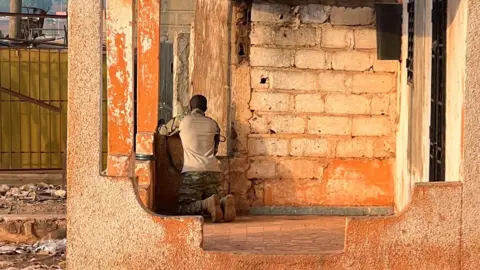
The attacks involved heavy gunfire and explosions in Bamako, particularly near the main airport, as well as in the major military town of Kati. Simultaneous assaults were reported in the northern and central cities of Kidal, Gao, Sévaré, Mopti, and Bourem. The perpetrators were identified as a coalition of two primary groups: Jama'at Nusrat al-Islam wal-Muslimin (JNIM), the al-Qaeda affiliate in the Sahel, which claimed responsibility for the attacks in Bamako, Kati, and central Mali; and the Azawad Liberation Front (FLA), a Tuareg rebel group that claimed to have seized control of Kidal and parts of Gao in the north. A spokesperson for the FLA confirmed the coordination with JNIM — a dangerous new level of cooperation between ideologically distinct armed factions.
In a major blow to the ruling junta, Defence Minister General Sadio Camara was killed in a car bomb attack on his home in Kati. The Malian government stated that its forces were repelling the assaults and claimed to have inflicted hundreds of casualties on the attackers, with Russian-backed Africa Corps mercenaries reported to be fighting alongside the Malian army. The US Embassy in Mali urged its citizens to shelter in place, while the UN and the African Union condemned the violence. As NPR reported, the scale and coordination of the attacks marked a significant escalation in the conflict.
Why It Matters
The coordinated attacks on Mali's capital and key cities represent a profound challenge to the authority of the ruling junta and a stark demonstration of the failure of the security strategy pursued since the expulsion of French and UN forces. The killing of the Defence Minister is a particularly significant blow, both symbolically and operationally. The cooperation between JNIM and the FLA — groups with different ideological foundations and historical grievances — suggests that the armed opposition to the junta is becoming more sophisticated and better coordinated. For the broader Sahel region, the attacks are a warning sign that the security situation in Mali could deteriorate further, with potential consequences for neighbouring countries including Burkina Faso, Niger, and Mauritania. As Al Jazeera reported, the international community is watching the situation with deep concern.
Local Impact
For the United Kingdom and Ireland, the deteriorating security situation in Mali and the broader Sahel region has implications for migration, counter-terrorism, and development policy. The Sahel has become a significant source of irregular migration to Europe, and the collapse of security in Mali risks accelerating displacement and creating new humanitarian crises. The UK government has maintained engagement with Sahel security issues through multilateral frameworks, and the latest attacks are likely to prompt renewed discussion about how Western governments can support stability in the region without direct military involvement. For the Irish Defence Forces, which have participated in UN peacekeeping operations in Mali, the situation is a reminder of the risks faced by peacekeepers in some of the world's most dangerous environments.
What's Next
The Malian government has declared a state of emergency in the affected areas and has called on its security forces and Russian-backed allies to restore order. The UN Security Council is expected to convene an emergency session to discuss the situation. The attacks are likely to prompt a reassessment of the security partnership between Mali and Russia, and may create pressure on the junta to reconsider its rejection of Western military assistance. For the people of Mali, the immediate priority is survival — and the international community's response in the coming days will be critical in determining whether the situation can be stabilised or whether it descends into a deeper and more prolonged crisis.