Boy of 16 Drove Wrong Way on M50 and Hit Garda Vehicles in Dangerous High-Speed Incident, Court Hears
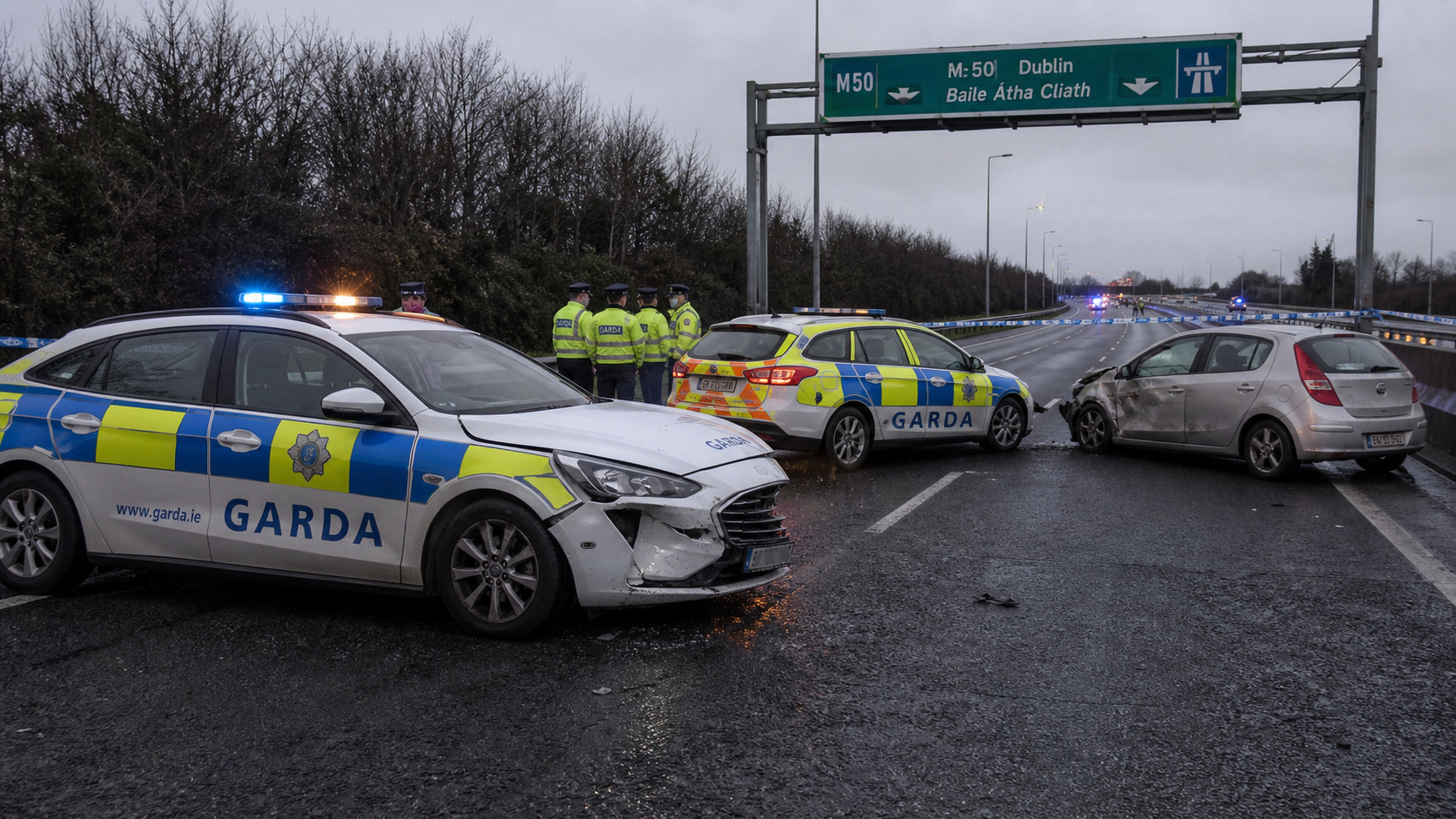
A 16-year-old boy drove on the wrong side of the M50 motorway and struck a civilian's car and two garda vehicles in a dangerous high-speed incident that could have resulted in multiple fatalities, a Dublin court heard on Friday — a case that has prompted renewed calls for action on youth crime, road safety, and the adequacy of supports for young people who are at risk of serious offending.
Background
The M50 is Dublin's primary orbital motorway, carrying tens of thousands of vehicles daily around the western and southern edges of the city. It is one of the busiest roads in Ireland, and incidents on it — particularly those involving wrong-way driving — carry an extremely high risk of serious injury or death. Wrong-way driving on motorways is a phenomenon that has attracted increasing attention from road safety authorities in Ireland and across Europe, with research suggesting that it is often associated with impaired driving, mental health crises, or, in some cases, deliberate risk-taking behaviour.
The involvement of a 16-year-old in an incident of this kind raises a distinct set of questions about the circumstances that led to a minor being in control of a vehicle on a motorway, and about the supports — or lack thereof — that were available to him before the incident occurred. The juvenile justice system in Ireland is designed to prioritise rehabilitation over punishment for young offenders, but it requires adequate resources and early intervention to be effective.
The case comes against a backdrop of growing concern about youth crime in Dublin, particularly in areas of the city where social deprivation, family breakdown, and limited access to education and employment opportunities create conditions in which young people are at elevated risk of becoming involved in criminal activity. Gardaí and youth workers have consistently argued that early intervention and adequate resourcing of youth services are more effective responses to this problem than punitive measures alone.
Key Developments
The case was heard at the Dublin Children's Court on Friday. The court heard that the boy had been driving on the wrong side of the M50 when he struck a civilian's car and then two garda vehicles that had been deployed to intercept him. No one was killed in the incident, but several people sustained injuries, and the potential for a catastrophic outcome was significant. The boy's legal representatives indicated that he had a difficult background and that the incident was connected to a broader pattern of behaviour that required therapeutic intervention rather than purely punitive measures.
The judge adjourned the case to allow for the preparation of a probation report and a psychological assessment. The boy was remanded on bail with conditions, including a curfew and a requirement to engage with youth support services.
Why It Matters
The M50 incident is a stark illustration of the consequences that can follow when young people at risk do not receive adequate support at an early stage. The boy involved is 16 years old — old enough to cause serious harm but young enough that the trajectory of his life is not yet fixed. The juvenile justice system's emphasis on rehabilitation reflects a recognition that young offenders are not simply miniature adults but individuals whose behaviour is shaped by circumstances that can be changed with the right intervention. The challenge is ensuring that those interventions are available, adequately resourced, and delivered in a timely manner. The alternative — a punitive approach that fails to address the underlying causes of the behaviour — is likely to produce worse outcomes for the young person and for society.
Local Impact
The M50 serves communities across Dublin, from Blanchardstown in the north-west to Sandyford in the south-east, and incidents on it affect commuters and residents across a wide area. The wrong-way driving incident caused significant disruption to traffic on the motorway and generated considerable anxiety among motorists who witnessed it or heard about it. Road safety organisations have used the case to renew their calls for improved barriers and detection systems on Irish motorways to reduce the risk of wrong-way driving incidents.
What's Next
The case will return to the Dublin Children's Court in October, when the probation report and psychological assessment will be available. The judge has indicated that the outcome will depend significantly on the boy's engagement with support services in the intervening period. Youth justice advocates have called for the case to be used as an opportunity to review the adequacy of early intervention services for young people at risk in Dublin.