Bluetongue Virus Confirmed in Wexford as Agriculture Department Activates Emergency Response and Movement Restrictions
A case of bluetongue virus has been confirmed in a cattle herd in County Wexford, the Department of Agriculture, Food and the Marine has announced, triggering an emergency response that includes movement restrictions on the affected holding, enhanced surveillance of livestock in the surrounding area, and contact tracing of animals that may have been moved from the holding in recent weeks — the first confirmed case of the disease in the Republic of Ireland in several years and a development that will be closely watched by the farming community across the south-east.
Background
Bluetongue is a viral disease of ruminants — cattle, sheep, goats, and deer — transmitted by biting midges of the Culicoides species. The disease does not affect humans and cannot be transmitted through the consumption of meat or dairy products, but it can cause significant mortality in sheep and, to a lesser extent, cattle, and its presence in a herd triggers significant trade restrictions that can have serious economic consequences for affected farmers and for the wider agricultural sector.
The disease is caused by the bluetongue virus, of which there are multiple serotypes. Different serotypes have different geographic distributions and different levels of virulence, and the identification of the specific serotype involved in the Wexford case will be an important step in determining the appropriate response. The disease has been present in parts of northern Europe — including the Netherlands, Belgium, and northern France — in recent years, with the BTV-3 serotype causing significant outbreaks in those countries. The UK confirmed its first cases of BTV-3 in 2023, and the disease has since spread to several counties in England.
Ireland's geographic position — separated from Great Britain by the Irish Sea and from continental Europe by the Atlantic — has historically provided some protection against the introduction of vector-borne diseases like bluetongue. However, the expansion of the Culicoides midge population in response to changing climate conditions, and the movement of livestock through trade, have increased the risk of introduction in recent years.
Key Developments
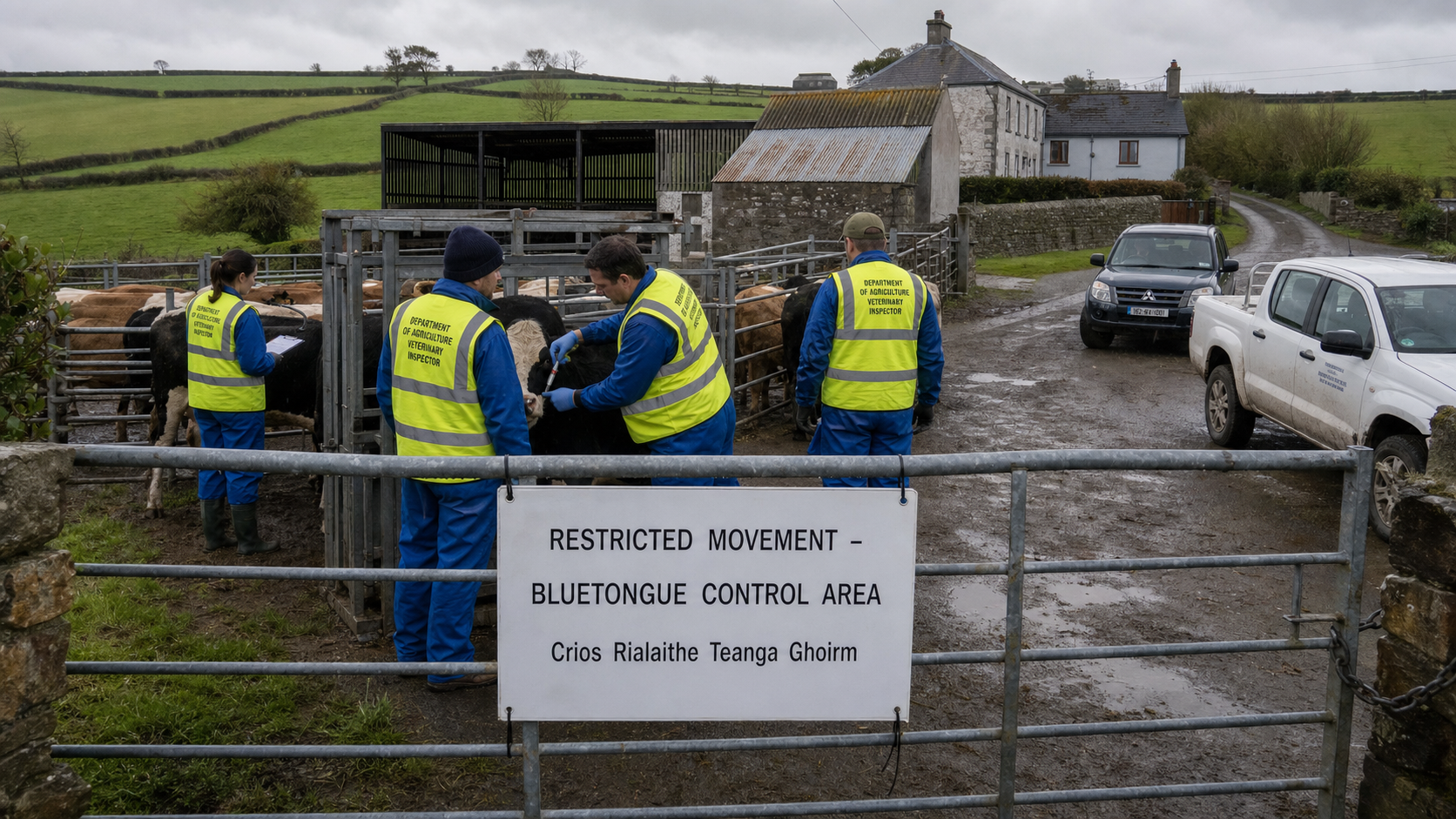
The Department of Agriculture confirmed the bluetongue case in Wexford following laboratory testing of samples from animals showing clinical signs consistent with the disease. Movement restrictions have been placed on the affected holding, preventing the movement of any animals on or off the farm until the extent of the infection has been determined. Enhanced surveillance has been activated in the surrounding area, with veterinary inspectors visiting neighbouring holdings to assess the health status of livestock.
Contact tracing is under way to identify any animals that may have been moved from the affected holding in the weeks before the diagnosis, with the Department working to trace those animals and place them under observation. The Department has also activated its bluetongue contingency plan, which sets out the procedures for managing a confirmed case and for preventing the spread of the disease to other holdings.
The Minister for Agriculture has described the confirmation as "a serious development" and has called on farmers across the south-east to be vigilant for signs of the disease in their livestock. The clinical signs of bluetongue in cattle include fever, nasal discharge, swelling of the face and tongue, and lameness. In sheep, the disease can be more severe, with high mortality rates in some outbreaks. Farmers who observe these signs in their animals are urged to contact their veterinary practitioner immediately.
Why It Matters
The confirmation of bluetongue in Wexford matters for the Irish agricultural sector because of the trade implications of the disease's presence. Ireland exports significant quantities of live cattle and sheep, as well as beef and lamb, to markets across Europe and beyond. The presence of bluetongue in Ireland could trigger trade restrictions from importing countries, with potentially significant economic consequences for the sector. The Department of Agriculture will be working to notify Ireland's trading partners of the confirmed case and to provide assurances about the measures being taken to contain the disease.
The case also matters because it is a reminder of the vulnerability of Ireland's livestock sector to the introduction of exotic diseases. The changing climate — which is expanding the range of the Culicoides midge — and the increasing movement of livestock through international trade are creating new pathways for disease introduction that require sustained vigilance and investment in biosecurity.
Local Impact
In Wexford, the confirmation of the bluetongue case has caused significant concern among the farming community. The county has a large and productive livestock sector, with cattle and sheep farming important components of the local agricultural economy. The movement restrictions on the affected holding will have immediate financial consequences for the farmer involved, and the enhanced surveillance in the surrounding area will create additional administrative burden for neighbouring farms. The Wexford branch of the Irish Farmers' Association has called on the Department of Agriculture to provide clear and timely information to farmers about the extent of the outbreak and the measures being taken to contain it.
What's Next
The Department of Agriculture will publish daily updates on the bluetongue situation as the investigation progresses. The results of the contact tracing exercise are expected within the next 48 to 72 hours, and will determine whether additional movement restrictions need to be put in place. The Department is also in contact with the European Commission and with the competent authorities in other EU member states to notify them of the confirmed case and to coordinate the response. A vaccination programme may be considered if the disease is found to have spread beyond the initial holding, though the availability of vaccines for the specific serotype involved will need to be assessed.