Belfast TradFest Opens with Spectacular Titanic Céilí as City Embraces Its UNESCO Music Heritage
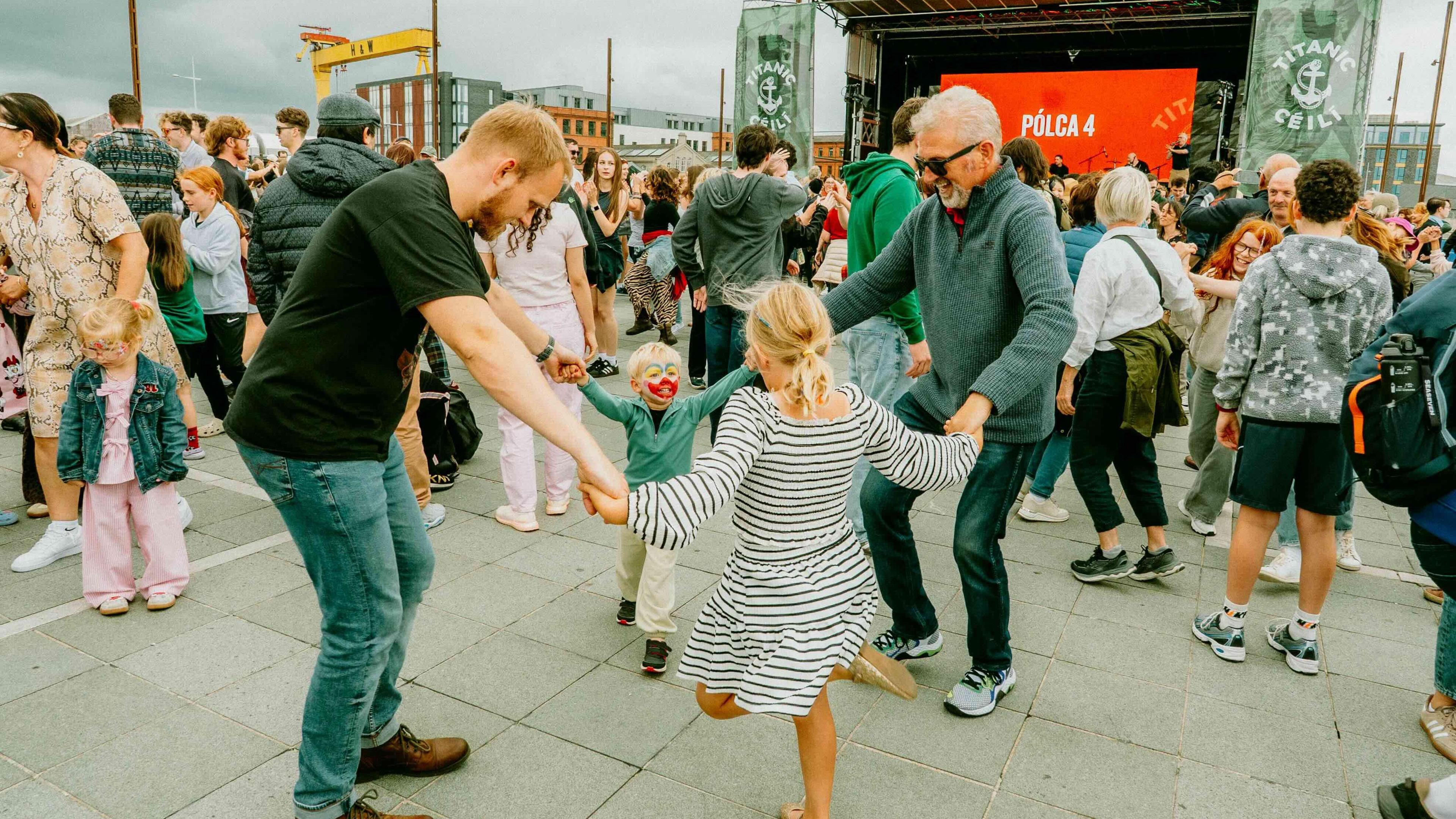
Thousands of music lovers gathered at the Titanic Slipways in east Belfast on Sunday evening as the eighth edition of Belfast TradFest opened with a free outdoor céilí that set the tone for what promises to be the festival's most ambitious programme yet. With the Blackwater Céilí Band leading the dancing and performers Jack Warnock and Niamh McGlinchey drawing the crowds, the event marked the beginning of eight days of traditional music, song, and dance across 40 venues throughout the city.
Background
Belfast TradFest has grown from modest origins as a summer school into one of the island of Ireland's most significant celebrations of traditional arts. The festival's trajectory mirrors Belfast's own cultural renaissance — a city that has spent the past three decades rebuilding its identity and discovering, or rediscovering, the richness of its artistic heritage. The designation of Belfast as a UNESCO City of Music in 2021 provided formal international recognition of what local musicians and audiences had long known: that this is a city with an extraordinary relationship with music in all its forms.
Traditional music has deep roots in Belfast, from the sessions in Kelly's Cellars on Bank Square — one of the oldest pubs in the city, dating to 1720 — to the vibrant scene that has developed around venues like Madden's Bar in the Cathedral Quarter. The TradFest has become the annual focal point for this community, drawing performers and audiences from across Ireland, Britain, and further afield.
The 2026 edition is the largest in the festival's history, with nearly 600 events scheduled across eight days. The programme includes headline concerts at the Mandela Hall and the Empire Music Hall, a summer school delivered in partnership with Ulster University, and the Dunville's Irish Whiskey Session Trail — more than 130 free listening sessions across 20 local pubs.
Key Developments
Sunday's opening Titanic Céilí drew an estimated crowd of several thousand to the Slipways, the historic site where the RMS Titanic was launched in 1911. The choice of venue was deliberate: the Slipways represent both the industrial heritage of east Belfast and the city's capacity for reinvention. The Blackwater Céilí Band, one of the most respected traditional ensembles in Ireland, provided the music for dancing that continued well into the evening.
The headline concert programme features some of the most celebrated names in traditional music. The Michael McGoldrick Big Band, Cherish the Ladies, Solas (on their 30th Anniversary Tour), Flook, and Four Men and a Dog are among the acts performing at the Mandela Hall over the coming week. The Empire Music Hall will host Barry Kerr, Pauline Scanlon, and The Bonny Men, among others.
New for 2026 are alcohol-free "sober sessions" — a recognition that traditional music's appeal extends to those who prefer to enjoy it without alcohol — and pop-up performances at Grand Central Station, bringing the music to commuters and visitors who might not otherwise seek it out. The Ulster University summer school, one of the world's largest traditional music teaching programmes, is running concurrently with the festival.
Why It Matters
Belfast TradFest matters for reasons that go beyond the music itself. Traditional music is one of the few cultural forms that genuinely crosses the community divide in Belfast — it belongs to no single tradition, no single political identity. The céilí at the Titanic Slipways drew people from across the city and beyond, united by a shared love of music and dance. In a city that has sometimes struggled to find common cultural ground, that is no small thing.
The festival also has significant economic impact. Tourism NI has consistently identified TradFest as one of the key events driving visitor numbers to Belfast in the summer months, with the 2025 edition estimated to have contributed several million pounds to the local economy. The 2026 programme, with its expanded venue list and international headliners, is expected to surpass that figure. The timing — immediately before the Fleadh Cheoil na hÉireann, which arrives in Belfast on 2 August — means the city is entering a sustained period of traditional music celebration that is without precedent in its history.
Local Impact
The Session Trail is perhaps the most democratically accessible element of the festival, with free sessions running in pubs from the Cathedral Quarter to the Holylands and beyond. The Garrick Bar on Chichester Street, Madden's Bar on Berry Street, and Kelly's Cellars on Bank Square are among the venues hosting nightly sessions throughout the week. For residents of north and west Belfast, pop-up performances at community venues and the Grand Central Station events bring the festival to neighbourhoods that might not otherwise be part of the city centre cultural circuit. The Ulster University summer school, held at the Jordanstown campus, is drawing students from across Ireland, Britain, the United States, and Australia.
What's Next
Belfast TradFest runs until Sunday, 2 August 2026, when it hands the baton to the Fleadh Cheoil na hÉireann, which will bring an estimated 800,000 visitors to the city over the following week. The combination of the two events represents the most significant concentration of traditional music activity in Belfast's history. Festival organisers have confirmed that planning for TradFest 2027 will begin in September, with a view to building on the momentum of this year's record programme.