Belfast Lord Mayor Róis-Máire Donnelly Targeted with Threats as New City Hall Leadership Faces Hostile Reception
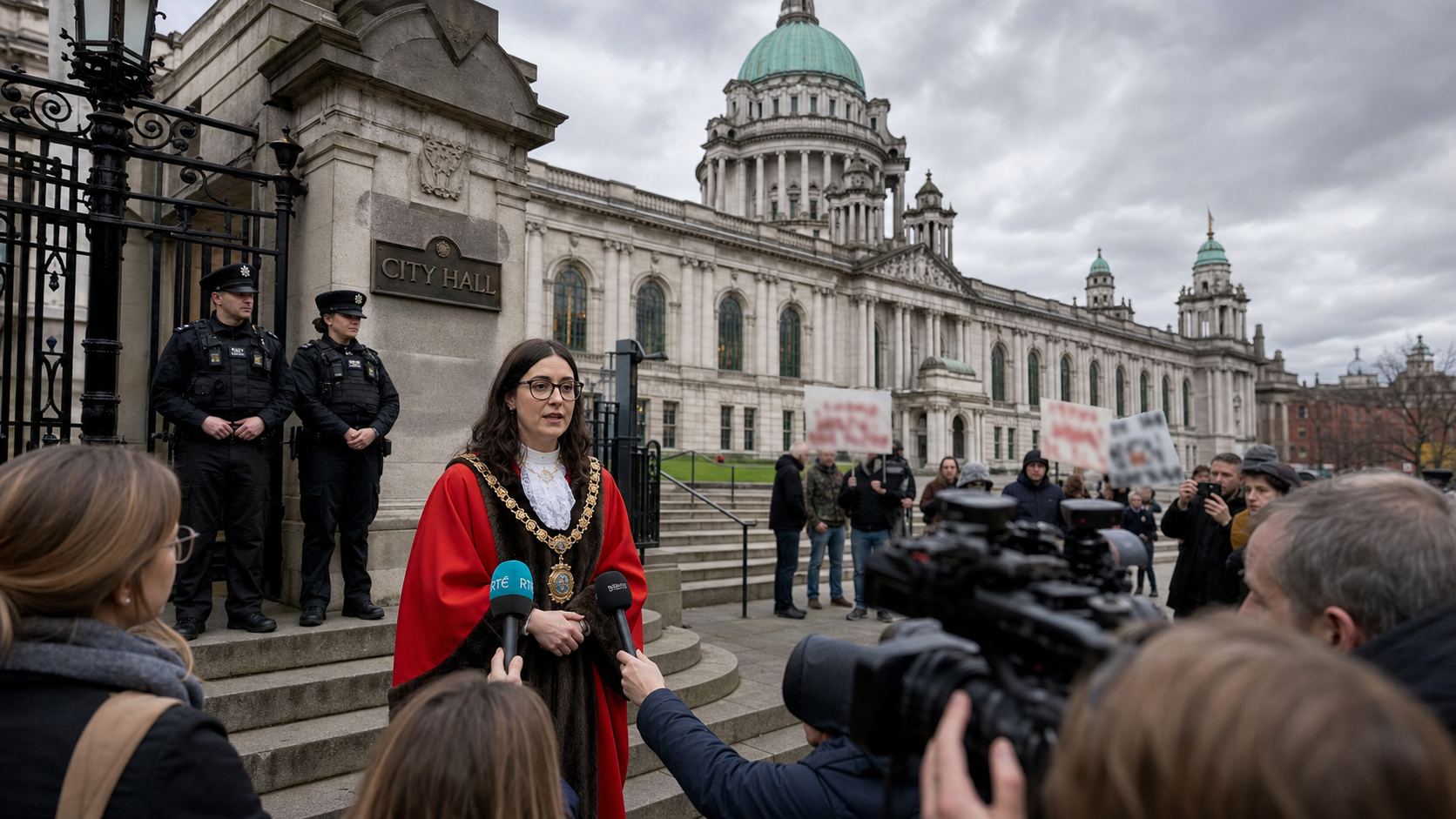
Róis-Máire Donnelly, who was installed as Belfast's Lord Mayor on June 1st, has been subjected to a sustained campaign of social media threats and hostile commentary in the weeks since taking office — a development that has prompted condemnation from councillors across all parties and raised fresh concerns about the safety of elected representatives in Northern Ireland's political environment.
Background
The office of Lord Mayor of Belfast is one of the most visible civic roles in Northern Ireland, carrying both ceremonial significance and genuine political weight. The Lord Mayor chairs Belfast City Council, represents the city at official functions, and serves as a public face of Belfast's civic life. The role has historically been held by representatives of the city's two main political traditions in rotation, though the changing demographics of Belfast and the rise of the Alliance Party have complicated that pattern in recent years.
Donnelly's election to the role in June 2026 was notable for several reasons. She is among the youngest people to have held the office, and her election reflected the shifting political landscape of a city that has changed dramatically in the three decades since the Good Friday Agreement. Her background and political affiliation placed her at the centre of ongoing debates about the direction of Belfast's civic identity — debates that have become increasingly fraught in the context of the tensions that have marked the city in recent months.
The threats directed at Donnelly are not an isolated phenomenon. Northern Ireland has seen a pattern of intimidation directed at elected representatives in recent years, with councillors, MLAs, and community leaders across the political spectrum reporting harassment, threats, and in some cases physical intimidation. The PSNI has repeatedly warned that such behaviour represents a serious threat to democratic participation and has committed to investigating all credible threats against public figures.
Key Developments
The threats against Donnelly emerged on social media platforms in the days following her installation as Lord Mayor, with a number of accounts posting hostile and threatening content directed at her personally. The content ranged from abusive commentary about her political views to more explicit threats that prompted her office to contact the PSNI. The police have confirmed they are aware of the threats and are assessing the material.
The response from across Belfast City Council has been unequivocal. Councillors from the DUP, Alliance, SDLP, and Ulster Unionist Party have all issued statements condemning the threats and expressing solidarity with the Lord Mayor. The council's chief executive has also spoken publicly about the importance of ensuring that elected representatives can carry out their duties without fear of intimidation.
Donnelly herself has responded with composure, stating publicly that she will not be deterred from carrying out her duties and that the threats represent an attempt to undermine democratic representation in Belfast. Her response has been widely praised by civic and community leaders across the city, who have described her conduct as exemplary in difficult circumstances.
Why It Matters
The targeting of Belfast's Lord Mayor is symptomatic of a broader deterioration in the quality of public discourse in Northern Ireland that has been evident for several years. The anonymity afforded by social media platforms has lowered the threshold for threatening behaviour, while the polarised political environment has provided a context in which such behaviour can be rationalised by those who engage in it. The consequences, however, are entirely real: elected representatives who face threats must make decisions about their personal security, their family's safety, and whether the personal cost of public service is sustainable. If that calculation tips against participation, the democratic process is diminished. This is not a partisan issue. Elected representatives from every party in Northern Ireland have faced threats and harassment, and the pattern is one that the PSNI, the Assembly, and civic society have all identified as a serious concern. The response to the threats against Donnelly — swift, cross-party, and unequivocal — is the appropriate one, and it sets a standard that should be maintained consistently.
Local Impact
In Belfast, the threats against the Lord Mayor have been felt across the city's civic community. Community organisations in north Belfast, east Belfast, and the city centre — many of which work closely with the Lord Mayor's office on community events, charitable initiatives, and civic programmes — have expressed concern about the climate of intimidation. The Belfast Civic Trust and a number of community development organisations have issued statements of support for Donnelly. In the Short Strand, the Markets area, and other communities where civic engagement is already fragile, the targeting of an elected representative sends a chilling message about the risks of public participation. The PSNI's Community Policing teams in Belfast have been briefed on the situation and are maintaining contact with the Lord Mayor's office.
What's Next
The PSNI is expected to complete its initial assessment of the threats within the coming days and will determine whether criminal charges are appropriate. Belfast City Council is understood to be reviewing its security arrangements for the Lord Mayor's office and public engagements. The Assembly's Committee on Standards and Privileges has been asked to consider whether additional protections for elected representatives are needed, and a debate on the issue is expected before the summer recess. Donnelly has confirmed she will continue with her full programme of civic engagements, including a series of community visits planned for later this month.