Orange Order Confirms 18 Main Twelfth Parades Across Six Counties as 2026 Marching Season Takes Shape
The Orange Order has published its arrangements for 18 main Twelfth of July parades across all six counties of Northern Ireland for 2026, with the annual marching season set against a backdrop of heightened community tensions following recent civil disorder, prompting the Order's leadership to emphasise the peaceful and cultural character of the events while engaging proactively with the Parades Commission and local communities.
Background
The Twelfth of July is the most significant date in the loyalist and unionist calendar, marking the anniversary of the Battle of the Boyne in 1690 at which the forces of King William III defeated those of King James II. The Orange Order, founded in 1795, organises parades across Northern Ireland and in parts of the Republic, Scotland, and further afield on and around the Twelfth, with the main demonstrations in each county drawing thousands of participants and spectators.
The marching season has been a source of significant community tension in Northern Ireland throughout the post-conflict period, with disputes over parade routes — particularly in areas where loyalist and nationalist communities live in close proximity — generating some of the most serious public order incidents of the peace process era. The Parades Commission, established under the Public Processions Act 1998, has the power to impose conditions on parades and, in exceptional circumstances, to prohibit them entirely.
In recent years, the relationship between the Orange Order and the Parades Commission has been complex and sometimes adversarial, with the Order challenging Commission decisions in the courts on a number of occasions. The broader context of community relations in Northern Ireland — including the ongoing debates about flags, symbols, and cultural expression — means that the marching season is never simply a logistical exercise but always carries significant political and social weight.
Key Developments
The Orange Order's announcement of 18 main parades covers all six counties, with demonstrations planned in Belfast, Antrim, Armagh, Down, Fermanagh, Londonderry/Derry, and Tyrone. The main demonstration for 2026 has been designated in one of the county towns, with the precise location and route subject to the Parades Commission's formal notification and determination process.
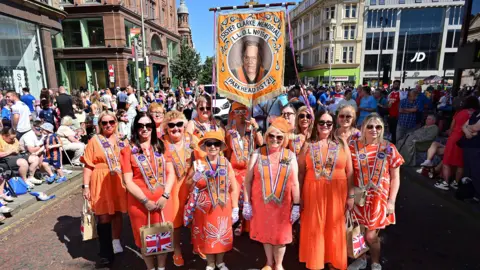
The Order has also confirmed arrangements for a series of pre-Twelfth events, including church services, band parades, and community gatherings, that form part of the broader marching season programme. These events, which take place in the weeks leading up to the Twelfth, are an important part of the cultural calendar for many loyalist communities and provide opportunities for families and communities to come together in a festive atmosphere.
This year's marching season takes place against the backdrop of the recent civil disorder, which has raised the temperature of community relations across Northern Ireland. The Orange Order's leadership has been careful to distance the institution from the disorder, emphasising that the Order's parades are peaceful, family-friendly events that have nothing in common with the violence that has been seen on the streets in recent weeks. The Order has also called for calm and for community leaders to work together to reduce tensions ahead of the marching season.
Why It Matters
The Twelfth of July parades are one of the most visible expressions of loyalist and unionist cultural identity in Northern Ireland, and their management is a significant test of the community relations infrastructure that has been built up since the Good Friday Agreement. The parades are protected under the European Convention on Human Rights as an expression of freedom of assembly and cultural expression, but they must be balanced against the rights of residents in areas through which they pass.
The current environment makes the management of the 2026 marching season particularly challenging. The recent disorder has heightened sensitivities on all sides, and there is a real risk that incidents during the marching season — even relatively minor ones — could be amplified by social media and used to inflame tensions further. The Parades Commission, the PSNI, and community mediators will all need to work closely together to ensure that the season passes off as peacefully as possible.
Unlike in previous years, when the main flashpoints were typically disputes over specific parade routes in contested areas, the 2026 season is taking place in a context where the broader question of community relations and social cohesion is under acute pressure. The Orange Order's decision to engage proactively with the Parades Commission and to emphasise the peaceful character of its events is a positive signal, but it will need to be matched by equally constructive engagement from all parties.
Local Impact
Across the six counties, local Orange lodges are making their preparations for the Twelfth with the usual combination of excitement and logistical complexity. In Belfast, the main city parade will pass through the city centre and into the loyalist heartlands of east and north Belfast, with thousands of participants from lodges across the greater Belfast area. In Derry, the parade will take place in the Waterside, the predominantly unionist area on the east bank of the Foyle, with the route carefully managed to avoid the most sensitive areas of the city.
In the rural counties — Fermanagh, Tyrone, and Armagh — the Twelfth parades are often the largest public gatherings of the year, drawing participants and spectators from across wide catchment areas. For many rural communities, the Twelfth is as much a social occasion as a political or religious one, with families travelling from across the county to meet friends and relatives at the demonstration field.
What's Next
The Parades Commission will now process the formal notifications submitted by the Orange Order for each of the 18 main parades, issuing determinations that set out any conditions attached to the events. The Commission's decisions are expected to be published in late June, giving organisers and communities time to prepare. The PSNI will publish its policing plan for the marching season in the coming weeks, with the plan expected to reflect the heightened security environment following the recent disorder.