Artemis II Crew Closer to Moon Than Earth as Historic Mission Reaches Halfway Point
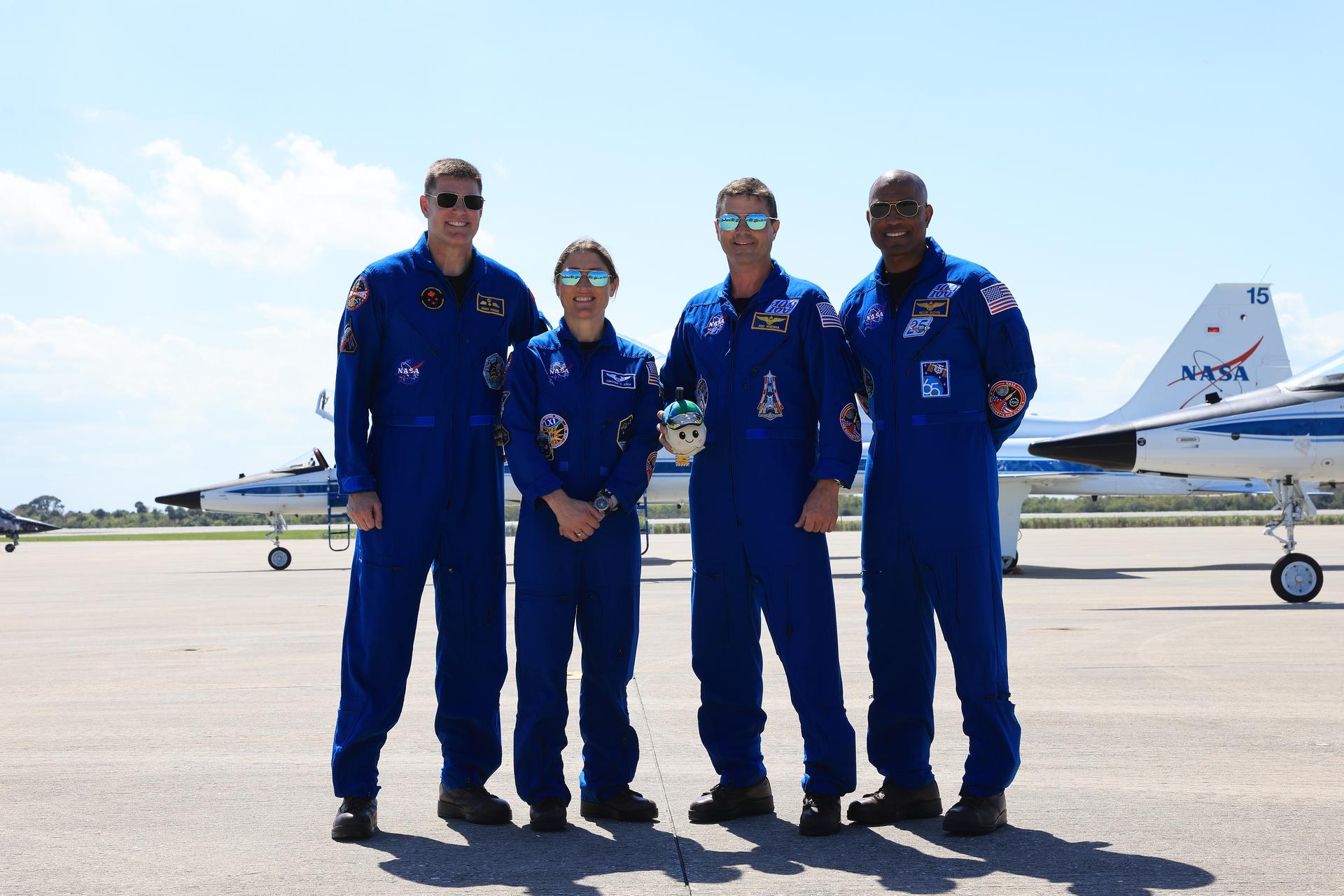
NASA's Artemis II crew reached a historic milestone on Saturday as the four astronauts aboard the Orion spacecraft were informed they were now closer to the Moon than to Earth — the first humans to venture beyond low Earth orbit since Apollo 17 in 1972. Commander Reid Wiseman, Pilot Victor Glover, Mission Specialist Christina Koch, and Canadian Space Agency astronaut Jeremy Hansen launched from Kennedy Space Center on 1 April and are on course for a lunar flyby that will see them set a new human distance record from Earth of 252,756 miles — surpassing the record set by the stricken Apollo 13 crew in 1970.
Background
The Artemis II mission is the first crewed flight of NASA's Artemis programme, designed to test the Orion spacecraft and its systems in deep space before committing to a lunar landing. The mission draws inevitable comparisons to Apollo 8, the first crewed mission to orbit the Moon in December 1968, but the differences are as significant as the similarities. Where Apollo operated with the computing power of a pocket calculator by modern standards, Orion is equipped with vastly more sophisticated systems, a more advanced life support module, and a crew that reflects the diversity of 21st-century America and its international partners.
The Apollo programme's final mission, Apollo 17, returned from the Moon in December 1972. In the more than five decades since, no human being has travelled beyond low Earth orbit — a gap in human spaceflight ambition that the Artemis programme is designed to close permanently. The goal is not merely to repeat the Apollo achievement but to establish a sustainable human presence on and around the Moon, with the Gateway lunar space station serving as a staging post for eventual crewed missions to Mars.
The crew announced in April 2023 carries historic significance beyond the mission itself. Christina Koch becomes the first woman to travel beyond low Earth orbit and near the Moon. Victor Glover is the first person of colour to venture within the vicinity of the Moon. Jeremy Hansen is the first non-US citizen and first Canadian to travel beyond low Earth orbit — a milestone for the international partnerships that underpin the Artemis programme.
Key Developments
Following launch on 1 April, Orion performed a trans-lunar injection burn on 2 April to set its course for the Moon. The crew have been exercising using a flywheel device, practising medical response procedures, and testing the emergency communications system as they prepare the Orion cabin for the lunar observation period. On Saturday, flight controllers were evaluating a minor issue with the spacecraft's toilet, which the crew reported a "burning smell" from — though they received clearance to continue using it, a reminder that even historic missions involve the mundane realities of human spaceflight.
The lunar flyby on Monday will be the mission's defining moment. The crew will orbit the far side of the Moon, reaching a closest approach of approximately 4,067 miles from the lunar surface, before setting the new distance record of 252,756 miles from Earth. During the six-hour flyby, communications with Earth are expected to be lost for 30–50 minutes as Orion passes behind the far side of the Moon — a moment that will mark the furthest humans have ever been from home. Splashdown is planned for 10 April in the Pacific Ocean near San Diego.
Why It Matters
Artemis II matters because it represents the resumption of humanity's most ambitious endeavour: the exploration of worlds beyond our own. After more than fifty years of human spaceflight confined to low Earth orbit, the sight of four astronauts travelling toward the Moon carries a weight that transcends national pride or scientific achievement. The mission is a proof of concept for everything that follows — Artemis III, which will land humans on the lunar south pole for the first time, and the long-term vision of a permanent human presence on the Moon. The data and experience gathered from Artemis II will directly inform the design and execution of those future missions. For a generation that has never seen humans travel beyond Earth orbit, this mission is a reminder of what is possible when ambition, engineering, and international cooperation align.
Local Impact
The UK has a direct stake in the Artemis programme's success. The European Service Module — the component that provides propulsion, power, water, and air for the Orion crew — was built by Airbus in Bremen with components manufactured across Europe, including significant British industrial contributions. The European Space Agency, of which the UK remains a member post-Brexit, is a core partner in the Artemis architecture. The mission has captured enormous public interest across the UK and Ireland, with schools and space enthusiasts following the crew's journey closely. For British industry and the UK Space Agency, Artemis II is a demonstration that European engineering is at the heart of humanity's return to the Moon.
What's Next
With the lunar flyby complete and splashdown on 10 April, NASA will begin the detailed analysis of Orion's performance data that will shape the design of Artemis III — the mission that will actually land humans on the Moon. The timeline for Artemis III remains under review, but the success of Artemis II will be the critical factor in determining how quickly NASA can proceed. For the four crew members, the mission will mark them permanently as pioneers — the first humans to travel beyond low Earth orbit in over half a century, and the pathfinders for all who follow. Sources: NASA — Artemis II Mission; ESA — Artemis II and the European Service Module.