US-Iran Peace Talks Begin in Islamabad as Ceasefire Remains Under Strain
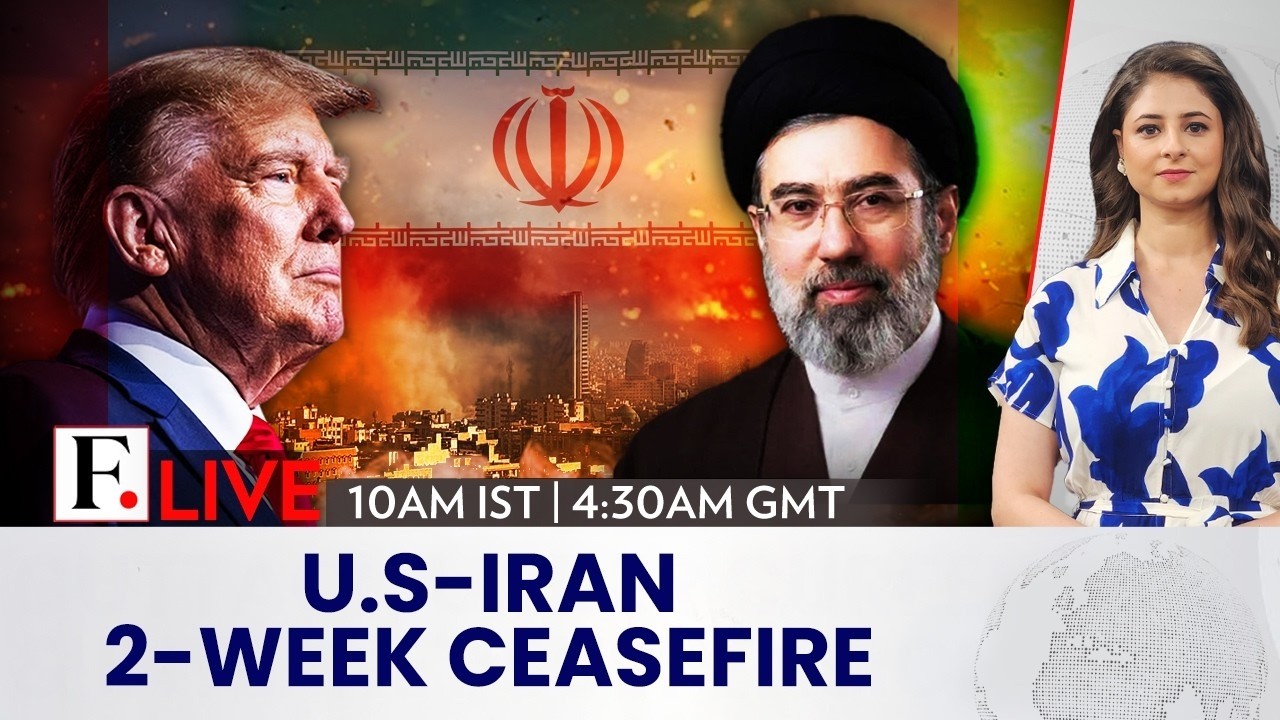
High-stakes negotiations between US and Iranian officials got under way in Islamabad on Friday, as the two-week ceasefire that ended 39 days of conflict remained fragile — with Israel's continued military campaign in Lebanon threatening to derail the agreement before it can be consolidated, and the Strait of Hormuz still effectively closed to normal commercial traffic.
The talks, brokered by Pakistan, represent the first direct diplomatic engagement between Washington and Tehran since the conflict began in late February — and the first direct, high-level negotiations between the two countries since the 1979 Islamic Revolution. Iran has presented a 10-point plan as a basis for a lasting agreement, which US President Donald Trump initially described as a "workable basis," though significant gaps remain on core issues.
Background
The US-Iran conflict began on 28 February when US and Israeli forces launched coordinated strikes on Iran, citing concerns about Tehran's nuclear weapons programme. Iran responded by striking neighbouring countries and effectively closing the Strait of Hormuz, through which approximately 20 per cent of the world's oil typically passes. The closure triggered a sharp spike in global energy prices, with Brent crude surpassing $100 a barrel, and caused significant economic disruption worldwide.
A two-week ceasefire was agreed less than two hours before a US deadline expired, with the reopening of the Strait of Hormuz as a key condition. The White House press secretary declared the truce "a victory for the United States," with Trump claiming "total and complete victory." The Islamabad talks, held on 11 and 12 April, were facilitated by Pakistani Prime Minister Shehbaz Sharif, Foreign Minister Ishaq Dar, and Chief of Defence Forces Asim Munir. The US delegation was led by Vice President JD Vance, accompanied by special envoys Steve Witkoff and Jared Kushner, while Iran's team was headed by parliamentary speaker Mohammad Bagher Ghalibaf and Foreign Minister Abbas Araghchi.
Key Developments
Iran's 10-point plan includes demands for a US commitment to non-aggression, acceptance of Iran's nuclear enrichment programme, the lifting of all sanctions, withdrawal of US forces from the region, and compensation for war damages. It also proposes reopening the Strait of Hormuz with navigation coordinated by the Iranian armed forces — and the imposition of transit fees by Iran and Oman, a proposal widely rejected by the international community, including the US and the Gulf Cooperation Council. The International Maritime Organization stated there is no legal basis for Iran to impose such fees.
Despite 21 hours of discussions, the Islamabad talks failed to produce a comprehensive agreement. Trump stated that Iran's offer was "not good enough," and on 13 April announced a US naval blockade of Iranian ports. The ceasefire is under immediate strain due to Israel's continued bombardment of Beirut and southern Lebanon. Israel maintains that Lebanon is not covered by the truce, while Iran insists a ceasefire in Lebanon is an "inseparable part" of the agreement. Lebanon's health ministry reported at least 303 deaths from Israeli airstrikes earlier this week. A separate 10-day truce between Israel and Lebanon was eventually agreed on 16 April to allow for direct negotiations.
Why It Matters
The outcome of the Islamabad talks will have profound implications for global energy markets, regional stability, and the international order. The dispute over transit fees has added another layer of complexity and risk for the global shipping industry, with insurance rates for tankers rising sharply. Major economies including China, India, and Japan have reportedly been paying the transit fees to ensure the passage of their ships, creating a fragmented international response that complicates efforts to present a unified front.
For the UK, a durable resolution would ease energy price pressures and reduce the economic headwinds facing British households and businesses. China is reported to have played a quiet but significant role in encouraging Iran to negotiate, adding a further geopolitical dimension to the talks and raising questions about the shifting balance of global power in the Middle East.
The failure of the Islamabad talks to produce an agreement has deepened uncertainty in global energy markets, with analysts warning it could take months for the global oil market to fully recover even if a lasting settlement is eventually reached.
Local Impact
For the UK, the ongoing instability in the Strait of Hormuz has had tangible consequences for energy prices, inflation, and the cost of living. The Bank of England has been forced to navigate a difficult balancing act between managing energy-driven inflation and supporting an economy under pressure. British businesses dependent on international shipping have faced sharply higher insurance and freight costs, while households have seen petrol, diesel, and home heating oil prices rise significantly.
The UK government has been among the most vocal advocates for a swift and unconditional reopening of the Strait, and Prime Minister Keir Starmer's Gulf diplomatic tour reflects the seriousness with which London views the economic and strategic stakes of the ongoing crisis. The Foreign Office has urged British nationals in the region to exercise heightened caution.
What's Next
Further diplomatic efforts are expected in the coming weeks, with the UK expected to play a supporting role alongside European partners and Gulf allies. A broader international conference on Hormuz security is also being planned. The durability of the ceasefire will depend heavily on whether a resolution can be found to the Lebanon question and whether the US and Iran can bridge the fundamental gaps that caused the Islamabad talks to collapse.
For the latest updates, see Al Jazeera on the stalled Islamabad talks and Al Jazeera's coverage of the ceasefire terms.